
I am text block. Click edit button to change this text. Lorem ipsum dolor sit amet, consectetur adipiscing elit. Ut elit tellus, luctus nec ullamcorper mattis, pulvinar dapibus leo.
-13%Sold out

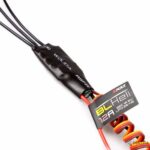
EMAX BLHELI 12Amp ESC for Quadcopter / Drones
Original price was: ₹800.00.₹750.00Current price is: ₹750.00. inc. GST

Leadshine DMA860E Stepper Motor Driver
Original price was: ₹6,000.00.₹5,700.00Current price is: ₹5,700.00. inc. GST
Wemos D1 Mini ESP8266 NodeMCU WIFI board for Arduino
Original price was: ₹400.00.₹350.00Current price is: ₹350.00. inc. GST
- Microcontroller: ESP-8266EX
- Operating Voltage: 3.3 V
- Digital I/O Pins: 11
- Analog Input Pins 1(Max input: 3.2V)
- Clock Speed: 80MHz/160MHz
- Flash: 4M bytes
- Length: 34.2mm
- Width: 25.6mm
- Use BRT (Bias Resistor Transistor)
- Easier into flash mode.
- 30% increase in radiating area
- Good stability.
- 11 digital input/output pins, all pins have interrupt/PWM/I2C/one-wire supported(except for D0)
- 1 analog input(3.2V max input)
- Micro USB connection
- Compatible with Arduino
- Compatible with Node MCU
- Support OTA wireless uploading
- 11 x I/O pins,1 x ADC pin
Out of stock
Description
The Esp8266 D1 Mini NodeMCU Wi-Fi Development Board based on ESP8266 designed as an Arduino Compatible Mini wifi board. This Wi-Fi board with 4MB flash specifically to fulfill the needs of a new connected world. It gives access to any microcontroller to your Wi-Fi network. This D1 mini board consists of 11 digital input/output pins, with all pins have interrupt/PWM/I2C/one-wire supported (except D0) 1 analog input(3.3V max input), and a Micro USB connection. D1 Mini NodeMCU provides on board switching power supply in which the board is powered using a 12v power supply.
In short D1 mini is an ESP8266 development board that is compact, versatile, and very easy to use with the Arduino IDE and Node MCU. The development board features with self-contained SOC and an integrated TCP/IP protocol stack. Thus It gives access to any microcontroller to your WiFi network. Moreover, this NodeMCU designed with ESP8266 based serial Wi-Fi integrated onboard capable of providing GPIO, PWM, ADC, I2C, and 1-WIRE resources. This module flashed with the latest firmware version and using the onboard micro USB connection can be set up and programmed right away. While providing a wireless internet connection for embedded devices it comparatively consumes low power. Moreover, due to its small form factor its easily integrated into resource-limited devices.
APPLICATIONS:
- Wireless communication between two microcontrollers
- Communicate with Laptop, Desktops and mobile phones
- Data Logging application
- Consumer applications
- Wireless Robots
- Home Automation
Reviews (0)
Shipping & Delivery

Related products

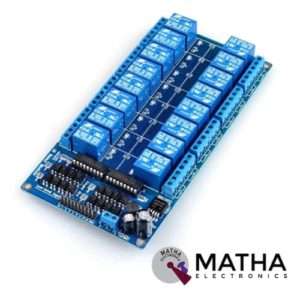
16 CHANNEL 12V RELAY
- 16 channel 12V relay board
- Operating voltage: 12V
- Supply current: 0.2 A
- Relay contact current capacity of 10A @250 V AC/10A@ 30V AC
- Optocoupler protection
- LED status indicates relay ON/OFF state.
- The 10-16 road can be any full-on/off or any road
- Common terminal(com) in each rely is user friendly and can be accessed by different signal
- Normally closed or normally open with each port
- Strong anti-jamming ability and stable performance
- The on-board power supply module doesn’t need any external power
- Dimension: 180*90*20mm
- Weight: 100gm

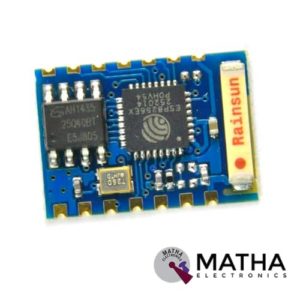
ESP8266 ESP – 03 WIFI Transreceiver Wireless Module
- Communication interface voltage: 3.3V
- Working current: 240mA(MAX)
- 802.11 b/g/n
- Wi-Fi Direct (P2P), soft-AP
- Integrated TCP/IP protocol stack
- Integrated TR switch, balun, LNA, power amplifier and matching network
- Integrated PLLs, regulators, DCXO and power management units
- +19.5dBm output power in 802.11b mode
- Power down leakage current of <10uA
- Integrated low power 32-bit CPU could be used as application processor
- SDIO 1.1/2.0, SPI, UART
- STBC, 1×1 MIMO, 2×1 MIMO
- A-MPDU & A-MSDU aggregation & 0.4ms guard interval
- Wake up and transmit packets in < 2ms
- Standby power consumption of < 1.0mW (DTIM3)
- SDIO 2.0, SPI, UART
- 32-pin QFN package
- Integrated RF switch, balun, 24dBm PA, DCXO, and PMU
- Integrated RISC processor, on-chip memory and external memory interfaces
- Integrated MAC/baseband processors
- Quality of Service management
- I2S interface for high fidelity audio applications
- On-chip low-dropout linear regulators for all internal supplies
- Proprietary spurious-free clock generation architecture
- Integrated WEP, TKIP, AES, and WAPI engines

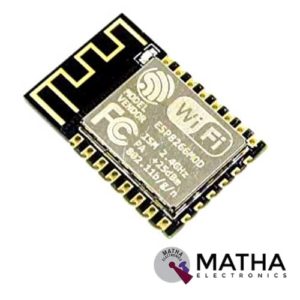
ESP8266 ESP-12F
- Communication interface voltage: 3.3V
- Working current: 240mA(MAX)
- Serial port baud rate: 115200 (default), can be modified to other values by AT command
- Serial communication format: 8N1
- Wireless Network Mode: station / softAP / SoftAP + station
- Wireless criteria: 802.11 b / g / n
- WIFI @ 2.4 GHz, support for WPA / WPA2 security mode
- +19.5dBm output power
- Compatible with ESP-12(ESP-202)
- It is very easy to develop projects with AT commands
- Surface Mount Package with 2mm Pitch Pads
- Mulitple GPIO’s for all your sensor needs
- Integrated TCP/IP protocol stac
- Integrated TR switch, balun, LNA, power amplifier and matching network
- Integrated PLL, regulators, DCXO and power management unit
- Power down leakage current of <10uA
- Integrated low power 32-bit CPU could be used as an application processor
- SDIO 1.1/2.0, SPI, UART
- STBC, 1×1 MIMO, 2×1 MIMO
- A-MPDU & A-MSDU aggregation & 0.4ms guard interval
- Wake up and transmit packets in < 2ms
- Standby power consumption of < 1.0mW (DTIM3)
- Both SMD and Inline package are available, and the pin pitch is 2.0mm.

ESP8266 WIFI Industrial stable version A full test board cloud function test Black board T5
- Support 802.11b / n / g wireless standard
- Independent development MCU platform
- High cost performance
- Support UART / GPIO data communication interface
- Support STA / AP / STA + AP coexistence mode of operation
- Support SmartLink intelligent networking (APP)
- Support wireless upgrade firmware
- Support WPS network configuration
- Built-in onboard antenna &Temperature and humidity sensor
- RGB three-color light adjustable
- Provide rich AT command set configuration
- Free AiCloud cloud service for debugging
- 3 AA batteries / 5V adapter power supply
- Size: 61.6mm x 56.2mm;
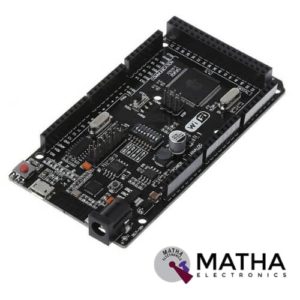
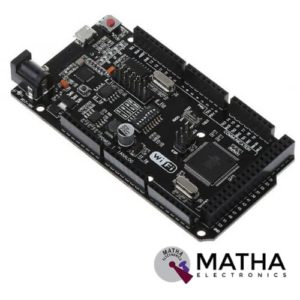
Mega R3 +WiFi ATmega2560+ESP8266 Module CH340G Compatible For Arduino Mega
- Microcontroller:ATmega2560
- IC Wi-Fi : ESP8266
- USB-TTL converter: CH340G
- Power Out: 5V-800mA
- Power Input USB: 5V (500mA max.)
- Power Input VIN/DC Jack: 9-24V
- Power Consumption: 5V 800mA
- Logic Level: 5V
- Wi-Fi 802.11 b/g/n 2.4 GHz
- USB: Micro USB
- Clock Frequency: 16MHz
- Operating Supply Voltage: 5V
- Digital I/O: 54
- Analog I/O: 16
- Memory Size: 256kb
- Data RAM Type/Size: 8Kb
- Data ROM Type/Size: 4Kb
- Interface Type: SerialOTA
- Operating temperature:−40С°/+125С°
- Build in external antenna
- Dimensions:53.361×101.86mm


NODEMCU ESP8266-12 USB CH340
- 11 b/g/n Wi-Fi Direct (P2P), soft-AP
- Power input: 4.5V to 9V (10VMAX), USB-powered
- Transfer rate: 110-460800bps
- Support UART / GPIO data communication interface
- Support Smart Link Smart Networking
- Working temperature: -40°C ~ + 125°C
- Drive Type: Dual high-power H-bridge
- Don’t need to download resetting
- A great set of tools to develop ESP8266
- Flash size: 4MByte
- Integrated TCP/IP protocol stack
- Use CH340G to replace the CP2102.
- Integrated low power 32-bit CPU
- Advanced API for hardware IO, which can dramatically reduce the redundant work for configuring and manipulating hardware.
- Integrated TR switch, balun, LNA, power amplifier, and matching network
- Integrated PLL, regulators, DCXO, and power management units
- On-board USB to serial chip to easily program and upload codes from the Arduino IDE
- Embeds logic level converter circuits
- Has onboard 3.3V regulator to ensure enough power to function as your go-to WiFi chip!
- Easy access to the GPIO pins for easy prototyping


NODMCU Esp8266-12 USB CP2102
- 11 b/g/n Wi-Fi Direct (P2P), soft-AP
- Integrated TCP/IP protocol stack
- CP2102 Serial / USB Chip
- +19.5dBm output power in 802.11b mode
- 4MB Flash Memory
- Integrated low power 32-bit CPU
- SDIO 1.1 / 2.0, SPI, UART
- Dimensions – 49 x 24.5 x 13mm
- Integrated TR switch, balun, LNA, power amplifier and matching network
- Integrated PLLs, regulators, DCXO and power management units
- On board USB to serial chip to easily program and upload codes from the Arduino IDE
- Embeds logic level converter circuits
- Has on board 3.3V regulator to ensure enough power to function as your go-to WiFi chip!
- Easy access to the GPIO pins for easy prototyping
- ESP-12E Processor
- Easy to use breadboard friendly form factor
- Voltage Regulator / Converter, excellent DC to DC conversion, super efficientESP-12E Processor
- Easy to use breadboard friendly form factor


Wemos D1 WiFi Esp8266 Development Board Uno Compatible Program
- Microcontroller: ESP-8266EX
- Operating Voltage: 3.3 V
- Digital I/O Pins: 11
- Analog Input Pins 1(Max input: 3.2V)
- Clock Speed: 80MHz/160MHz
- Flash: 4M bytes
- Good stability.
- 11 digital input/output pins, all pins have interrupt/PWM/I2C/one-wire supported(except for D0)
- 1 analog input(3.2V max input)
- Micro USB connection
- Compatible with Arduino
- Support OTA wireless uploading
- On-Board Switching Power Supply:
- Micro USB connection
- Compatible with Arduino
- Support OTA wireless uploading
Reviews
There are no reviews yet.