
I am text block. Click edit button to change this text. Lorem ipsum dolor sit amet, consectetur adipiscing elit. Ut elit tellus, luctus nec ullamcorper mattis, pulvinar dapibus leo.
-23%Sold out



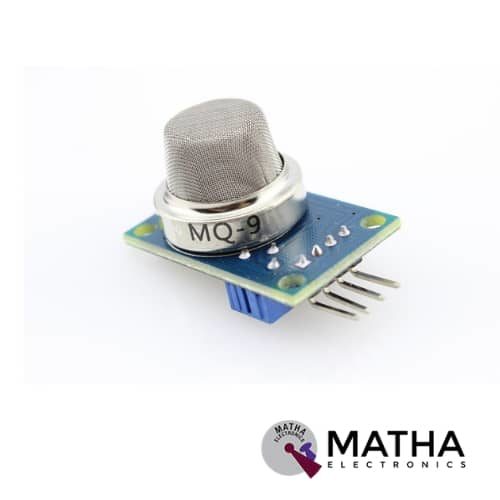
MQ-9 Carbon Monoxide, Methane and LPG Gas Sensor Module
Original price was: ₹250.00.₹200.00Current price is: ₹200.00. inc. GST
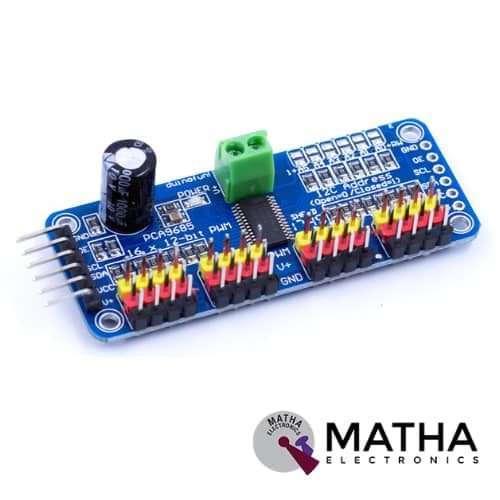
16-Channel 12-bit PWM/Servo Driver I2C interface PCA9685 for Arduino Raspberry Pi
Original price was: ₹700.00.₹600.00Current price is: ₹600.00. inc. GST
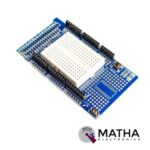
Prototype Shield V3.0 For Arduino Mega with breadboard
Original price was: ₹650.00.₹500.00Current price is: ₹500.00. inc. GST
- The shield can support being fully assembled with Arduino MEGA
- Support soldering components directly on this shield
- Support sticking the mini breadboards on this shield
- Reset button up top
- Mainboard aureate quadrate
- With SOP28 SMT components encapsulation
- With PWR & STAT indicator
- Breadboard Points : 170
- Shield Size (mm) : 102×56
- Breadboard Size (mm) : 48×34
- Weight (gm) :35
Out of stock
Description
The Protosheild is intended to make bespoke circuits simple. An Arduino Mega Prototype Shield V3.0 that allows you to create additional applications without the use of a breadboard. This Prototyping Shield was created to make prototyping with an Arduino or an Arduino similar board as simple as possible. With the Arduino, the prototype boards were utilised to develop bespoke circuits based on the user’s requirements. The Prototype Shield V3.0 For Arduino Mega is a solderless prototyping shield with a tiny breadboard on the proto region. So we can glue the components on this shield, and setting up a circuit on the tiny breadboard is as simple. This shield board also has connections for all I/O pins as well as room for through-hole and surface-mount integrated circuits. This is a convenient way to make your custom circuit and a module.
The prototype V3 gold PCB sink method is used in the Prototype Shield V3.0 for Arduino Mega with breadboard. In addition, the mainboard has a tiny golden square pad spacing. As a result, the welding components become more and more convenient. Furthermore, the encapsulation of SOP28 SMT components makes it easier for Arduino electronic enthusiasts to use, since they are not directly constrained by inserted components.
The maximum length and breadth of the Proto Shield PCB are 2.7 and 2.1 inches, respectively, for this Prototype Shield V3.0. The shield may be attached to a surface or case using three screw holes on the shield board. The distance between digital pins 7 and 8 is 160 mil (12:16 “), which is not an even multiple of the other pins’ 100-mile distance. It also has a reset button and two LEDs that display the board’s power and condition.
Reviews (0)
Shipping & Delivery

Related products

37 IN 1 Sensor Kit For Arduino
- For beginners who are interested in Arduino
- A complete set of Arduino’s most common and useful electronic components
- Infrared sensor receiving module
- Laser sensor module
- Temperature and humidity sensor module
- Infrared sensor module
- 5v relay module
- Obstacle avoidance sensor module. For beginners who are interested in Arduino
- A complete set of Arduino’s most common and useful electronic components
- Packaging Type: Box
- Material: Circuit board
- Dimensions: 98 x 0.59 x 0.24 inch
- Weight: 428 g
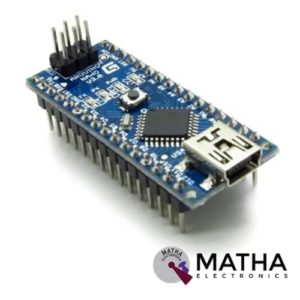

Arduino Nano V3.0
- Microcontroller: Atmel ATmega328 SMD Package
- Operating Voltage (logic level): 5 V
- Input Voltage (recommended): 7-12 V
- Input Voltage (limits): 6-20 V
- Digital I/O Pins: 14 (of which 6 provide PWM output)
- Analog Input Pins: 8
- DC Current per I/O Pin: 40 mA
- Flash Memory: 32 KB (of which 2KB used by bootloader)
- SRAM: 2 KB
- EEPROM: 1 KB
- Clock Speed: 16 MHz
- Automatic reset during program download
- Power OK blue LED
- Green (TX), red (RX) and orange (L) LED
- Auto-sensing/switching power input
- Small mini-B USB for programming and serial monitor
- ICSP header for direct program download
- Standard 0.1” spacing DIP (breadboard friendly)
- Manual reset switch
- Dimensions: 0.70” x 1.70”


CAN Bus Shield
- Implements CAN V2.0B at up to 1 Mb/s
- Industrial standard 9 pin sub-D connector
- OBD-II and CAN standard pinout selectable.
- Changeable chip select pin
- Changeable CS pin for TF card slot
- Changeable INT pin
- Screw terminal that easily to connect CAN_H and CAN_L
- Arduino Uno pin headers
- Grove connectors (I2C and UART)
- SPI Interface up to 10 MHz
- Standard (11 bit) and extended (29 bit) data and remote frames
- Two receive buffers with prioritized message storage


ESP8266 WIFI Shield
- Operating voltage 5V (supplied from the Arduino Board)
- Connection via: 802.11b/g networks
- Encryption types: WEP and WPA2 Personal
- Connection with Arduino on SPI port
- on-board micro SD slot
- ICSP headers
- FTDI connection for serial debugging of WiFi shield
- Mini-USB for updating WiFi shield firmware
- 32-bit RISC architecture
- The processor can operate at 80MHz / 160MHz
- 32MB flash memory
- 64kB for instructions
- 96kB for data
- Operates in AP, Station or AP + Station mode
- It has 11 digital pins
- It has 1 analogue pin with 10-bit resolution
- Digital pins except the D0 have interrupts, PWM, I2C and one wire
- Programmable through USB or WiFi (OTA)
- Compatible with Arduino IDE
- Compatible with modules and sensors used in Arduino
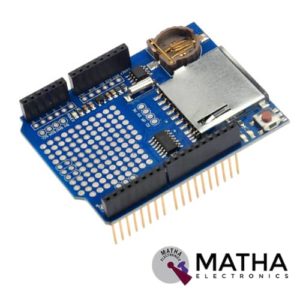

SD Card shield V4.0 for Arduino UNO
- Standard SD card, SDHC card and TF card compatible
- 3.3v and 5v logical voltage compatible
- 2.6-3.6v DC power supply
- UART Grove & I2C connection compatible
- Fully supported SD Library
- Minimal number of SPI port
- Jumpers provided for configuring Arduino SPI port pins
- Onboard toggle switch for SD card select type
- Truly stackable
- Prototype expand Library support
- Size: 53mm x 47mm
- Weight: 35g

STM32 Nucleo-64 development board with STM32F103RB MCU, supports Arduino and ST morpho connectivity
- STM32 microcontroller with LQFP64 package
- Two types of extension resources
- mbed-enabled (mbed.org)
- On-board ST-LINK/V2-1 debugger/programmer with SWD connector
- Flexible board power supply
- Three LEDs
- Two push buttons: USER and RESET
- USB re-enumeration capability: three different interfaces supported on USB
- Comprehensive free software HAL library including a variety of software examples
- Supported by wide choice of Integrated Development Environments (IDEs) including IAR, Keil, GCC-based IDEs
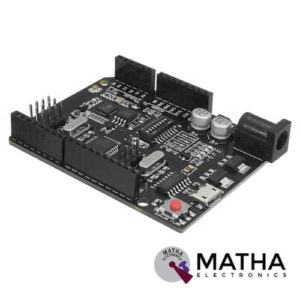

UNO R3 +WiFi ATmega328P+ESP8266 Module CH340G Compatible For Arduino Uno
- Microcontroller: ATmega328IC
- Wi-Fi: ESP8266
- USB-TTL converter: CH340G
- Power Output: 5V-800mA
- Power input USB: 5V (500mA max.)
- Power input VIN/DC Jack: 9-24V
- Power Consumption: 5V 800mA
- Logic Level: 5V
- WiFi: 802.11 b/g/n 2.4 GHz
- USB type: Micro USB
- USB Clock Frequency: 16MHz
- Operating Supply Voltage: 5V
- Digital I/O Pins: 14
- Analog I/O pins: 6
- Memory Size: 32Mb
- Interface Type: serial
- Operating temperature: −40С°/+125С°
- Dimensions (L×W)mm: 53.34×68.58
Reviews
There are no reviews yet.