
I am text block. Click edit button to change this text. Lorem ipsum dolor sit amet, consectetur adipiscing elit. Ut elit tellus, luctus nec ullamcorper mattis, pulvinar dapibus leo.
-17%Sold out
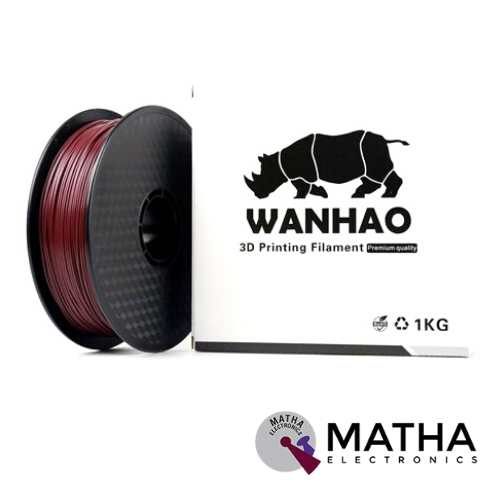
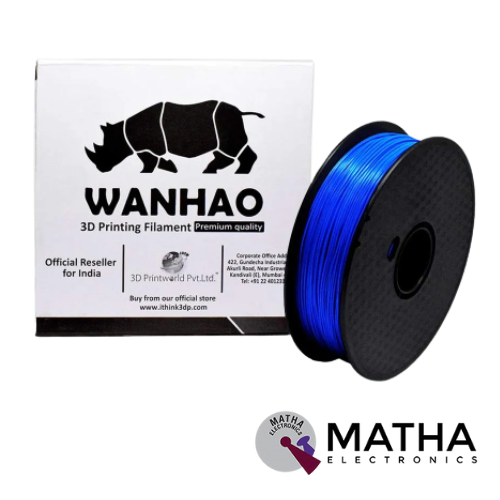
1.75mm PLA 3D Printer Filament Translucent Blue Wanhao
Original price was: ₹1,800.00.₹1,500.00Current price is: ₹1,500.00. inc. GST
Duplicator i3 V2 3D Printer Wanhao
Original price was: ₹42,000.00.₹40,000.00Current price is: ₹40,000.00. inc. GST
1.75mm PLA 3D Printer Filament Brown Wanhao
Original price was: ₹1,800.00.₹1,500.00Current price is: ₹1,500.00. inc. GST
- Material: PLA
- Diameter: 1.75 mm
- 3D Printing Material
- Suitable for printing artworks and crafts
- PLA Filament
- Easy to move the supporting material
- Transparent colour, Eco-friendly
- Diameter Accuracy: 1.75mm
- Roundness Accuracy: +/- 0.5mm +/- 0.5mm
- Density: 1.31g/cm3 1.01g/cm3
- Melt Point: 210°C 220°C
- Outer Diameter : 200 mm Hub Diameter : 32 mm
- Packaging Vacuum-sealed with desiccant to protect filament from humidity
- Extrusion Speed Tested up to 200mm/s
- Diameter tolerances of ± 0.1mm checked with laser monitor
- Smooth surface with even roundness
- Lower melting temperature
- Good flow properties
- Little odor development
- Less danger of clogging the nozzle, compared to ABS
- Compatible with almost all 1.75mm FDM printers
- No heating bed necessary
- High quality means less waste
- Easy to use
Out of stock
Description
This 1.75mm PLA 3D Printer Filament Brown Wanhao comes in 1 Kg (2.2 lbs) spool of 1.75mm PLA filament. PLA, also known as Polylactic Acid is the most commonly used material for 3d printing, mainly due to its Low Warping and odorless features. PLA defined as a biodegradable material made from corn starch and the highest consumed Bioplastic in terms of Volume, used in the world. It is quite easy to process while manufacturing compared to traditional plastics. It operates at a printing Temperature of 190 – 220 Degrees C. PLA, designed as a biodegradable material performs much better for the environment, especially compared to petrochemical-based alternatives (such as ABS). PLA highly recommended as the default printing material due to its high strength and minimal warping. It offers a wide range of applications in the field of 3D Printing Filament for Desktop 3D Printers.
PLA are available in a wide range of colors and is glossy and marginally translucent. It features a lower melting point, less shrinkage, and is non-toxic. Thus making it a perfect material for everyday 3d printing which is compatible with almost all printers. Moreover, PLA provides constant diameter, thereby offers great finishing in prints. Variation in filament diameter results in poor surface quality (primarily on vertical sections) because it produces unwarranted and uncontrollable fluctuations in extrusion rates.
Recommended temperatures when used with Wanhao 3D printers:
- First Layer: 210 ° C
- Printing temperature: 200 ° C
- Raft temperature: 190 ° C
- Heating bed temperature: 45-60 ° C
Reviews (0)
Shipping & Delivery

Related products

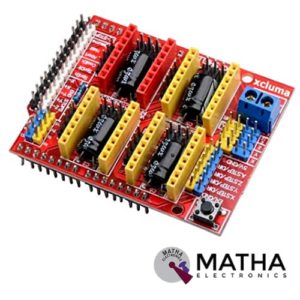

Arduino CNC Shield v3 Engraving Machine/3D Printer/A4988 driver GRBL compatible
- Coolant enable
- Uses removable Pololu A4988 compatible stepper drivers. (A4988, DRV8825, and others) (Not Included)
- Jumpers to set the Micro-Stepping for the stepper drivers. (Some drivers like the DRV8825 can do up to 1/32 micro-stepping )
- Compact design.
- Stepper Motors can be connected with 4 pin Molex connectors or soldered in place.
- Runs on 12-36V DC. (At the moment only the Pololu DRV8825 drivers can handle up to 36V so please consider the operation voltage when powering the board.)
- Please note that this is an unassembled kit and needs soldering.
- Latest Arduino CNC Shield Version 3.10
- GRBL 0.9 compatible. (Open source firmware that runs on an Arduino UNO that turns G-code commands into stepper signals)
- PWM Spindle and direction pins
- 4-Axis support (X, Y, Z, A-Can duplicate X, Y, Z or do a full 4th axis with custom firmware using pins D12 and D13)
- 2 x End stops for each axis (6 in total)
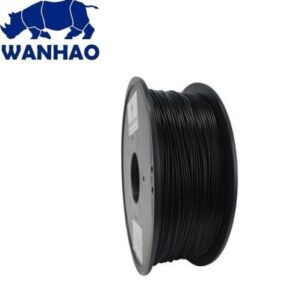
Black PLA 1.75 mm 1 Kg Filament For 3D Printer Wanhao
- Material: PLA
- Diameter: 1.75 mm
- Printing temperature: 190-225 ° C
- Heating bed temperature: 45 ° C - 60 ° C
- Density: 1.25 g / cm³-21.5 ° C
- Melt Flow Index: 5 (10min, 2.16kg)
- Shock resistance: 5 KJ / m²
- Dimensional accuracy: 1.70 ± 0.1 mm
- Filament weight: 1 kg
- Spool size: approx. 200 mm diameter, 50 mm spool mount, 65 mm height
- Diameter tolerances of ± 0.1mm checked with laser monitor
- Smooth surface with even roundness
- Lower melting temperature
- Good flow properties
- Little odor development
- Less danger of clogging the nozzle, compared to ABS
- Compatible with almost all 1.75mm FDM printers
- No heating bed necessary
- High quality means less waste
- Easy to use
- No heating bed necessary
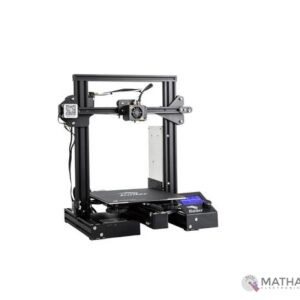
Creality 3D Ender-3 Pro V-slot Prusa I3 DIY 3D Printer
- Modelling technology: FDM ( Fused Deposition Modelling)
- Printing size: 220 x 220 x 250 mm
- Machine size: 440 x 410 x 465 mm
- Max traveling speed: 180mm / s
- Filament: 1.75 mm PLA, TPU, ABS, Gradient color, carbon fiber, etc.
- Input: AC 100 - 265V, 50 - 60Hz
- Output: DC 24V, 15 A, 360W
- Layer thickness: 0.1 - 0.4 mm
- Nozzle diameter: 0.4 mm
- Precision: ±0.1 mm
- File Format: STL, OBJ, G-Code
- Working mode: online or SD offline
- Max nozzle temperature: 255 Deg.C
- Max hotbed temperature: 110 Deg.C
- Bed Temp.: ≤110℃.
- Slice Software: Cura, Repetier-Host, Simplify3D.
- W: 6.9KG.
- W: 8.9KG.
- Package Size : 595*495*165mm. "
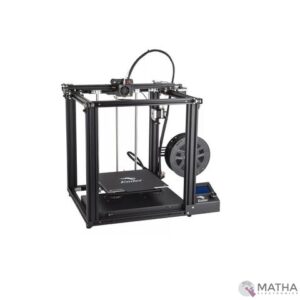
Creality 3D Ender-5 DIY 3D Printer Kit 220*220*300mm Printing Size
- Moulding Technology: FDM.
- Print Dimensions: 220*220*300mm.
- Print Speed: <180mm/s, Normal Printing Speed 40-80 mm/s.
- Print Accuracy: + - 0.1mm.
- Layers Thickness: 0.1-0.4mm.
- Nozzle Diameter: Standard 0.4mm. Convertible 0.2, 0.3mm.
- Nozzle Quantity: 1.
- Nozzle Temperature: <260 Degree C
- Hot Bed Temperature: <135 Degree C
- Working Modes: Online or TF Cards are printed offline.
- File Formats: STL, ODJ, AMF.
- Slicing Software: Cura, Repeti-Host, Simlify 3d.
- Power Parameters: Input:110v/220v. 50/60Hz. Output: DC 24V.
- Machine Power: 270W.
- Printing Materials: PLA, ABS, Soft Glue, Wooden, Copper Containing, Gradient, etc.
- Consumables Diameter: 1.75mm.
- Heating upto 100 deg C in 5 mins,
- Printing with High precision,
- Resume Printing after power-off,
- Soft Magnetic Stickers - Instead of traditional beauty paper & glue, easy to mold, model adhesion is good.
- Built-in Power Supply - 350w high-quality power supply, easy to achieve long time stable printing.
- Dual Y-Axis - synchronization, small moving quality, flexible & reliable.
- Down Shift Z-Axis - for smoother movement.
- Descartes Design - Down Shift Z-axis for smoother movement.
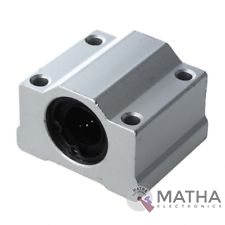

Stepper Motor Nema 23 kg 7.2 kg Dual shaft
- Rated Voltage: 6.6 V
- Current/ phase: 1A
- Resistance/ phase: 6.6ohms
- Inductance/ phase: 8.2 mH
- Holding Torque: 7.2 kg-cm
- of Leads - 6
- Rotor Inertia - 275
- Weight: 0.65kg
- Detent Torque: 0.36 kg-cm
- Step Angle - 1.8°
- Step Angle Accuracy - ±5% (full step, no load)
- Resistance Accuracy - ±10%
- Inductance Accuracy - ±20%
- Frame Size (mm) - 57x57
- Shaft Length (mm) - 20.6
- Shaft Diameter (mm) - 6.35
- Comparably more powerful than NEMA17 motors.
- Input pulse decides the rotation angle of the motor.
- High accuracy of around 3 to 5% a step.
- Provides good starting, stopping and reversing.
- Control of this motor is less costly because of exclusion of complex control circuitry.
- The speed is proportional to the frequency of the input pulses.
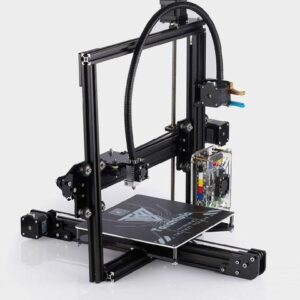
TEVO Tarantula I3 Aluminium Extrusion 3D Printer kit
- Layer resolution of 50 microns.
- MAX Printing Speed: 150 mm/s.
- Build size: 200X 200 X 200mm.
- Full Metal Bowden Extruder.
- Material type: PLA, ABS, PETG, Wood, PVA and Flexible Filaments (With Pro Metal Extruder).
- Material specifications 1.75mm in diameter.
- Positioning accuracy: Z 0.04mm, XY 0.012mm.
- Printing Color: Single color.
- Nozzle diameter: 0.4mm.
- Recommended extruder temperature: 210°C (the maximum can be set to 260°C).
- Heating plate temperature: 60-120°C (proper winter warming and summer appropriate cooling).
- Best ambient temperature: +/-25°C.
- Power requirements: 220V, 250W, 50Hz, 0.89A.
- Connection: TF card or USB.
- The file print format: STL, G-Code.
- Compatibility: Windows, Linux, Mac.
- CE, FCC specifications: CE, FC, ROHS.
- No Printed Parts.
- Easy Assembling.
- High Performance.
- 2020 and 2040 Aluminium Frames.
- Equipment size: 430 X 440 X400mm.
- Package size: 440X 340X 190m.
- Device weight: 7.5kg.
Reviews
There are no reviews yet.