
I am text block. Click edit button to change this text. Lorem ipsum dolor sit amet, consectetur adipiscing elit. Ut elit tellus, luctus nec ullamcorper mattis, pulvinar dapibus leo.
-10%
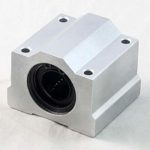
SC10UU 10mm Linear Motion Bearing Slide Bushing Block
Original price was: ₹300.00.₹250.00Current price is: ₹250.00. inc. GST
Black PLA 1.75 mm 1 Kg Filament For 3D Printer Wanhao
Original price was: ₹1,800.00.₹1,500.00Current price is: ₹1,500.00. inc. GST
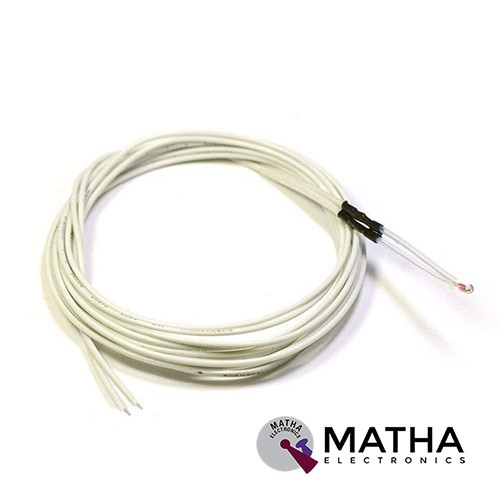
100K ohm NTC 3950 Thermistor/Temperature Sensor for Reprap 3D printer Extruder
Original price was: ₹100.00.₹90.00Current price is: ₹90.00. inc. GST
- High-temperature Teflon wire temperature: 200 degrees
- Nominal resistance R25 (25 ℃): 100k
- Resistance accuracy: ± 1%
- B value R25 / 50: 3950k
- B value accuracy: ± 1%
- Operating temperature range: -40 ℃ ~ +300 ℃
- Dissipation power factor: ≥ 5 mW / ℃ (static air)
- Thermal time constant: ≤ 7S (static air)
- Maximum rated power: 45mW
- Wiring length: 1 meter
- Material: glass glaze film
Description
This 100K ohm NTC 3950 Thermistor/Temperature Sensor designed specifically for Reprap 3D printer Extruder or Heated Bed. This thermistor Conviniently pre-wired with 1 meter long high-temperature PTFE insulated wiring. Moreover, this offers a wide range of applications in 3d printing and often used with a heated bed or extruder. The Stainless steel tube encapsulation protects the probe from waterproof moistureproof thus prevents rust. This compact-sized, easy to install temperature sensor fairly precise ±0.5°C over much of the range.
Hence the temperature can be measured with a precision of 0.0625 C. It can give output is digitally accurate to 12 bits of precision from the onboard digital-to-analog converter. Here the NTC thermistor made up of think material with the heating rod made up of high-quality material. This temperature sensor module offers high sensitivity, and has a swift response, 1 percent, with a resistance value at 25°c= 100k. It uses adaptive thermosensitive material with high-quality wiring insulation with high temperature Teflon/ PTFE
Reviews (0)
Shipping & Delivery

Related products
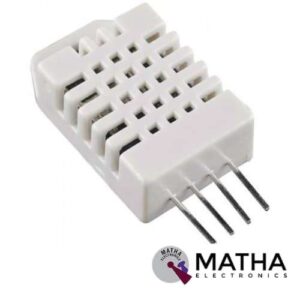
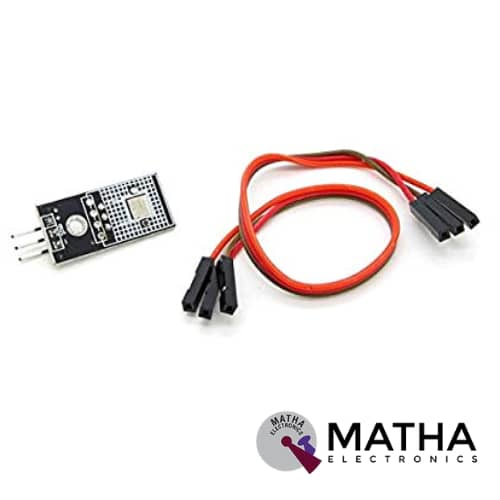
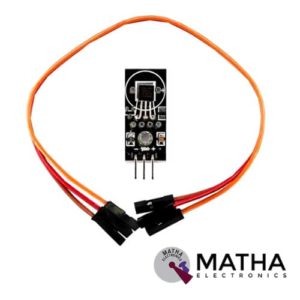
DS18B20 MODULE
- Resolution: 9bits to 12bits (Selectable)
- Supply Voltage (V): 3 to 5.5
- Temperature Range(°C): -55 to +125
- Measuring Accuracy(°C): ±0.5
- Uses 1-Wire interface- requires only one digital pin for communication
- Unique 64 bit ID burned into the chip
- Multiple sensors can share one pin
- Maximum conversion time and response: 750 ms
- Multidrop capability simplifies distributed temperature sensing applications
- Requires no external components
- Digital signal output
- 18B20 Temperature Sensor Chip
- Send data via a pin
- User-definable nonvolatile (NV) alarm settings
- Dimension: 19*15*6cm
- Weight: 9gm


DS18B20 PROBE
- Usable temperature range: -55 to 125°C (-67°F to +257°F)
- 9 to 12-bit selectable resolution
- Uses 1-Wire interface- requires only one digital pin for communication
- Unique 64 bit ID burned into a chip
- Multiple sensors can share one pin
- ±0.5°C Accuracy from -10°C to +85°C
- Temperature-limit alarm system
- Query time is less than 750ms
- Usable with 3.0V to 5.5V power/data
- Each pin uses a heat-shrinkable tube to prevent short circuit, internal sealing glue.
- Stainless steel tube encapsulation waterproof moistureproof prevents rust.
- Stainless steel tube 6mm diameter by 30mm long.
- Contains DS18B20 temperature sensor.
- Uses 1-Wire interface- requires only one digital pin for communication.
- Unique 64 bit ID burned into the chip.
- Multiple sensors can share one pin.
- Temperature-limit alarm system.
- Without the external components, the unique single bus.
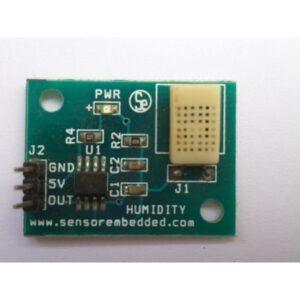
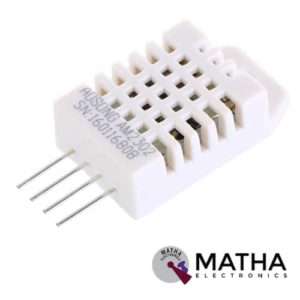
HR202 Digital Temperature Humidity Sensor
- Working Voltage: 3.3 V-5 V
- Output AO - analog output, DO - digital output
- High-quality HR202 humidity sensor
- Comparator output signal is clean, good waveform, driving ability, more than 15mA
- Adjust the temperature distribution position detection threshold
- The output form: DO digital switching outputs ( 0 and 1 ) and AO analog voltage output
- A fixed bolt holes for easy installation
- Using a wide voltage LM393 comparator
- PCB Board Size: 3.2 cm x 1.4 cm

NEMA 23 10.1 kg-cm
- Operating Voltage : 2.3 Volts
- Step Angle : 1.8°
- Holding Torque : 10.1 kg-cm
- Supply Current (A) : 2.8 Ampere/Phase
- Number of Leads : 4
- Inductance : 2.2 mH/Phase
- Resistance : 0.83 Ohm
- Rotor Inertia : 275 gm-cm2
- Weight (gm) : 650
- Detent Torque (kg-cm) : 0.36
- Frame Size (mm) : 57 x 57
- Inductance Accuracy : ±20%
- Resistance Accuracy : ±10%
- Shaft Diameter (mm) : 6.35
- Shaft Length (mm) : 20.6
- Step Angle Accuracy : ±5%
- Comparably more powerful than NEMA17 motors.
- The input pulse decides the rotation angle of the motor.
- High accuracy of around 3 to 5% a step.
- It provides good starting, stopping, and reversing.
- Control of this motor is less costly because of the exclusion of complex control circuitry.
- The speed is proportional to the frequency of the input pulses.

NEMA 23 18.9 kg-cm
- Step Angle : 1.8 °
- Holding Torque : 18.9 kg-cm
- Operating Voltage : 3.2 Volts
- Supply Current (A) : 2.8 A/Phase
- No. of Leads : 4
- Inductance: 3.6 mH/Phase
- Resistance : 1.13 O/Phase
- Rotor Inertia : 480 gm-cm2
- Inductance Accuracy : ±20%
- Resistance Accuracy : ±10%
- Shaft Diameter (mm) : 6.35
- Shaft Length (mm) : 20.6
- Cable Length: 30 CM
- Comparably more powerful than NEMA17 motors.
- Input pulse decides the rotation angle of the motor.
- High accuracy of around 3 to 5% a step.
- Provides good starting, stopping and reversing.
- Control of this motor is less costly because of exclusion of complex control circuitry.
- The speed is proportional to the frequency of the input pulses.

Stepper Motor Nema 23 kg 7.2 kg Dual shaft
- Rated Voltage: 6.6 V
- Current/ phase: 1A
- Resistance/ phase: 6.6ohms
- Inductance/ phase: 8.2 mH
- Holding Torque: 7.2 kg-cm
- of Leads - 6
- Rotor Inertia - 275
- Weight: 0.65kg
- Detent Torque: 0.36 kg-cm
- Step Angle - 1.8°
- Step Angle Accuracy - ±5% (full step, no load)
- Resistance Accuracy - ±10%
- Inductance Accuracy - ±20%
- Frame Size (mm) - 57x57
- Shaft Length (mm) - 20.6
- Shaft Diameter (mm) - 6.35
- Comparably more powerful than NEMA17 motors.
- Input pulse decides the rotation angle of the motor.
- High accuracy of around 3 to 5% a step.
- Provides good starting, stopping and reversing.
- Control of this motor is less costly because of exclusion of complex control circuitry.
- The speed is proportional to the frequency of the input pulses.

Reviews
There are no reviews yet.