
I am text block. Click edit button to change this text. Lorem ipsum dolor sit amet, consectetur adipiscing elit. Ut elit tellus, luctus nec ullamcorper mattis, pulvinar dapibus leo.
-14%


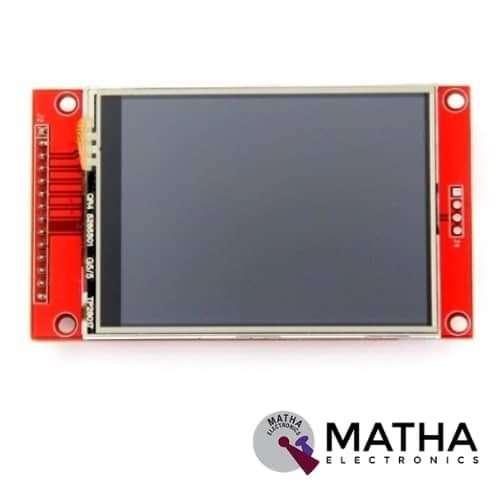
2.8 inch SPI Screen Module TFT Interface 240 x 320 without Touch
Original price was: ₹1,725.00.₹1,500.00Current price is: ₹1,500.00. inc. GST
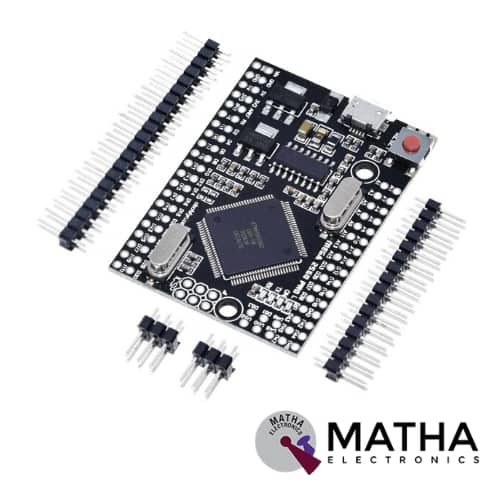
Arduino Mega Pro Mini CH340 Development Board
Original price was: ₹1,675.00.₹1,600.00Current price is: ₹1,600.00. inc. GST
ESP32 SIM800L Wireless Communication Module
Original price was: ₹2,555.00.₹2,200.00Current price is: ₹2,200.00. inc. GST
- Chipset: ESPRESSIF-ESP32 240MHz Xtensa® dual-core 32-bit LX6 microprocessor
- FLASH: QSPI flash 4MB / PSRAM 8MB
- SRAM: 520 kB SRAM
- Modular interface: UART, SPI, SDIO, I2C, LED PWM, TV PWM, I2S, IRGPIO, capacitor touch sensor, ADC, DACLNA pre-amplifier
- SIM card: Only supports Nano SIM card
- Power Supply: USB 5V/1A
- WIFI Protocol : 802.11 b/g/n
- Communication distance: 300m
- Bluetooth Protocol: Bluetooth v4.2BR/EDR and BLE standard
- Dimensions: 78.83mm*28.92mm*8.06mm
- Weight: 12 grams
Description
This esp32 sim800l wireless communication module. The wireless module is equipped with an ESPRESSIF-ESP32 dual-core 32-bit LX6 CPU running @ 240MHz. This communication module requires a Type C connector and a 5V/1A power source. It has Bluetooth v4.2BR/EDR and BLE standard protocol, as well as 802.11 b/g/n wifi protocol.
The cloud server development and SDK for user firmware development are both supported by the wireless communication module. This wireless communication module is compatible with the SIM800L GPRS Module. This communication module may also be used as a development board for the ESP32 (ESP-ROVER-B 8MB PSRAM). UART, SPI, SDIO, I2C, LED PWM, TV PWM, I2S, IRGPIO, capacitor touch sensor, ADC, DACLNA pre-amplifier module interface are all used in this wireless module. It uses a 2.7V-3.6V operating voltage and accepts a Nano SIM card. The ESP32-based wireless communication module, on the other hand, is ideal for IoT applications. Because it’s a USB Type C pluggable board with a LiPo Battery Charging Circuit and Connector aboard.
The SIM800L GSM/GPRS module, which is a small GSM modem, may be used in a variety of IoT projects. This SIM800L GSM/GPRS module works in the same way as a regular cell phone. It can send and receive SMS text messages, make and receive phone calls, and connect to the internet through GPRS and TCP/IP, among other things. Furthermore, the module supports a quad-band GSM/GPRS network, indicating that it may be used almost anywhere on the planet.
Reviews (0)
Shipping & Delivery

Related products

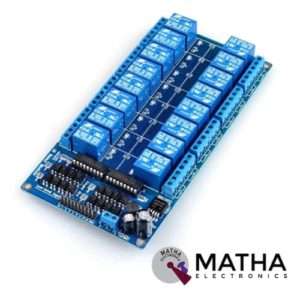
16 CHANNEL 12V RELAY
- 16 channel 12V relay board
- Operating voltage: 12V
- Supply current: 0.2 A
- Relay contact current capacity of 10A @250 V AC/10A@ 30V AC
- Optocoupler protection
- LED status indicates relay ON/OFF state.
- The 10-16 road can be any full-on/off or any road
- Common terminal(com) in each rely is user friendly and can be accessed by different signal
- Normally closed or normally open with each port
- Strong anti-jamming ability and stable performance
- The on-board power supply module doesn’t need any external power
- Dimension: 180*90*20mm
- Weight: 100gm


2 CHANNEL 5V RELAY
- High current relay
- Two LED S to indicate relays ON/OFF status
- Low-level trigger expansion board
- Opto isolation circuitry
- Works with logic level signal 3.3V or 5V devices
- Can be used as normally open (NO) or normally closed (NC)
- Back EMF protection
- Ensures diode current protection
- AC control voltage: 250v @mx10A
- DC control voltage: 30V @max 10A
- Easy installation and fixing

4*4 MATRIX KEYPAD
The maximum voltage across each button: 24v
- The maximum current across each button: 3mA
- Easy communication with any microcontroller
- Ultra-thin design
- Adhesive backing provides easy integration
- High price-performance ratio
- Allows microcontroller to scan 8 output pins to check which 16 button
- Long life
- Maximum operating temperature: 0 degrees to 50 degrees Celsius
- Dimension: 70*77*1mm
- Weight: 7.5gm
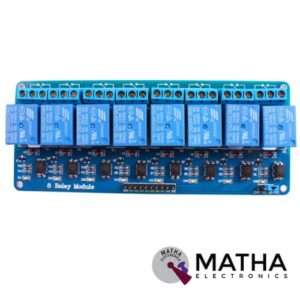
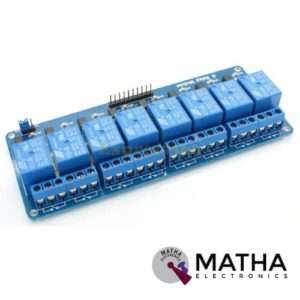
8 CHANNEL 5V RELAY
- Relay operating voltage: 5V
- 8 channel
- High impedance controller pin
- One normally closed contact and one normally opened
- Useful for appliances control
- Power supply indicator and control indicator lamp
- Pull-down circuit to avoid malfunction
- Can control both DC and AC to 220v AC load
- Works with both 3.3 V and 5 V logic with the less current drive
- 3 terminals per SPDT relay
- Standard interface can be directly controlled by a microcontroller like Arduino, 8051, AVR, PIC, DSP, ARM, MSP430, TTL logic
- Dimension: 7*6.4*1 inch

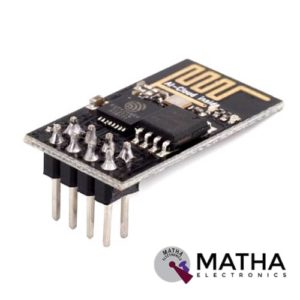
ESP8266 ESP – 01
- 11 b/g/n
- Wi-Fi Direct (P2P), soft-AP
- Integrated TCP/IP protocol stack
- Integrated TR switch, balun, LNA, power amplifier and matching network
- Integrated PLLs, regulators, DCXO and power management units
- +19.5dBm output power in 802.11b mode
- Power down leakage current of <10uA
- 1MB Flash Memory
- Dimensions: 25 x 15 x 11 mm (LxWxH)
- PCB Thickness: 1mm
- Weight: 2 gm
- SDIO 1.1 / 2.0, SPI, UART
- STBC, 1×1 MIMO, 2×1 MIMO
- A-MPDU & A-MSDU aggregation & 0.4ms guard interval
- Wake up and transmit packets in < 2ms
- Standby power consumption of < 1.0mW (DTIM3)
- Integrated low power 32-bit CPU could be used as an application processor
- A-MPDU & A-MSDU aggregation & 0.4ms guard interval
- Wake up and transmit packets in < 2ms
- Standby power consumption of < 1.0mW (DTIM3)

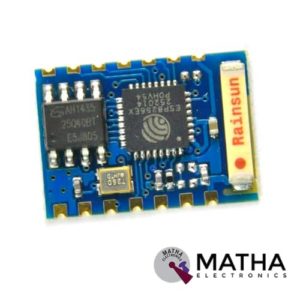
ESP8266 ESP – 03 WIFI Transreceiver Wireless Module
- Communication interface voltage: 3.3V
- Working current: 240mA(MAX)
- 802.11 b/g/n
- Wi-Fi Direct (P2P), soft-AP
- Integrated TCP/IP protocol stack
- Integrated TR switch, balun, LNA, power amplifier and matching network
- Integrated PLLs, regulators, DCXO and power management units
- +19.5dBm output power in 802.11b mode
- Power down leakage current of <10uA
- Integrated low power 32-bit CPU could be used as application processor
- SDIO 1.1/2.0, SPI, UART
- STBC, 1×1 MIMO, 2×1 MIMO
- A-MPDU & A-MSDU aggregation & 0.4ms guard interval
- Wake up and transmit packets in < 2ms
- Standby power consumption of < 1.0mW (DTIM3)
- SDIO 2.0, SPI, UART
- 32-pin QFN package
- Integrated RF switch, balun, 24dBm PA, DCXO, and PMU
- Integrated RISC processor, on-chip memory and external memory interfaces
- Integrated MAC/baseband processors
- Quality of Service management
- I2S interface for high fidelity audio applications
- On-chip low-dropout linear regulators for all internal supplies
- Proprietary spurious-free clock generation architecture
- Integrated WEP, TKIP, AES, and WAPI engines

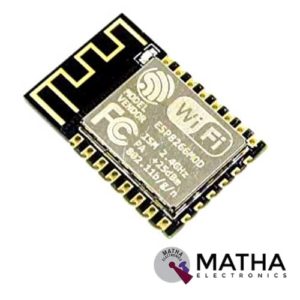
ESP8266 ESP-12F
- Communication interface voltage: 3.3V
- Working current: 240mA(MAX)
- Serial port baud rate: 115200 (default), can be modified to other values by AT command
- Serial communication format: 8N1
- Wireless Network Mode: station / softAP / SoftAP + station
- Wireless criteria: 802.11 b / g / n
- WIFI @ 2.4 GHz, support for WPA / WPA2 security mode
- +19.5dBm output power
- Compatible with ESP-12(ESP-202)
- It is very easy to develop projects with AT commands
- Surface Mount Package with 2mm Pitch Pads
- Mulitple GPIO’s for all your sensor needs
- Integrated TCP/IP protocol stac
- Integrated TR switch, balun, LNA, power amplifier and matching network
- Integrated PLL, regulators, DCXO and power management unit
- Power down leakage current of <10uA
- Integrated low power 32-bit CPU could be used as an application processor
- SDIO 1.1/2.0, SPI, UART
- STBC, 1×1 MIMO, 2×1 MIMO
- A-MPDU & A-MSDU aggregation & 0.4ms guard interval
- Wake up and transmit packets in < 2ms
- Standby power consumption of < 1.0mW (DTIM3)
- Both SMD and Inline package are available, and the pin pitch is 2.0mm.


NODEMCU ESP8266-12 USB CH340
- 11 b/g/n Wi-Fi Direct (P2P), soft-AP
- Power input: 4.5V to 9V (10VMAX), USB-powered
- Transfer rate: 110-460800bps
- Support UART / GPIO data communication interface
- Support Smart Link Smart Networking
- Working temperature: -40°C ~ + 125°C
- Drive Type: Dual high-power H-bridge
- Don’t need to download resetting
- A great set of tools to develop ESP8266
- Flash size: 4MByte
- Integrated TCP/IP protocol stack
- Use CH340G to replace the CP2102.
- Integrated low power 32-bit CPU
- Advanced API for hardware IO, which can dramatically reduce the redundant work for configuring and manipulating hardware.
- Integrated TR switch, balun, LNA, power amplifier, and matching network
- Integrated PLL, regulators, DCXO, and power management units
- On-board USB to serial chip to easily program and upload codes from the Arduino IDE
- Embeds logic level converter circuits
- Has onboard 3.3V regulator to ensure enough power to function as your go-to WiFi chip!
- Easy access to the GPIO pins for easy prototyping
Reviews
There are no reviews yet.