
I am text block. Click edit button to change this text. Lorem ipsum dolor sit amet, consectetur adipiscing elit. Ut elit tellus, luctus nec ullamcorper mattis, pulvinar dapibus leo.
-36%
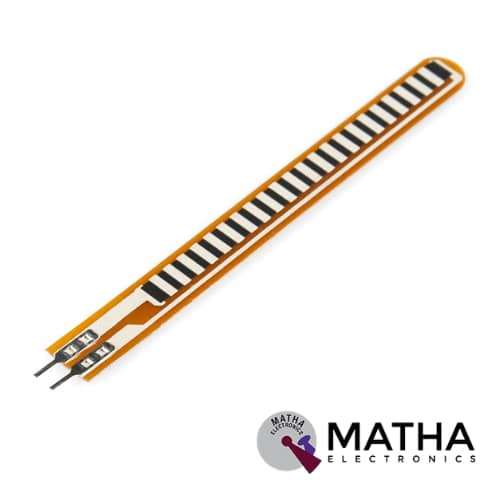
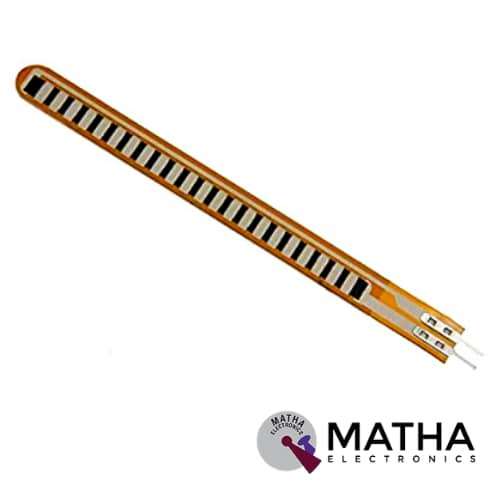
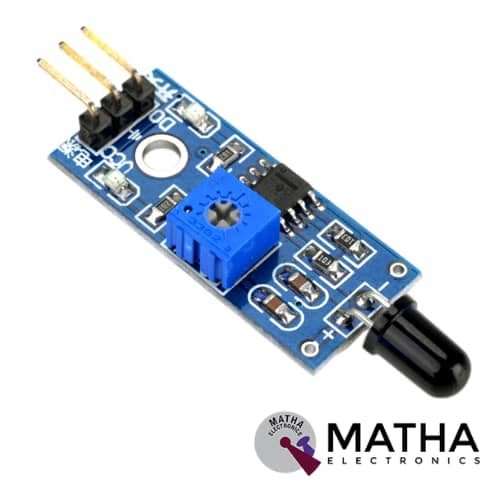
Flame Sensor
Original price was: ₹120.00.₹99.00Current price is: ₹99.00. inc. GST
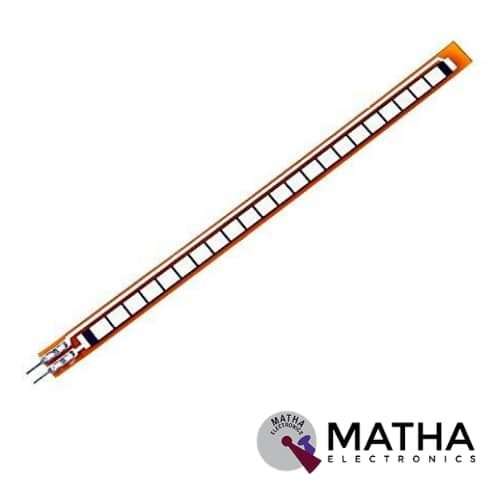
Flex Sensor 4.5”
Original price was: ₹1,100.00.₹1,000.00Current price is: ₹1,000.00. inc. GST
Flex Sensor 2.2”
Original price was: ₹700.00.₹450.00Current price is: ₹450.00. inc. GST
- Flex length: 5.6 cm
- Operating voltage: 0-5V
- Power rating: 0.5Watt (continuous), 1 Watt (peak)
- Life:1 million
- Flat Resistance: 25K Ω
- Resistance Tolerance: ±30%
- Bend Resistance Range: 45K to 125K Ohms(depending on the bend)
- Total Length: 2.2″
- Bends and Flexes physically with the motion device.
- Simple Construction.
- Dimension:14.6 x 9.8 x 4.6 cm
- Weight: 30 Grams
Description
The flex sensor is defined as a bend detecting sensor, one of the prominent sensors that have got numerous applications in robotics, medical, and haptic technology. These are variable resistance in which the resistance of sensors changes in accordance with the bend, which can be measured using any microcontroller. In short, this is a flexible sensor that changes its output when it is bent or when force is applied to it. Hence also works as a Force sensor. The Flex sensor provides an active sensing area of 5cm with a flex resistance of 25K Ω and a length of 2.2inch. A connector of 0.1″ spaced used and breadboard-friendly makes the installation easier.
This sensor provides two output wires. As the sensor flexed or bend, the resistance between these two wires increased. It should be considered that the base of the sensor is sensitive to bending and may get damaged. Hence care should be taken that you bend only the sensing area. For best results, securely mount the base and bottom portion and only allow the actual flex sensor to flex.
During nominal resistance, the surface of the Flex sensor is completely linear. When it bents 45º angle the Flex Sensor resistance increases to twice as before. And when bents 90º the resistance varies as high as four times than the nominal resistance. As a result, the resistance across the terminals rises linearly with a bent angle. So in short the flex sensor converts flex angle to resistance parameter. For better convenience, we convert this resistance parameter to a voltage parameter using a voltage divider circuit. This voltage parameter is fed into ADC for digital output.
Reviews (0)
Shipping & Delivery

Related products


Flex Sensor 4.5”
- Operating voltage: 0-5V
- Power rating: 0.5Watt (continuous), 1 Watt (peak)
- Life>1 million
- Flat Resistance: 10K Ω
- Resistance Tolerance: ±30%
- Bend Resistance Range: 60K to 110KOhms(depending on the bend)
- Total Length: 4.5″
- Bends and Flexes physically with the motion device.
- Simple Construction.
- Dimension:11*1*5cm
- Weight: 400gm
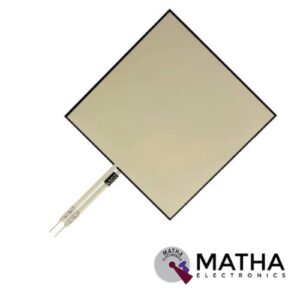

FlexiForce Tekscan A502 Sensor
- Thickness - 0.203 mm (0.008 in.).
- Length - 81.3 mm (3.20 in.)**.
- Width - 55.9 mm (2.20 in.).
- Sensing Area - 50.8 mm x 50.8 mm (2 in. x 2 in.).
- Connector - 2-pin Male Square Pin.
- Substrate - Polyester.
- Pin Spacing 2.54 mm (0.1 in.).
- Standard Force: 222 N.
- Temperature Range (Low): -40 °C.
- Temperature Range (High): 60 °C.
- Thin and flexible.
- Ideal for prototyping and integration.
- Easy to use.
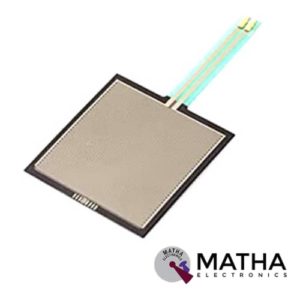

Force Sensor 38.1mm
- Easily customizable to a wide range of sizes
- Cost-effective
- Ultra-thin; 0.45 mm
- Life: up to 10 million actuations
- Simple and easy to Integrate.
- Actuation Force: 0.1 Newtons
- Force Sensitivity Range: 0.1 - 10.02 Newtons
- Non-Actuated Resistance: 10M W
- Device Rise Time: <3 microseconds
- Temp Operating Range: 30 - +70 ºC
- 16MHz Clock Speed
- 32 KB Flash Memory
- Overall length: 1.75 inches
- Overall width: 0.28 inch
- Sensing area: 0.3 inch
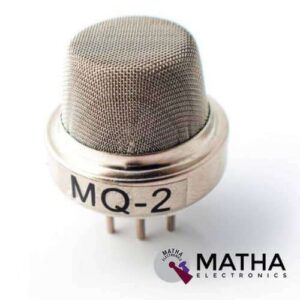
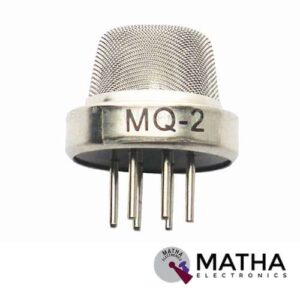
MQ2 Sensor
- Operating Voltage: +5V
- Can be used to Measure or detect LPG, Alcohol, Propane, Hydrogen, CO, and even methane
- Analogue output voltage: 0V to 5V
- Digital Output Voltage: 0V or 5V (TTL Logic)
- Preheat duration 20 seconds
- Can be used as a digital or analogue sensor
- Load resistance: 20 KΩ
- Heater resistance: 33Ω ± 5%
- Heating consumption: <800mw
- Sensing Resistance: 10 KΩ – 60 KΩ
- Detection range: 200 – 10000ppm
- Preheat Time: Over 24 hour
- High sensitivity to LPG, Propane, and Hydrogen
- The Sensitivity of a Digital pin can be varied using the potentiometer
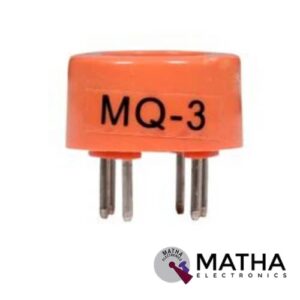
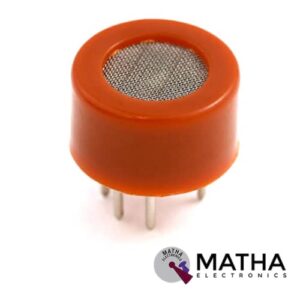
MQ3 Sensor
- Operating Voltage: 5V ±0.1
- Detecting Concentration: 0.05-10mg/L Alcohol
- Current Consumption : 150mA
- Operation Temperature : -10°C ~ 70°C
- Heater consumption: less than 900mW
- Load resistance: Adjustable
- Heating resistance: 33Ω ± 5%
- Easy SIP header interface
- Compatible with most of the microcontrollers
- Low-power standby mode
- Requires heater voltage
- Good sensitivity to alcohol gas
- Fast response and High sensitivity
- Requires simple Drive circuit
- Dimensions: 32 x 22 x 16 mm

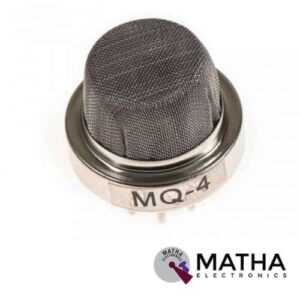
MQ4 Sensor
- Power requirements: VCC - 5V±0.1
- DO output: TTL digital 0 and 1 (0.1 and 5V)
- AO output: 0.1-0 .3 V (relative to pollution), the maximum concentration of a voltage of about 4V
- Detection Gas: Natural gas/Methane
- Detection Concentration: 200-10000ppm (Natural gas / Methane)
- Interface: 1 TTL compatible input (HSW), 1 TTL compatible output (ALR)
- Heater consumption: less than 750mw
- Operating temperature: 14 to 122 °F (-10 to 50°C)
- Related humidity less than 95%Rh
- Load resistance: 20KΩ
- Sensing Resistance: 10KΩ- 60KΩ (1000ppm CH4)
- Preheat time: Over 24 hour
- Standard Encapsulation Bakelite, Metal cap
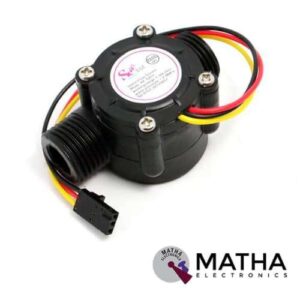
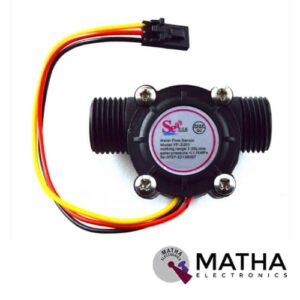
YF G1 Water Flow Sensor
- Working Voltage: DC 4.5V
- Working Voltage: DC 5V~18V
- Flow Rate Range: 2~100L/min
- Water pressure resistance: = >2MPa
- Operating Temperature: = -20~85C
- Insulation resistance: = >100MΩ
- Characteristics of Flow pulse: f=(4.8*Q) Q=L/Min
- Accuracy: ±3%
- Compact, Easy to Install
- High Sealing Performance
- High-Quality Hall Effect Sensor
- RoHS Compliant
Reviews
There are no reviews yet.