
I am text block. Click edit button to change this text. Lorem ipsum dolor sit amet, consectetur adipiscing elit. Ut elit tellus, luctus nec ullamcorper mattis, pulvinar dapibus leo.




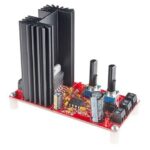
Metal Detector Sensor
- Low battery indicator
- Multiple Modes
- VCC 9V Battery
- Logic high output with common ground
- Can detect any metal at the range of 1Cm to 3Cm, you can connect a 9V battery to make it handy
- It will not detect coins if it is in the middle of the coil, it may detect if it is close to the coil, It will not detect any type of explosives
- The metal sensor has to supply 12V from controllers and not 12V via adapter
Description
A metal detector is defined as an electronic instrument used to detect the presence of metal nearby. Metal detectors are widely used for finding metal inclusions hidden within objects, or metal objects buried underground. This metal detector module basically consists of a handheld unit with a sensor probe that swept over the ground or other objects. If a piece of metal comes in the sensor range, indicated by a changing tone in earphones, or a needle moving on an indicator. When a target is detected the metal detector generates an audible response, such as a beep or change in tone. Basically, the device gives some indication of distance; which means the closer the metal is, the higher the tone in the earphone or the higher the needle goes.
Metal detectors work by transmitting an electromagnetic field from the search coil into the ground. As a result, any metal objects (targets) within the electromagnetic field become energized and retransmit an electromagnetic field of their own. The retransmitted field is received by the detector’s search coil alerts the user by producing a target response. Certain metal detectors can be set to ignore unwanted targets and discriminate between different target types. . The control box in the device contains the detector’s electronics. This is where the transmit signal is generated and the received signal is processed and converted into a target response.
There exist certain cases when unwanted targets are attracted to a detector, normally ferrous (attracted to a magnet), such as nails, but also be non-ferrous, such as bottle tops. If the metal detector is set to reject unwanted targets then a target response is not produced for those targets. The detecting range of the metal detector is “as deep as the diameter of the coil”. So detectors with larger coils will detect deeper. However, detection depth also depends upon detector methods and other environmental factors.
Reviews (0)
Shipping & Delivery

Related products
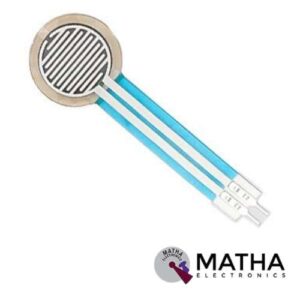

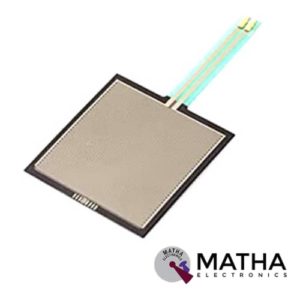

Force Sensor 38.1mm
- Easily customizable to a wide range of sizes
- Cost-effective
- Ultra-thin; 0.45 mm
- Life: up to 10 million actuations
- Simple and easy to Integrate.
- Actuation Force: 0.1 Newtons
- Force Sensitivity Range: 0.1 - 10.02 Newtons
- Non-Actuated Resistance: 10M W
- Device Rise Time: <3 microseconds
- Temp Operating Range: 30 - +70 ºC
- 16MHz Clock Speed
- 32 KB Flash Memory
- Overall length: 1.75 inches
- Overall width: 0.28 inch
- Sensing area: 0.3 inch
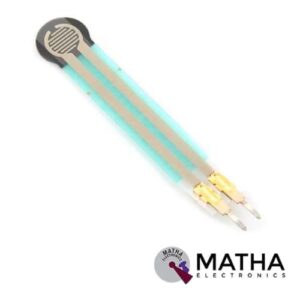
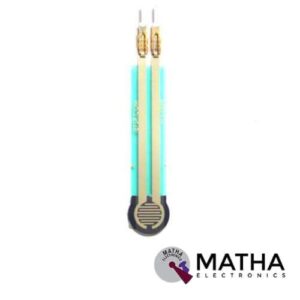
Force Sensor 5.08mm
- Two pins extend from the bottom of the sensor with 0.1″ pitch making it bread friendly.
- Device Rise Time: <3 microseconds
- Easily customizable to a wide range of sizes
- Actuation Force: 0.1 Newtons
- Cost-effective
- Ultra-thin; 0.45 mm
- Robust; up to 10 million actuation
- Force Sensitivity Range: 0.1 - 10.02 Newtons
- Simple and easy to Integrate.
- Non-Actuated Resistance: 10M W
- Temp Operating Range: 30 - +70 ºC
- 16MHz Clock Speed
- 32 KB Flash Memory


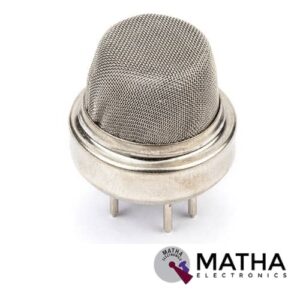
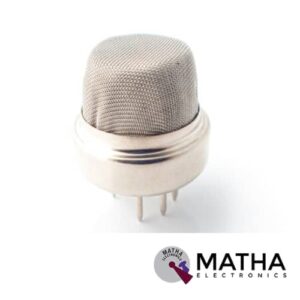
MQ135 SENSOR
- Operating Voltage: 3.3 – 5V.
- Detect/Measure NH3, NOx, alcohol, Benzene, smoke, CO2, etc.
- Analog output voltage: 0V to 5V
- Digital output voltage: 0V or 5V (TTL Logic)
- Detection range:10 ppm-300 ppm NH3, 10 ppm-1000 ppm Benzene, 10 ppm-300 ppm Alcohol
- Heating voltage (high): 5V ± 0.1
- Heating voltage (low): 1.4V ± 0.1
- Load resistance: Adjustable
- Heating resistance: 33Ω ± 5%
- Heating consumption: less than 800mW
- Detection temperature: 20℃±2℃
- Relative humidity: 65%+-5%RH
- Preheat duration 20 seconds
- Can be used as a digital or analogue sensor
- The sensitivity of Digital pin can be varied using the potentiometer
- It has a long life and low cost.
- Possesses high sensitivity to ammonia, benzene, sulfide gases.
- simple drive circuit
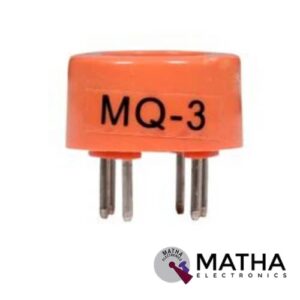
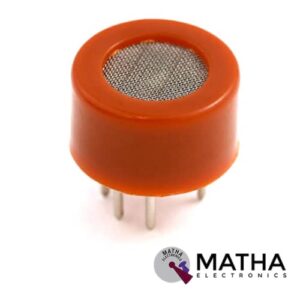
MQ3 Sensor
- Operating Voltage: 5V ±0.1
- Detecting Concentration: 0.05-10mg/L Alcohol
- Current Consumption : 150mA
- Operation Temperature : -10°C ~ 70°C
- Heater consumption: less than 900mW
- Load resistance: Adjustable
- Heating resistance: 33Ω ± 5%
- Easy SIP header interface
- Compatible with most of the microcontrollers
- Low-power standby mode
- Requires heater voltage
- Good sensitivity to alcohol gas
- Fast response and High sensitivity
- Requires simple Drive circuit
- Dimensions: 32 x 22 x 16 mm
MQ5 SENSOR
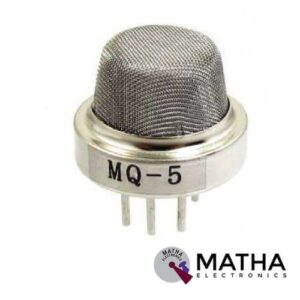
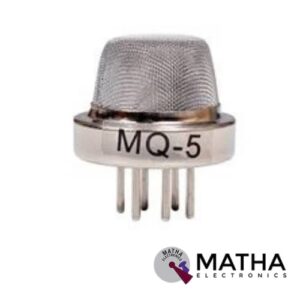
- Power requirements: VCC - 5V±0.1
- DO output: TTL digital 0 and 1 (0.1 and 5V)
- AO output: 0.1-0 .3 V (relative to pollution), the maximum concentration of a voltage of about 4V
- Detection Gas: LPG, natural gas, town gas
- Detection Concentration: 300-10000ppm
- Heating voltage: 5V±0.1
- Load resistance: 20KΩ
- Heater resistance: 31±10%
- Heating consumption: less than 800mw
- Operating temperature:-10 to 50°C
- Related humidity less than 95%Rh
- Sensing Resistance: 10KΩ- 60KΩ (1000ppm CH4)
- Preheat time: Over 24 hour
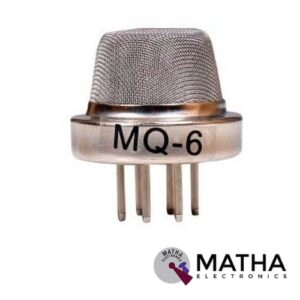

MQ6 SENSOR
- Power requirements: VCC - 5V±0.1
- DO output: TTL digital 0 and 1 (0.1 and 5V)
- AO output: 0.1-0 .3 V (relative to pollution), the maximum concentration of a voltage of about 4V
- Detection Gas: LPG, iso-butane, propane, and LNG
- Detection Concentration: 200-10000ppm
- Heating voltage: 5V±0.1
- Load resistance: 20KΩ
- Heater resistance: 33±10%
- Heating consumption: less than 750mw
- Operating temperature:-10℃-50℃
- Related humidity less than 95%Rh
- Sensing Resistance: 10KΩ- 60KΩ (1000ppm LPG)
- Preheat time: Over 24 hour
- High sensitivity to LPG, iso-butane, propane
- Small sensitivity to alcohol, smoke.
- Fast response
- Simple drive circuit
Reviews
There are no reviews yet.