
I am text block. Click edit button to change this text. Lorem ipsum dolor sit amet, consectetur adipiscing elit. Ut elit tellus, luctus nec ullamcorper mattis, pulvinar dapibus leo.
-27%


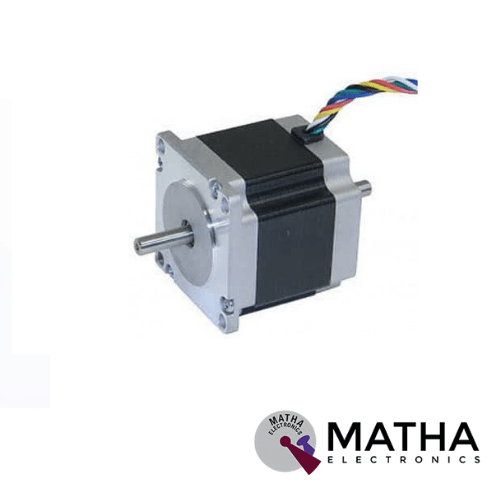
STEPPER MOTOR NEMA 23 7.2KG
Original price was: ₹1,600.00.₹1,500.00Current price is: ₹1,500.00. inc. GST
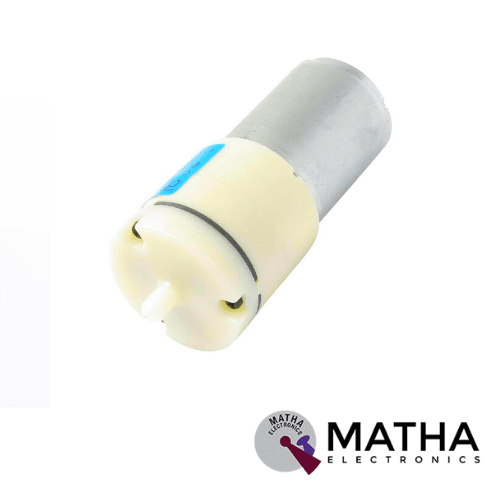
DC 6V AIR PUMP SMALL
Original price was: ₹350.00.₹300.00Current price is: ₹300.00. inc. GST
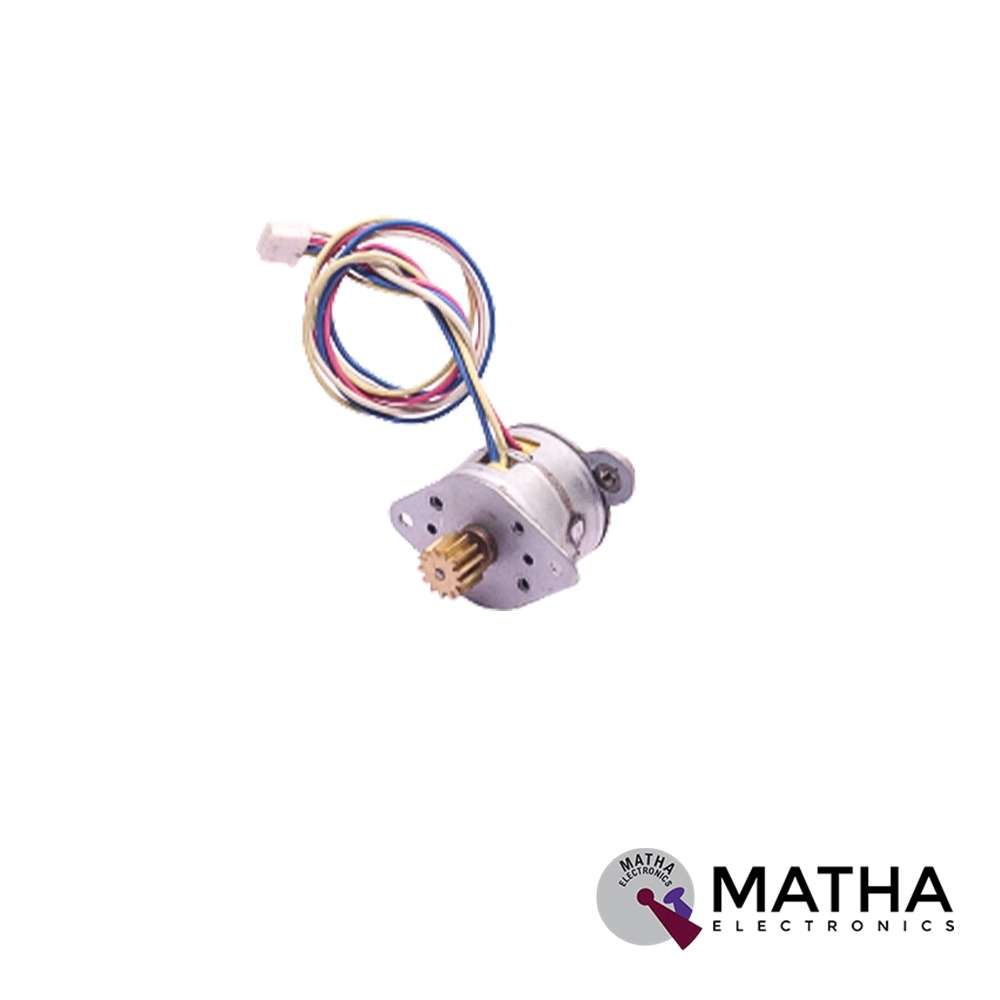
STEPPER MOTOR MINI
Original price was: ₹150.00.₹110.00Current price is: ₹110.00. inc. GST
- This is a high quality medium torque stepper motor.
- Its compact size enables it to be mounted in tight spaces.
- It has two holes for easy mounting.
- It has a step angle of 7.5 degrees and comes with a compatible wire connector.
Description
The Mini stepper motor designed as an electromechanical device that converts electrical pulses into discrete mechanical movements. Hence, can be operated directly from a microprocessor via a pulse train input. When electrical command pulses are supplied to a stepper motor in the correct order, the shaft rotates in discrete step increments. In numerous ways, the motor’s rotation is closely tied to the applied input pulses. The direction of rotation of the motor shaft is directly connected to the sequence of applied pulses. The frequency of the input pulses has a direct relationship with shaft rotation speed, and the quantity of input pulses has a direct relationship with shaft rotation length. As long as step integrity is maintained, error is not cumulative. Can stacking step angles
Reviews (0)
Shipping & Delivery

Related products

A2212 BRUSHLESS DC MOTOR 1400KV
- Operating voltage: 7.2V to 12V
- LiPO Batteries: 2S-3S
- No-load Current: 10 V: 0.5 A.
- Current Capacity: 12A/60S
- Maximum current:13Amp for 60Sec
- Maximum Watts:150 Watt
- Efficiency Current: 4-10A
- Shaft Diameter: 3.17 mm
- Prop Adapter is quality tested
- Minimum ESC Specification: 18A (30A Suggested)
- Maximum operating temperature: + 80°C
- Complete speed control because of three-phase connection.
- Long-life as there are no moving contact
- Thrust @ 3S with 1045 propeller: 1000gms approx.
- Thrust @ 3S with 0945 propeller: 650gms approx.
- Thrust @ 3S with 0845 propeller: 550gms approx.
- Motor Dimensions: 27.5 x 30mm
- Weight of motor:50-60 grams
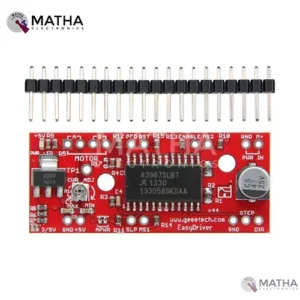
A3967 STEPPER MOTOR DRIVER
- A3967 precision micro-stepping driver
- Power supply: 7v to 30v
- Logic voltage: 5v to 3.3v
- Higher the voltage higher the torque at high speed
- Adjustable current control from 150Ma/ phase to 750ma phase
- Automatic current decay mode detection/selection
- Fast, slow, and mixed current decay modes
- Internal UVLO and thermal shutdown circuitry
- Crossover current protection
- Micro stepping resolution to full, half, quarter, and eighth steps by broken out MS1 and MS2 pins.
- Compatible with Arduino, GRBL G-Code interpreter for driving3-axis CNC machines
- Salington sink drivers used
- Compactible with 4, 6,8 wire stepper motor of any voltage

Minebea 16PU-M202 Bipolar Stepper Motor
- Step angle 3.75 degree
- Phase current: 0.6 ampere
- Step Angle: 3.75 Degree +/- 5%
- Drive Sequence: Bipolar
- Rated Current per Winding: 0.6 A
- Winding Resistance: 5E5
- Holding Torque Nm (Kg-cm): 0.064 (0.65)
- Rotor Inertia (Kg-cm2): 0.015
- Rated Voltage: Max 40V DC, 12V Typical
- Flange Size: 56.5 mm
- Shaft (with coupling spur gear): 5mm
- Connecting Wire Length: 30 cm
- Holding Torque: 0.074 nm

NEMA 17 5.5 kgcm
- Step Angle : 1.8°
- Holding Torque : 5.5 KgCm
- Operating Voltage : 12 - 16 volts
- Supply Current (A) :1.5 Ampere
- Number of Leads : 6
- Inductance : 5.5 mH
- Resistance : 2.8 Ohms
- Weight (gm) : 363
- Detent Torque (kg-cm) : 2.6
- Frame Size (mm) : 42 x 42
- Inductance Accuracy : ±20%
- Resistance Accuracy : ±10%
- Step Angle Accuracy : ±5%
- Shaft Diameter (mm) : 5
- Shaft Length (mm) : 22
- Input pulse decides the rotation angle of the motor.
- High accuracy of around 3 to 5% a step.
- Provides good starting, stopping and reversing.
- Control of this motor is less costly because of exclusion of complex control circuitry.
- The speed is proportional to the frequency of the input pulses.

NEMA 23 10.1 kg-cm
- Operating Voltage : 2.3 Volts
- Step Angle : 1.8°
- Holding Torque : 10.1 kg-cm
- Supply Current (A) : 2.8 Ampere/Phase
- Number of Leads : 4
- Inductance : 2.2 mH/Phase
- Resistance : 0.83 Ohm
- Rotor Inertia : 275 gm-cm2
- Weight (gm) : 650
- Detent Torque (kg-cm) : 0.36
- Frame Size (mm) : 57 x 57
- Inductance Accuracy : ±20%
- Resistance Accuracy : ±10%
- Shaft Diameter (mm) : 6.35
- Shaft Length (mm) : 20.6
- Step Angle Accuracy : ±5%
- Comparably more powerful than NEMA17 motors.
- The input pulse decides the rotation angle of the motor.
- High accuracy of around 3 to 5% a step.
- It provides good starting, stopping, and reversing.
- Control of this motor is less costly because of the exclusion of complex control circuitry.
- The speed is proportional to the frequency of the input pulses.

NEMA 23 18.9 kg-cm
- Step Angle : 1.8 °
- Holding Torque : 18.9 kg-cm
- Operating Voltage : 3.2 Volts
- Supply Current (A) : 2.8 A/Phase
- No. of Leads : 4
- Inductance: 3.6 mH/Phase
- Resistance : 1.13 O/Phase
- Rotor Inertia : 480 gm-cm2
- Inductance Accuracy : ±20%
- Resistance Accuracy : ±10%
- Shaft Diameter (mm) : 6.35
- Shaft Length (mm) : 20.6
- Cable Length: 30 CM
- Comparably more powerful than NEMA17 motors.
- Input pulse decides the rotation angle of the motor.
- High accuracy of around 3 to 5% a step.
- Provides good starting, stopping and reversing.
- Control of this motor is less costly because of exclusion of complex control circuitry.
- The speed is proportional to the frequency of the input pulses.

Stepper Motor Nema 23 kg 7.2 kg Dual shaft
- Rated Voltage: 6.6 V
- Current/ phase: 1A
- Resistance/ phase: 6.6ohms
- Inductance/ phase: 8.2 mH
- Holding Torque: 7.2 kg-cm
- of Leads - 6
- Rotor Inertia - 275
- Weight: 0.65kg
- Detent Torque: 0.36 kg-cm
- Step Angle - 1.8°
- Step Angle Accuracy - ±5% (full step, no load)
- Resistance Accuracy - ±10%
- Inductance Accuracy - ±20%
- Frame Size (mm) - 57x57
- Shaft Length (mm) - 20.6
- Shaft Diameter (mm) - 6.35
- Comparably more powerful than NEMA17 motors.
- Input pulse decides the rotation angle of the motor.
- High accuracy of around 3 to 5% a step.
- Provides good starting, stopping and reversing.
- Control of this motor is less costly because of exclusion of complex control circuitry.
- The speed is proportional to the frequency of the input pulses.

Reviews
There are no reviews yet.