
I am text block. Click edit button to change this text. Lorem ipsum dolor sit amet, consectetur adipiscing elit. Ut elit tellus, luctus nec ullamcorper mattis, pulvinar dapibus leo.
-6%

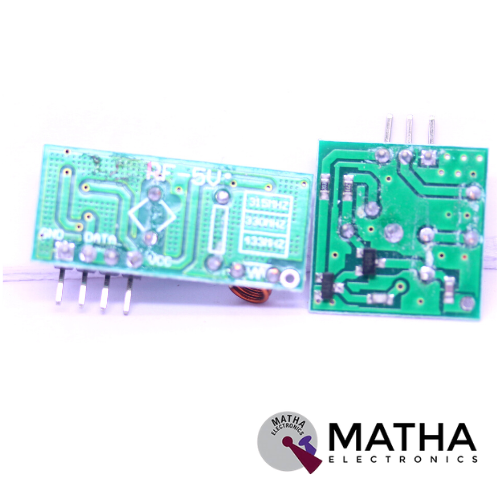
433MH RF Module Green
Original price was: ₹250.00.₹150.00Current price is: ₹150.00. inc. GST
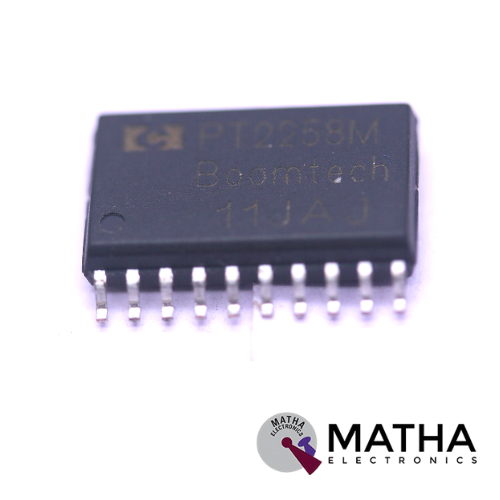
IC PT2258 SMD
Original price was: ₹100.00.₹70.00Current price is: ₹70.00. inc. GST
Arduino Uno R3 Clone SMD
Original price was: ₹900.00.₹850.00Current price is: ₹850.00. inc. GST
- Microcontroller: ATmega328 SMD.
- Operating Voltage: 5V.
- Supply Voltage recommended: 7-12V DC.
- Digital I/O Pins: 14 (of which 6 provide PWM output).
- Analog Input Pins: 6.
- DC Current per I/O Pin: 40 mA.
- DC Current for 3.3V Pin: 50 mA.
- Flash Memory: 32 KB (ATmega328) of which 0.5 KB is used by the bootloader.
- SRAM: 2 KB (ATmega328).
- EEPROM: 1 KB (ATmega328).
- Clock Speed: 16 MHz.
Description
Arduino Uno SMD is an open-source based on the Microchip ATmega328P SMD Package developed by Arduino. cc. The DIP packaged ATmega is becoming increasingly difficult to get as Atmel shifts more of its production capacity to surface mount ICs. We’ve added an SMD ATmega to the Arduino Uno R3 to keep up with demand. The board is identical to the PTH version of the Uno, but you’ll need some hot air to remove the ATmega. Most users should be unaffected by this modification.
The current version of Arduino Uno comes with a USB interface, 14 digital I/O pins, 6 analog pins, an ICSP header, 16 MHz ceramic resonators, a power jack, and a reset button. And an Atmega328 microcontroller is used to connect with external electronics circuits. Out of 14 I/O ports, 6 pins were used for PWM output. Each pin operates at a voltage of 5V providing a maximum of 50mA. It also supports serial communication using Tx and Rx pins. Although there are many versions of Arduino like Arduino Uno, Arduino Due, Arduino Leonardo, and Arduino Mega, however, most common versions are Arduino Uno and Arduino Mega. For projects related to digital electronics, embedded systems, robotics, or IoT, then using Arduino Uno would be the perfect option.
Moreover, this microcontroller is programmable with the Arduino IDE common to all our boards and runs both online and offline. The USB connection with the PC is necessary to program the board and not just to power it up. Arduino Uno is powered either by a USB cable or by an external 9-volt battery, although it operates at voltages between 7 and 20 volts. The ATmega328 on the board comes preprogrammed with a bootloader. Therefore, allows uploading new code to it without the use of an external hardware programmer.
Reviews (0)
Shipping & Delivery

Related products
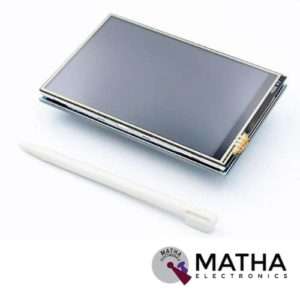
3.5″ inch ILI9486 TFT Touch Arduino Shield LCD Module
- 5″ diagonal LCD TFT display, with bright 4 white-LED backlights, default state: on
- It can control the backlight to connect the transistor to a digital pin
- 480×320 Pixels, with colourful and 18-bit, 262,000 different kinds of shade
- 4-wire resistive touchscreen
- 8-bit digital interface, plus 4 control lines

37 IN 1 Sensor Kit For Arduino
- For beginners who are interested in Arduino
- A complete set of Arduino’s most common and useful electronic components
- Infrared sensor receiving module
- Laser sensor module
- Temperature and humidity sensor module
- Infrared sensor module
- 5v relay module
- Obstacle avoidance sensor module. For beginners who are interested in Arduino
- A complete set of Arduino’s most common and useful electronic components
- Packaging Type: Box
- Material: Circuit board
- Dimensions: 98 x 0.59 x 0.24 inch
- Weight: 428 g

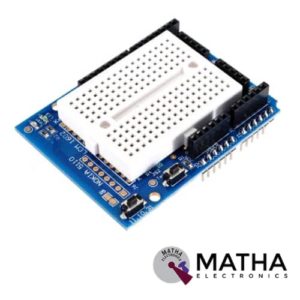
Arduino Compatible Nokia 5110 Prototype Proto Shield Expansion Board
- Supports Nokia5110 display
- Standard 0.1"x0.1" prototyping grid with big pads
- Comes with Stacking headers and plain header, choose whichever you want when soldering together
- IC pattern for adding DIP ICs up to 20 pins
- Power rails down the middle and sides
- Reset button and an extra general use button
- 2 3mm general use LEDs, red and green, as well as 2 matching resistors
- A pass-thru ICSP stacking header so you can stack any kind of shield on top, and/or use an AVR programmer
- Surface-mount chip area for up to 14 SOIC size parts
- Compatible with tiny breadboards
- Every pin is brought out
- Gold plated pads
- 2 x 0.1uF capacitors on either side for extra power stability


CAN Bus Shield
- Implements CAN V2.0B at up to 1 Mb/s
- Industrial standard 9 pin sub-D connector
- OBD-II and CAN standard pinout selectable.
- Changeable chip select pin
- Changeable CS pin for TF card slot
- Changeable INT pin
- Screw terminal that easily to connect CAN_H and CAN_L
- Arduino Uno pin headers
- Grove connectors (I2C and UART)
- SPI Interface up to 10 MHz
- Standard (11 bit) and extended (29 bit) data and remote frames
- Two receive buffers with prioritized message storage


ESP8266 WIFI Shield
- Operating voltage 5V (supplied from the Arduino Board)
- Connection via: 802.11b/g networks
- Encryption types: WEP and WPA2 Personal
- Connection with Arduino on SPI port
- on-board micro SD slot
- ICSP headers
- FTDI connection for serial debugging of WiFi shield
- Mini-USB for updating WiFi shield firmware
- 32-bit RISC architecture
- The processor can operate at 80MHz / 160MHz
- 32MB flash memory
- 64kB for instructions
- 96kB for data
- Operates in AP, Station or AP + Station mode
- It has 11 digital pins
- It has 1 analogue pin with 10-bit resolution
- Digital pins except the D0 have interrupts, PWM, I2C and one wire
- Programmable through USB or WiFi (OTA)
- Compatible with Arduino IDE
- Compatible with modules and sensors used in Arduino


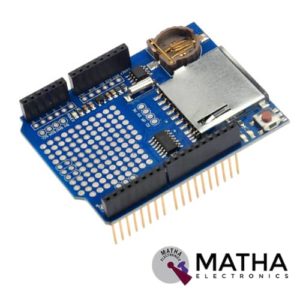

SD Card shield V4.0 for Arduino UNO
- Standard SD card, SDHC card and TF card compatible
- 3.3v and 5v logical voltage compatible
- 2.6-3.6v DC power supply
- UART Grove & I2C connection compatible
- Fully supported SD Library
- Minimal number of SPI port
- Jumpers provided for configuring Arduino SPI port pins
- Onboard toggle switch for SD card select type
- Truly stackable
- Prototype expand Library support
- Size: 53mm x 47mm
- Weight: 35g
Reviews
There are no reviews yet.