
I am text block. Click edit button to change this text. Lorem ipsum dolor sit amet, consectetur adipiscing elit. Ut elit tellus, luctus nec ullamcorper mattis, pulvinar dapibus leo.
-6%

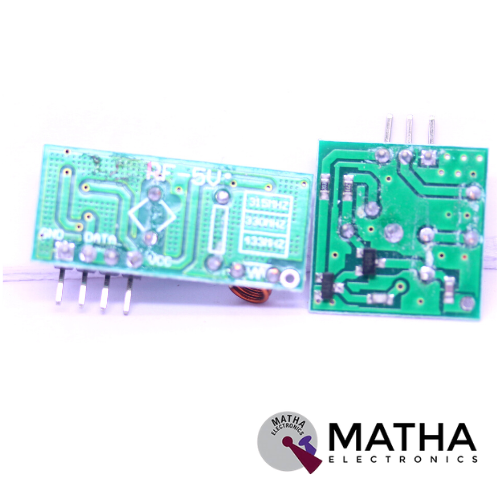
433MH RF Module Green
Original price was: ₹250.00.₹150.00Current price is: ₹150.00. inc. GST
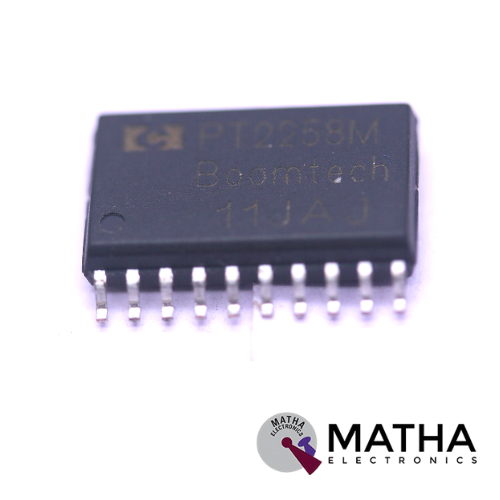
IC PT2258 SMD
Original price was: ₹100.00.₹70.00Current price is: ₹70.00. inc. GST
Arduino Uno R3 Clone SMD
Original price was: ₹900.00.₹850.00Current price is: ₹850.00. inc. GST
- Microcontroller: ATmega328 SMD.
- Operating Voltage: 5V.
- Supply Voltage recommended: 7-12V DC.
- Digital I/O Pins: 14 (of which 6 provide PWM output).
- Analog Input Pins: 6.
- DC Current per I/O Pin: 40 mA.
- DC Current for 3.3V Pin: 50 mA.
- Flash Memory: 32 KB (ATmega328) of which 0.5 KB is used by the bootloader.
- SRAM: 2 KB (ATmega328).
- EEPROM: 1 KB (ATmega328).
- Clock Speed: 16 MHz.
Description
Arduino Uno SMD is an open-source based on the Microchip ATmega328P SMD Package developed by Arduino. cc. The DIP packaged ATmega is becoming increasingly difficult to get as Atmel shifts more of its production capacity to surface mount ICs. We’ve added an SMD ATmega to the Arduino Uno R3 to keep up with demand. The board is identical to the PTH version of the Uno, but you’ll need some hot air to remove the ATmega. Most users should be unaffected by this modification.
The current version of Arduino Uno comes with a USB interface, 14 digital I/O pins, 6 analog pins, an ICSP header, 16 MHz ceramic resonators, a power jack, and a reset button. And an Atmega328 microcontroller is used to connect with external electronics circuits. Out of 14 I/O ports, 6 pins were used for PWM output. Each pin operates at a voltage of 5V providing a maximum of 50mA. It also supports serial communication using Tx and Rx pins. Although there are many versions of Arduino like Arduino Uno, Arduino Due, Arduino Leonardo, and Arduino Mega, however, most common versions are Arduino Uno and Arduino Mega. For projects related to digital electronics, embedded systems, robotics, or IoT, then using Arduino Uno would be the perfect option.
Moreover, this microcontroller is programmable with the Arduino IDE common to all our boards and runs both online and offline. The USB connection with the PC is necessary to program the board and not just to power it up. Arduino Uno is powered either by a USB cable or by an external 9-volt battery, although it operates at voltages between 7 and 20 volts. The ATmega328 on the board comes preprogrammed with a bootloader. Therefore, allows uploading new code to it without the use of an external hardware programmer.
Reviews (0)
Shipping & Delivery

Related products


2.4″ Inch Touch Screen TFT Display Shield for Arduino
- 4″ Touch LCD TFT display module for Arduino
- 240*320 pixels resolution
- Ability to display 262000 different colours
- The shield comes equipped with a microSD card slot.
- SPFD5408 controller with built-in video RAM buffer
- 8-bit digital interface, plus 4 control lines
- 5V compatible. Use with 3.3V or 5V logic
- On-board 3.3V 300mA LDO regulator
- Uses digital pins 5-13 and analogue 0-3. That means you can use digital pins 2, 3, and analog 4 and 5. Pin 12 is available if not using the microSD
- Works with any Arduino Uno and mega compatible boards
- Resolution: 240320 pixels
- Supply voltage: 5V
- Working temperature: -30C ~ 70C
- Dimension: 72*52*12mm
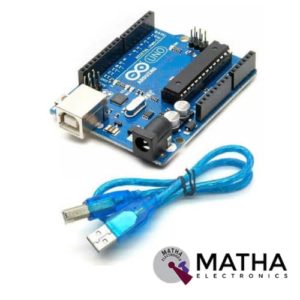

Arduino Duemilanove Development Board with USB Cable
- Microcontroller: ATmega168/ATmega 328
- Operating Voltage: 5V
- Input Voltage: 7-12V
- Input Voltage: 6-20V
- Digital I/O Pins: 14 (of which 6 provide PWM output)
- Analog Input Pins: 6
- DC Current per I/O Pin: 40 mA
- DC Current for 3.3V Pin: 50 mA
- Flash Memory: 16 KB (ATmega168) or 32 KB (ATmega328) of which 2 KB used by the bootloader
- SRAM: 1 KB (ATmega168) or 2 KB (ATmega328)
- EEPROM: 512 bytes (ATmega168) or 1 KB (ATmega328)
- Clock Speed: 16 MHz
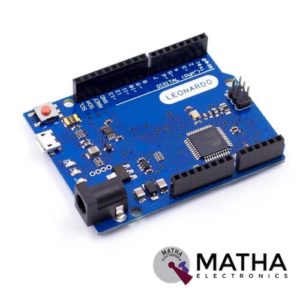

Arduino Leonardo R3
- Board Mode: LEONARDO R3
- Microcontroller: ATmega32u4
- Operating Voltage: 5V
- Input Voltage (Recommended): 7-12V
- Input Voltage (limits): 6-20V
- Digital I/O Pins: 20
- PWM Channels: 7
- Analog Input Channels: 12
- DC Current per I/O Pin: 40 mA
- DC Current for 3.3V Pin: 50 mA
- Flash Memory: 32 KB
- SRAM: 2.5 KB (ATmega32u4)
- EEPROM: 1 KB (ATmega32u4)
- Clock Speed: 16 MHz


Ethernet Shield
- Based on the W5100Based on the Wiznet W5100 allows an Arduino board to connect to the internet.
- Stackable Design, can directly be supported by Arduino official Ethernet Library.
- Supports up to four simultaneous socket connections
- Can be used to store files for serving over the network.
- Compatible with the Arduino Duemilanove (168 or 328), Uno as well as Mega (1280/2560).
- Can be accessed using the Mini SD TF library.
- The current shield has a Power over Ethernet (PoE) module designed to extract power from a conventional twisted-pair Category 5 Ethernet cable.
- IEEE802.3af compliant
- Low output ripple and noise (100mVpp)
- Overload and short-circuit protection
- 1500V isolation (input to output)


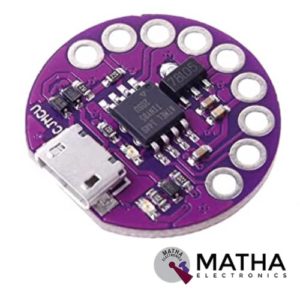
LilyTiny (LilyPad ATTiny85)
- Program Memory Type: Flash
- Program Memory (KB) : 8
- CPU Speed (MIPS): 20
- Data EEPROM (bytes): 512
- Digital Communication Peripherals: 1-SPI, 1-I2C
- Capture/Compare/PWM Peripherals : 5
- Comparators: 1
- Temperature Range (C) : -40 to 85
- Operating Voltage Range (V): 1.8 to 5.5
- Pin count: 8
- Cap Touch Channels : 3

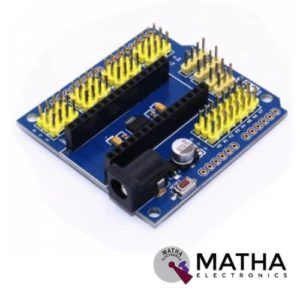
NANO / UNO Multi-Purpose Expansion Board
- The Sensor Shield makes your connections with the Arduino Nano much easier
- It is compatible with Arduino Nano 2.0 and 3.0
- The shield has up to 8 analogue pins, 13 digital I/O pins, and Aref with 3 pin connectors (GND, Vcc, Signal).
- Consists of an independent I2C port with 4pins (SDA, SCL, GND, and Vcc) and UART (Rx, Tx, Vcc, and GND).
- Reset button onboard and a female jack for external power supply
- Material: FR-4 Epoxy Glass Fibre Board
- IO port leads all digital and analogue IO ports, each IO port has positive and negative power supply interface standards.
- Leads to an I2C interface on the motherboard, convenient and I2C devices connected.
- Size: Approx. 57x53x8mm
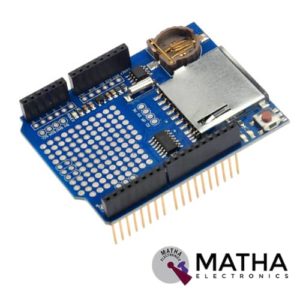

SD Card shield V4.0 for Arduino UNO
- Standard SD card, SDHC card and TF card compatible
- 3.3v and 5v logical voltage compatible
- 2.6-3.6v DC power supply
- UART Grove & I2C connection compatible
- Fully supported SD Library
- Minimal number of SPI port
- Jumpers provided for configuring Arduino SPI port pins
- Onboard toggle switch for SD card select type
- Truly stackable
- Prototype expand Library support
- Size: 53mm x 47mm
- Weight: 35g
Reviews
There are no reviews yet.