
I am text block. Click edit button to change this text. Lorem ipsum dolor sit amet, consectetur adipiscing elit. Ut elit tellus, luctus nec ullamcorper mattis, pulvinar dapibus leo.
-11%Sold out



Arduino Mega 2560 Board
Original price was: ₹2,000.00.₹1,600.00Current price is: ₹1,600.00.
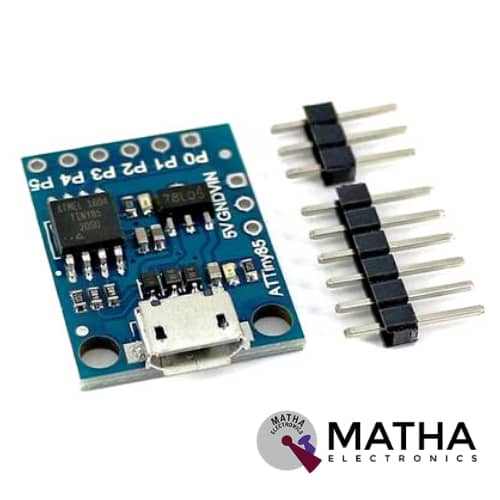
ATtiny85 Arduino-enabled Mini USB Dev Board
Original price was: ₹250.00.₹200.00Current price is: ₹200.00.
LilyTiny (LilyPad ATTiny85)
Original price was: ₹475.00.₹425.00Current price is: ₹425.00.
- Program Memory Type: Flash
- Program Memory (KB) : 8
- CPU Speed (MIPS): 20
- Data EEPROM (bytes): 512
- Digital Communication Peripherals: 1-SPI, 1-I2C
- Capture/Compare/PWM Peripherals : 5
- Comparators: 1
- Temperature Range (C) : -40 to 85
- Operating Voltage Range (V): 1.8 to 5.5
- Pin count: 8
- Cap Touch Channels : 3
Out of stock
Description
Lily Tiny was designed as a tiny little Lily Pad board designed to add flashy functionality to our electronics project. The compact-sized board consists of an ATtiny85 microcontroller that can sew 4 LEDs and connect a battery for blinky projects. LilyPad is a wearable e-textile technology developed by Leah Buechley and cooperatively designed by Leah and SparkFun. This is a circular miniature board of about 25mm in diameter. It does not have any connection pin, designed specifically for the applications of electronic clothing, we will simply connect the different components of the project (switch, button cell battery, Led, accelerometer, GPS …) using a wire Stitched.
These are high-performance, low-power Microchip 8-bit AVR RISC-based microcontrollers. It comes with 8KB ISP flash memory, 512B EEPROM, 512-Byte SRAM, 6 general-purpose I/O lines, 32 general purpose working registers, one 8-bit timer/counter with compare modes, one 8-bit high-speed timer/counter, USI, internal and external Interrupts, 4-channel 10-bit A/D converter, programmable watchdog timer with internal oscillator, three software selectable power saving modes, plus debug wire for on-chip debugging. The device operates at a voltage range of 2.7-5.5 volts and achieves a throughput of 20 MIPS at 20 MH. Meanwhile, the device can achieve throughputs approaching 1 MIPS per MHz, by executing powerful instructions in a single clock cycle. This ensures excellent balancing power consumption and processing speed.
The programming of the LilyTiny board was made quite simpler because a USB cable was used instead of an AVR programmer. It the ATTiny85designed as an AVR microcontroller just like the ATmega328 that equips Arduino boards. It is capable of executing the programs created with the Arduino IDE with some restrictions.
Reviews (0)
Shipping & Delivery

Related products

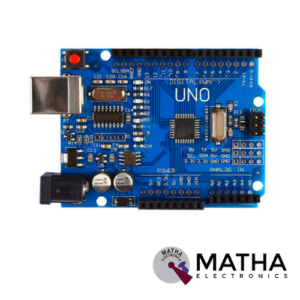
Arduino Uno R3 Clone SMD
- Microcontroller: ATmega328 SMD.
- Operating Voltage: 5V.
- Supply Voltage recommended: 7-12V DC.
- Digital I/O Pins: 14 (of which 6 provide PWM output).
- Analog Input Pins: 6.
- DC Current per I/O Pin: 40 mA.
- DC Current for 3.3V Pin: 50 mA.
- Flash Memory: 32 KB (ATmega328) of which 0.5 KB is used by the bootloader.
- SRAM: 2 KB (ATmega328).
- EEPROM: 1 KB (ATmega328).
- Clock Speed: 16 MHz.

ATtiny85 Arduino-enabled Mini USB Dev Board
- Support for the Arduino IDE 1.0+ (OSX/Win/Linux)
- Power via USB or External Source
- Onboard 5V Regulator
- Built-in USB
- 6 I/O Pins
- 8k Flash Memory (about 6k after bootloader)
- I2C and SPI (vis USI)
- PWM on 3 pins (more possible with Software PWM)
- 10-bit ADC
- ADC on 4 pins
- Power LED and Test/Status LED
- Low Power Consumption
- Active Mode:1 MHz, 1.8V: 300 µA


CAN Bus Shield
- Implements CAN V2.0B at up to 1 Mb/s
- Industrial standard 9 pin sub-D connector
- OBD-II and CAN standard pinout selectable.
- Changeable chip select pin
- Changeable CS pin for TF card slot
- Changeable INT pin
- Screw terminal that easily to connect CAN_H and CAN_L
- Arduino Uno pin headers
- Grove connectors (I2C and UART)
- SPI Interface up to 10 MHz
- Standard (11 bit) and extended (29 bit) data and remote frames
- Two receive buffers with prioritized message storage


ESP8266 WIFI Shield
- Operating voltage 5V (supplied from the Arduino Board)
- Connection via: 802.11b/g networks
- Encryption types: WEP and WPA2 Personal
- Connection with Arduino on SPI port
- on-board micro SD slot
- ICSP headers
- FTDI connection for serial debugging of WiFi shield
- Mini-USB for updating WiFi shield firmware
- 32-bit RISC architecture
- The processor can operate at 80MHz / 160MHz
- 32MB flash memory
- 64kB for instructions
- 96kB for data
- Operates in AP, Station or AP + Station mode
- It has 11 digital pins
- It has 1 analogue pin with 10-bit resolution
- Digital pins except the D0 have interrupts, PWM, I2C and one wire
- Programmable through USB or WiFi (OTA)
- Compatible with Arduino IDE
- Compatible with modules and sensors used in Arduino
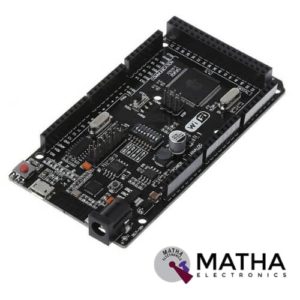
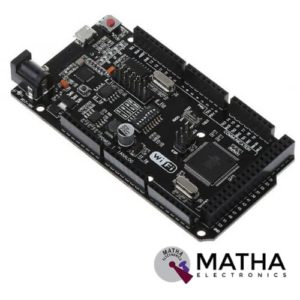
Mega R3 +WiFi ATmega2560+ESP8266 Module CH340G Compatible For Arduino Mega
- Microcontroller:ATmega2560
- IC Wi-Fi : ESP8266
- USB-TTL converter: CH340G
- Power Out: 5V-800mA
- Power Input USB: 5V (500mA max.)
- Power Input VIN/DC Jack: 9-24V
- Power Consumption: 5V 800mA
- Logic Level: 5V
- Wi-Fi 802.11 b/g/n 2.4 GHz
- USB: Micro USB
- Clock Frequency: 16MHz
- Operating Supply Voltage: 5V
- Digital I/O: 54
- Analog I/O: 16
- Memory Size: 256kb
- Data RAM Type/Size: 8Kb
- Data ROM Type/Size: 4Kb
- Interface Type: SerialOTA
- Operating temperature:−40С°/+125С°
- Build in external antenna
- Dimensions:53.361×101.86mm


Screw Shield Expansion board for Arduino
- Arduino terminal to provide the IO, port connection.
- 81 posts quality, reliable, convenient, durable.
- Combined with the Proto Shield, the middle can be used as a prototype expansion board.
- Double-sided PCB Prototyping extended area vias connecting the front sides can be welded components.
- The middle section can be placed small bread plate, convenient test extend


Wemos D1 WiFi Esp8266 Development Board Uno Compatible Program
- Microcontroller: ESP-8266EX
- Operating Voltage: 3.3 V
- Digital I/O Pins: 11
- Analog Input Pins 1(Max input: 3.2V)
- Clock Speed: 80MHz/160MHz
- Flash: 4M bytes
- Good stability.
- 11 digital input/output pins, all pins have interrupt/PWM/I2C/one-wire supported(except for D0)
- 1 analog input(3.2V max input)
- Micro USB connection
- Compatible with Arduino
- Support OTA wireless uploading
- On-Board Switching Power Supply:
- Micro USB connection
- Compatible with Arduino
- Support OTA wireless uploading
Reviews
There are no reviews yet.