
I am text block. Click edit button to change this text. Lorem ipsum dolor sit amet, consectetur adipiscing elit. Ut elit tellus, luctus nec ullamcorper mattis, pulvinar dapibus leo.
-10%Sold out


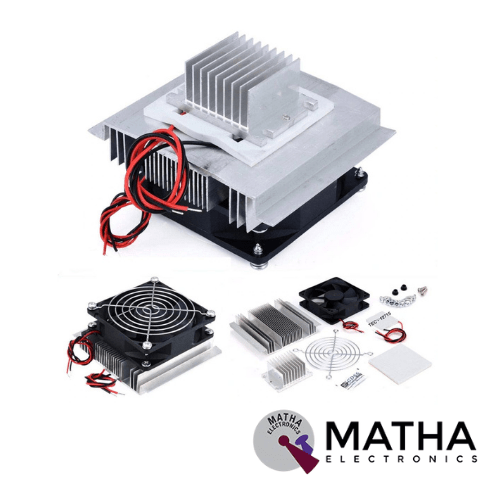
DC 12V Thermoelectric Peltier/TEC based Refrigeration Cooler kit
Original price was: ₹1,050.00.₹950.00Current price is: ₹950.00. inc. GST
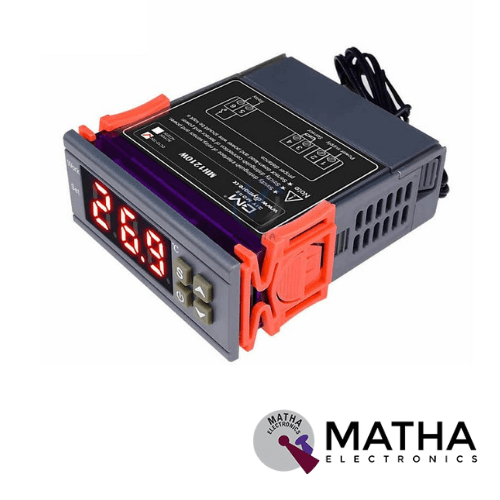
MH1210W 72V 250V 10A Digital Temperature Controller
Original price was: ₹2,000.00.₹1,600.00Current price is: ₹1,600.00. inc. GST
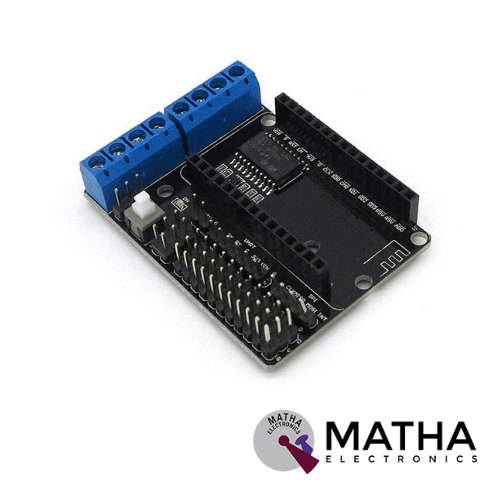
L293D Motor Driver Board for ESP8266 WiFi NodeMcu Lua ESP12E
Original price was: ₹500.00.₹450.00Current price is: ₹450.00. inc. GST
- Motor power supply Range: 4.5V ~ 36V
- Control power Range: 4.5V ~ 9V (10VMAX)
- Logic Operating current: ≤60mA
- Drive part of the work current Io: ≤1.2A
- Maximum power dissipation: 4W
- Drive Type: Dual high-power H-bridge driver
- Working temperature: -25 ℃ ~ + 125 ℃
- ESP12 DEV KIT development board expansion module
- Lead ESP12 DEV KIT all the features of pins: SPI, UART, GPIO, AI, and 3.3V power connector
- Extend two-way motor-driven, two-way direct-drive motor
- on board power switch
- Motor power, control power separation
- Dimension: 60 x 45 x 13mm
Out of stock
Description
This L293D Motor Driver module is compatible with the ESP12E Dev Kit and NodeMCU. The L298P motor driver is defined as a monolithic integrated, high-power driver for driving DC and stepper motors. The L298P is designed as a powerful dual H-bridge motor driver capable of driving a pair of DC motors or a single stepper motor. Hence, it can control up to 2 DC motors with direction and speed control. This L293D Motor Driver Board for ESP8266 WiFi NodeMcu Lua ESP12E is designed as one of the most prominent and versatile drivers available nowadays.
In this motor shield board, the IO port of the ESP-12E Dev Kit functions as the control port. The logic chip already configured inside can finish IC-driven. Moreover, this shield board comes with four ports: D1, D2, D3, and D4. These pins are used as PWMA(motor A), PWMB (motor B), DA (direction of motor A), and DB (direction of motor B), respectively. This shield board also has a number of pins, including VIN, 3.3V, DIO, AIO, SDIO, UART, SPI, RST, and EN. As a result, any type of sensors may be easily connected (e.g., temperature and humidity, buzzer, light, relay sensor, etc.)
The ESP-12 Lua NodeMCU WiFi development board is a complete plug-and-play solution for low-cost WiFi applications. The module comes with NodeMCU firmware pre-loaded and can be easily installed on your USB driver (below). The ESP-12 Lua NodeMCU WiFi Dev Board has a full ESP8266 WiFi module with all GPIO broken out, as well as a full USB-serial interface. All of this, including a power supply, is contained on a single breadboard, resulting in a user-friendly package.
Reviews (0)
Shipping & Delivery

Related products

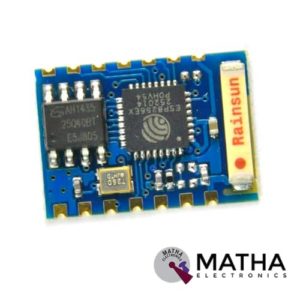
ESP8266 ESP – 03 WIFI Transreceiver Wireless Module
- Communication interface voltage: 3.3V
- Working current: 240mA(MAX)
- 802.11 b/g/n
- Wi-Fi Direct (P2P), soft-AP
- Integrated TCP/IP protocol stack
- Integrated TR switch, balun, LNA, power amplifier and matching network
- Integrated PLLs, regulators, DCXO and power management units
- +19.5dBm output power in 802.11b mode
- Power down leakage current of <10uA
- Integrated low power 32-bit CPU could be used as application processor
- SDIO 1.1/2.0, SPI, UART
- STBC, 1×1 MIMO, 2×1 MIMO
- A-MPDU & A-MSDU aggregation & 0.4ms guard interval
- Wake up and transmit packets in < 2ms
- Standby power consumption of < 1.0mW (DTIM3)
- SDIO 2.0, SPI, UART
- 32-pin QFN package
- Integrated RF switch, balun, 24dBm PA, DCXO, and PMU
- Integrated RISC processor, on-chip memory and external memory interfaces
- Integrated MAC/baseband processors
- Quality of Service management
- I2S interface for high fidelity audio applications
- On-chip low-dropout linear regulators for all internal supplies
- Proprietary spurious-free clock generation architecture
- Integrated WEP, TKIP, AES, and WAPI engines


ESP8266 ESP-12E
- LDR Light Sensor on board.
- WS2812 Led on board.
- Wireless Standard: IEEE 802.11 b/g/n protocol
- Frequency Range: 2.412 - 2.484 GHz
- Serial Transmission: 110 - 921600 bps, TCP Client 5
- SDIO 2.0, SPI and UART Interface available
- PWM available
- One ADC channel is available
- Programmable GPIO available
- Wireless Network Type: STA / AP / STA + AP
- Security Type: WEP / WPA-PSK / WPA2-PSK
- Encryption Type: WEP64 / WEP128 / TKIP / AES
- Network Protocol: IPv4, TCP / UDP / FTP / HTTP
- Operating Voltage: 3.3V
- Maximum current allowed to draw per pin: 15mA
- Power down leakage current of < 10uA
- Integrated low power 32-bit MCU
- Onboard PCB Antenna
- Wake up and transmit packets in < 2ms
- Standby power consumption of < 1.0mW
- Operating Temperature: -40ºC to +125 ºC

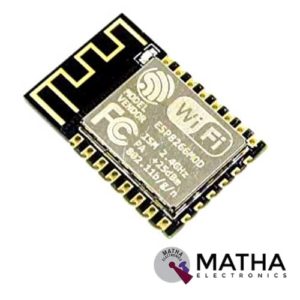
ESP8266 ESP-12F
- Communication interface voltage: 3.3V
- Working current: 240mA(MAX)
- Serial port baud rate: 115200 (default), can be modified to other values by AT command
- Serial communication format: 8N1
- Wireless Network Mode: station / softAP / SoftAP + station
- Wireless criteria: 802.11 b / g / n
- WIFI @ 2.4 GHz, support for WPA / WPA2 security mode
- +19.5dBm output power
- Compatible with ESP-12(ESP-202)
- It is very easy to develop projects with AT commands
- Surface Mount Package with 2mm Pitch Pads
- Mulitple GPIO’s for all your sensor needs
- Integrated TCP/IP protocol stac
- Integrated TR switch, balun, LNA, power amplifier and matching network
- Integrated PLL, regulators, DCXO and power management unit
- Power down leakage current of <10uA
- Integrated low power 32-bit CPU could be used as an application processor
- SDIO 1.1/2.0, SPI, UART
- STBC, 1×1 MIMO, 2×1 MIMO
- A-MPDU & A-MSDU aggregation & 0.4ms guard interval
- Wake up and transmit packets in < 2ms
- Standby power consumption of < 1.0mW (DTIM3)
- Both SMD and Inline package are available, and the pin pitch is 2.0mm.


MINI NODEMCU ESP8266 WIFI DEVELOPMENT BOARD BASED ON ESP-12F
- Communication interface voltage: 3.3V
- Working current: 240mA(MAX)
- Serial port baud rate: 115200 (default), can be modified to other values by AT command
- Serial communication format: 8N1
- Wireless Network Mode: station / softAP / SoftAP + station
- Wireless criteria: 802.11 b / g / n
- WIFI @ 2.4 GHz, support for WPA / WPA2 security mode
- +19.5dBm output power
- Compatible with ESP-12(ESP-202)
- It is very easy to develop projects with AT commands
- Surface Mount Package with 2mm Pitch Pads
- Multiple GPIO’s for all your sensor needs
- Integrated TCP/IP protocol stack
- Integrated TR switch, balun, LNA, power amplifier and matching network
- Integrated PLL, regulators, DCXO and power management unit
- Power down leakage current of <10uA
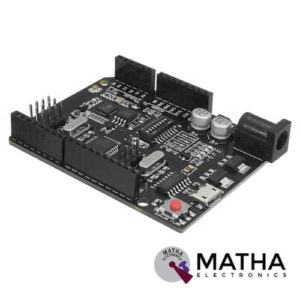

UNO R3 +WiFi ATmega328P+ESP8266 Module CH340G Compatible For Arduino Uno
- Microcontroller: ATmega328IC
- Wi-Fi: ESP8266
- USB-TTL converter: CH340G
- Power Output: 5V-800mA
- Power input USB: 5V (500mA max.)
- Power input VIN/DC Jack: 9-24V
- Power Consumption: 5V 800mA
- Logic Level: 5V
- WiFi: 802.11 b/g/n 2.4 GHz
- USB type: Micro USB
- USB Clock Frequency: 16MHz
- Operating Supply Voltage: 5V
- Digital I/O Pins: 14
- Analog I/O pins: 6
- Memory Size: 32Mb
- Interface Type: serial
- Operating temperature: −40С°/+125С°
- Dimensions (L×W)mm: 53.34×68.58

Wemos D1 Mini ESP8266 NodeMCU WIFI board for Arduino
- Microcontroller: ESP-8266EX
- Operating Voltage: 3.3 V
- Digital I/O Pins: 11
- Analog Input Pins 1(Max input: 3.2V)
- Clock Speed: 80MHz/160MHz
- Flash: 4M bytes
- Length: 34.2mm
- Width: 25.6mm
- Use BRT (Bias Resistor Transistor)
- Easier into flash mode.
- 30% increase in radiating area
- Good stability.
- 11 digital input/output pins, all pins have interrupt/PWM/I2C/one-wire supported(except for D0)
- 1 analog input(3.2V max input)
- Micro USB connection
- Compatible with Arduino
- Compatible with Node MCU
- Support OTA wireless uploading
- 11 x I/O pins,1 x ADC pin


Wemos D1 WiFi Esp8266 Development Board Uno Compatible Program
- Microcontroller: ESP-8266EX
- Operating Voltage: 3.3 V
- Digital I/O Pins: 11
- Analog Input Pins 1(Max input: 3.2V)
- Clock Speed: 80MHz/160MHz
- Flash: 4M bytes
- Good stability.
- 11 digital input/output pins, all pins have interrupt/PWM/I2C/one-wire supported(except for D0)
- 1 analog input(3.2V max input)
- Micro USB connection
- Compatible with Arduino
- Support OTA wireless uploading
- On-Board Switching Power Supply:
- Micro USB connection
- Compatible with Arduino
- Support OTA wireless uploading
Reviews
There are no reviews yet.