
I am text block. Click edit button to change this text. Lorem ipsum dolor sit amet, consectetur adipiscing elit. Ut elit tellus, luctus nec ullamcorper mattis, pulvinar dapibus leo.
-8%Sold out


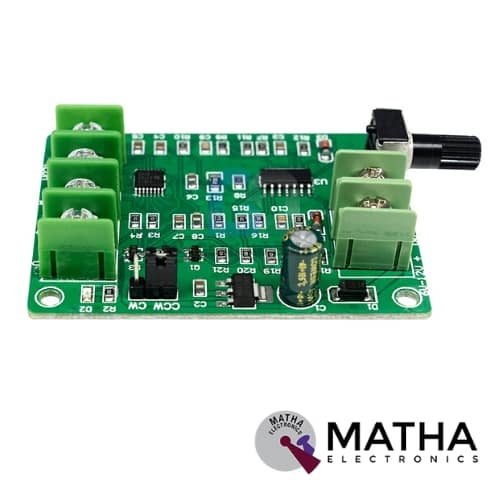
5V-12V DC Brushless Motor Driver Board Controller
Original price was: ₹2,225.00.₹1,999.00Current price is: ₹1,999.00. inc. GST
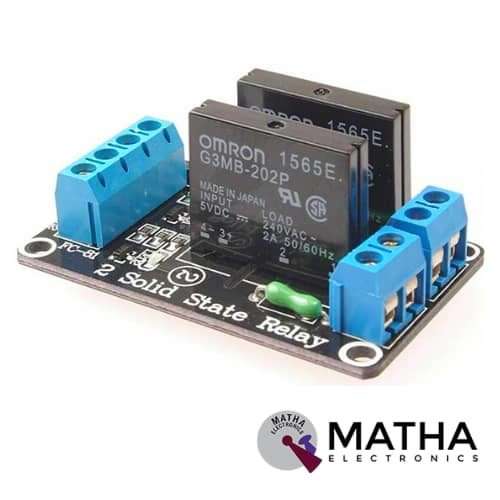
Solid Relay Module 2 channel 5v low level trigger for Arduino
Original price was: ₹500.00.₹475.00Current price is: ₹475.00. inc. GST
Solid Relay Module 1 channel 5v low level trigger for Arduino
Original price was: ₹300.00.₹275.00Current price is: ₹275.00. inc. GST
- 5V Solid State Relay
- Output With resistive fuse 240V 2A.
- Input Power: 5V DC (160MA).
- Input control signal voltage: 0 – 2.5V state low relay OFF/3.3V – 5V state high relay ON
- Working current: 12.5mA.
- Trigger voltage: 3.3-5V.
- Trigger current: 2mA.
- Rated output load: 100V to 240V AC (50Hz/ 60Hz) 2A per channel
- Rated input power: 5V, 160mA (all channels ON)
- Triggered at Low level (or Active Low)
- Separate LEDs showing the status of each Solid-State Relay
- Input control signal:
-Low Signal (Solid-State Relay ON / CLOSE), 0V- 2V or GND
-High Signal (Solid-State Relay OFF / OPEN), 3.3V – 5.0V or leave it floating
- Used in PLC control, home intelligent control, industry, electronic DIY etc.
- Dimension: 25mm x 34mm x 22mm
Out of stock
Description
A solid-state relay (SSR) is simply an IC that functions as a mechanical relay. The only difference between this SSR with the mechanical relay is that there is no moving contact in a Solid-State Relay. This SSR allows us to control high-voltage AC loads from lower voltage DC control circuitry. This is achieved by using infrared light as the ‘contact,’. In short, a solid-state relay is just an IR LED and a photometric enclosed into a little box. Thus we make use of the Phototriac coupler to turn it ON and OFF.
Solid-state relays offer numerous advantages over mechanical relays. One such advantage is that they can be switched by a much lower voltage and at a much lower current than most mechanical relays. Also, as there are no moving contacts, solid-state relays switched much faster and for much longer periods without wearing out. This 1-Channel Solid-State Relay Module is compatible with Arduino and hence interfaced easily.
Triggering at a high level indicates that there exists a forward voltage between a signal triggering terminal (CH1) and negative supply voltage. This usually connects positive supply voltage and triggering terminal together. When the triggering terminal contains a positive supply voltage or reaches the triggering threshold voltage, the relay will pull in.
While triggered at a low level resembles 0V voltage between the signal triggering terminal (CH1) and negative supply voltage. Or the voltage at the triggering terminal is lower than the positive supply voltage. Thus lowers to a triggering voltage, and the relay will pull in. It generally connects negative supply voltage and triggering terminal together. These relay module offers a wide range of applications in AC circuits as a TRIAC but offers only limited applications in DC. Along with that, this relay is suitable to control the AC load, not for DC load.
Reviews (0)
Shipping & Delivery

Related products
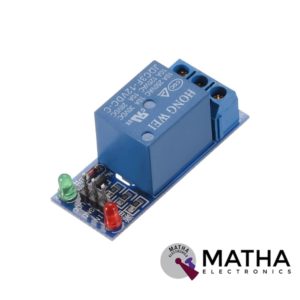
1 CHANNEL 12V RELAY
- 1-Channel relay interface board
- Operating voltage: 12V DC
- Provide high current relay of 15A
- For quick and easy connection high-quality screw terminals provided
- Can control both AC & DC appliances
- LED status indicates relay ON/OFF state.
- High current relay of 10A @250 V AC/10A@ 30V DC
- Standard interface that can be controlled by a microcontroller (Arduino, 8051, PIC, AVR, DSP, ARM)
- For easy accessibility input signal pin connected to burg sticks
- Dimension: 43*17*17mm
- Weight: 150gm
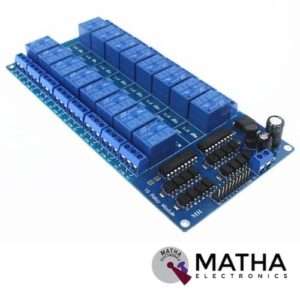
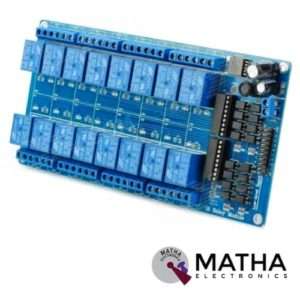
16 CHANNEL 5V RELAY
- 16 channel 5V relay board
- Operating voltage: 5V
- Supply current: 500mA
- Relay contact current capacity of 10A @250 V AC/10A@ 30V AC
- Optocoupler protection
- Low state voltage: 0V to 0.5V (relay is ON)
- High state voltage: 3.7V to 5V(relay is OFF)
- Single-chip design with reliable performance
- Strong anti-interferences
- Strong anti-jamming ability and stable performance
- The on-board power supply module doesn’t need any external power
- Common terminal(com) in each rely is user friendly and can be accessed by different signal
- Dimension: 180*90*20mm
- Weight: 100gm


2 CHANNEL 5V RELAY
- High current relay
- Two LED S to indicate relays ON/OFF status
- Low-level trigger expansion board
- Opto isolation circuitry
- Works with logic level signal 3.3V or 5V devices
- Can be used as normally open (NO) or normally closed (NC)
- Back EMF protection
- Ensures diode current protection
- AC control voltage: 250v @mx10A
- DC control voltage: 30V @max 10A
- Easy installation and fixing


3.3V/5V MB102 Breadboard Power Supply Module
- Input voltage: 6.5V to 12V
- Output voltage: 3.3V to 5V
- Output current: 700Ma
- Apply to MB102 breadboard
- Sorting jumpers used to switch voltage between 3.3V and 5V
- Onboard LED indicator to show the presence of power
- Short circuit protection
- Fits securely on standard 400 and 830 points on the breadboard
- Dimensions: 53*32*23mm
- Weight: 10gm
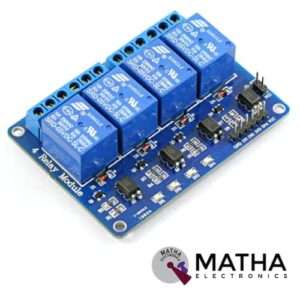

4 CHANNEL 5V RELAY
- 4-Channel relay interface board
- Operating voltage range: 3.3V to5V
- Maximum current: 10A
- Supply current: 20 mA
- High current relay of 10A @250 V AC/10A@ 30V DC
- Control signal: TTL level
- For quick and easy connection high-quality screw terminals provided
- Pull-down circuit to avoid malfunction
- Power supply indicator
- Can control both AC & DC appliances such as DC motors, solenoid valves, lamps, etc.
- LED status indicates relay ON/OFF state.
- Standard interface that can be controlled by a microcontroller (Arduino, 8051, PIC, AVR, DSP, ARM)
- For easy accessibility input signal pin connected to burg sticks
- Operating temperature: -40 to 85 degrees Celsius
- Dimension: 76*56*17mm
- Weight: 7gm
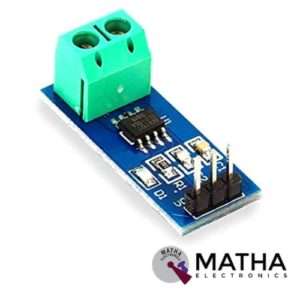

CURRENT SENSOR ACS712 30AMPS
- Current sensor chip: ACS712ELC-30A
- Supply voltage: 4.5V to 5.5V DC
- Current range: -30A to 30A
- Sensitivity: 66 millivolt/ampere
- Low noise analogue signal path
- Output rise time: 5 micro sec
- Extremely stable output offset voltage
- Zero magnetic hysteresis
- Factory trimmed for accuracy
- Easy to interface with a microcontroller, since it outputs an analogue voltage
- Onboard power indicator
- Dimension: 7*5*5cm
- Weight: 400gm


DS3231 RTC MODULE
- Operating voltage of DS3231: 2.3 v to 5.5v
- 400Khz I2C interface
- Automatic power failure battery switch circuitry
- RTC counts seconds, minutes, hours, and year
- High precision clock chip DS3231
- Programmable square-wave output
- Chip temperature sensor accuracy:+/_3 degree Celsius
- Memory chip: AT24C32 with 32K storage capacity
- CR2032 battery backup with a high life span
- Low power consumption
- Register for ageing trim
- Dimension: 38mm*22mm*14mm
Reviews
There are no reviews yet.