
I am text block. Click edit button to change this text. Lorem ipsum dolor sit amet, consectetur adipiscing elit. Ut elit tellus, luctus nec ullamcorper mattis, pulvinar dapibus leo.
-27%

PL2303 USB TO TTL CONVERTER
Original price was: ₹300.00.₹250.00Current price is: ₹250.00. inc. GST
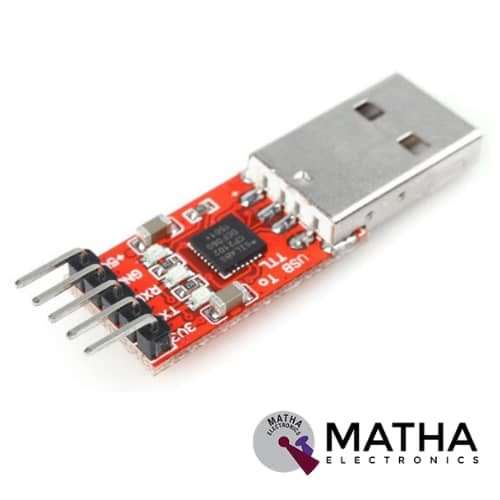
USB TO SERIAL CP2102 CONVERTER
Original price was: ₹380.00.₹250.00Current price is: ₹250.00. inc. GST
USB TO RS-485 CONVERTER
Original price was: ₹550.00.₹400.00Current price is: ₹400.00. inc. GST
- Small and compact size
- Baud rate:75 bps-115200bps, up to 6Mbps
- Communication distance:1200m
- Support USB 2.0 standard
- Self-powered by USB bus
- Working temperature:-40degree – +85 degree
- RS-232 serial port transmission speed of max 115.2Kbps
- Supports full handshake protocol, full-duplex data operating mode
- Directional control: Uses automatic data flow control technology, automatic identification and control of data transfer direction Load capacity: support multipoint
- Interface protection: TVS tube protection, USB self-recovery protection
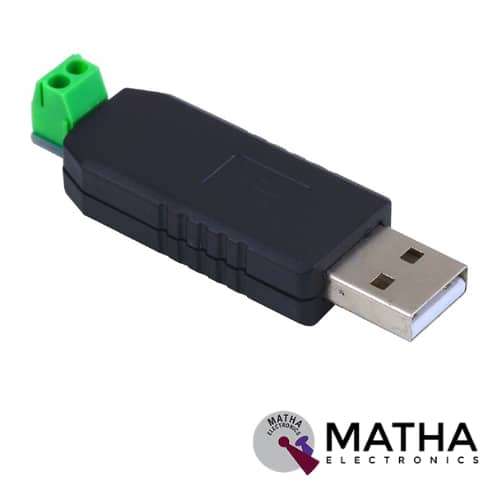
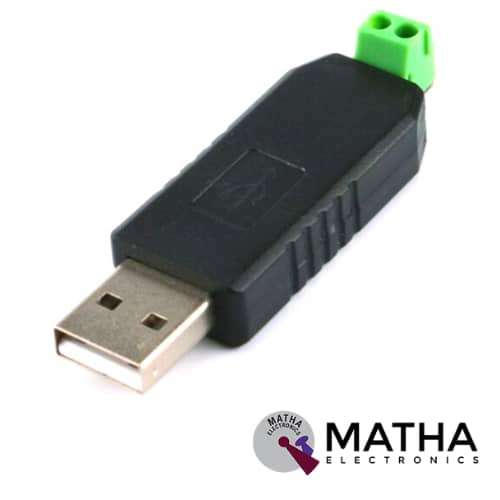
- Screw Terminal Connector for easy connection
- The module requires no external power, it takes power from the USB port
- Supported Systems: Windows XP, Vista, Windows 7, Linux, macOS, and
- Dimension:6.1×1.6×1.3cm
Description
USB to RS-485 converter is the most prominent and highly reliable converter used in embedded systems. This provides an easy interface connection method used to connect RS485 buses to the USB interface by means of a Virtual COM port. The USB to RS-485 converter he USB-RS485 can automatically detect whatever is sent to the user system. Thus installed as a COM port with an already existing serial communication application. Since it supports multiple module installations and thus allows the configuration of a multi-signal system without DMA and IRQ configuration.
USB TO RS485 converter supports half-duplex RS-485 communication with a baud rate at a range of 75 bps-115200bps, maximum up to 6Mbps. This is the best solution for communication between USB and RS-485 since it allows the transfer of up to 32 RS-485 devices through the same serial data line over a cable length of 1.2km and a maximum data rate of 10Mbps. The USB port and RS-485 are protected by 600W thus it protects the PC from unwanted signal loss, spikes, and errors in data communication. This device doesn’t require any external power since it is completely self-powered by a USB bus. This module provides superior characteristics and features found in expensive units, thus making it suitable for a wide range of applications in industrial and office fields.
APPLICATIONS
- ALL kinds of RS485 Port Device Settings and data communication over USB supported
- Reading/Writing Data to PLC
- Complete monitoring of data read and write, and PTZ control
- Centralized control of household electrical appliances
- Communication with Access Control System,
- Variety of industrial automation etc.
- LED display of communication data
- Machine PLC data reading and writing
- Access Control System card
Reviews (0)
Shipping & Delivery

Related products
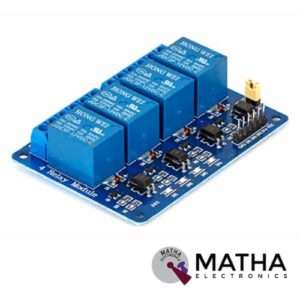

4 CHANNEL 12V RELAY
- 4-Channel relay interface board
- Relay input voltage: 12V DC
- Relay output: 5A/250V AC
- Signal input:5V DC from the microcontroller
- High current relay of 10A @250 V AC/10A@ 30V DC
- For quick and easy connection high-quality screw terminals provided
- Can control both AC & DC appliances such as DC motors, solenoid valves, lamps, etc.
- LED status indicates relay ON/OFF state.
- Power battery terminal for relay output and aux power connection
- Standard interface that can be controlled by a microcontroller (Arduino, 8051, PIC, AVR, DSP, ARM)
- Relay can directly control all equipment’s and loads
- For easy accessibility input signal pin connected to burg sticks
- Dimension: 165*65*1mm
- Weight: 7gm

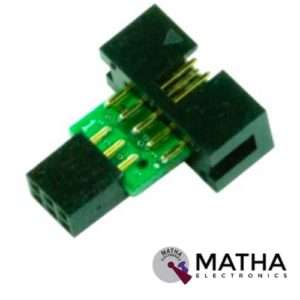
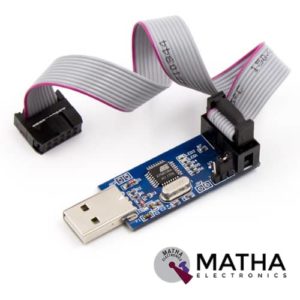

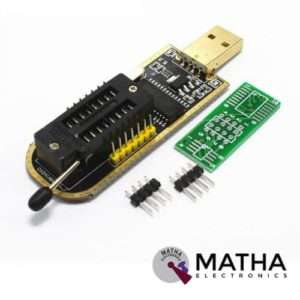
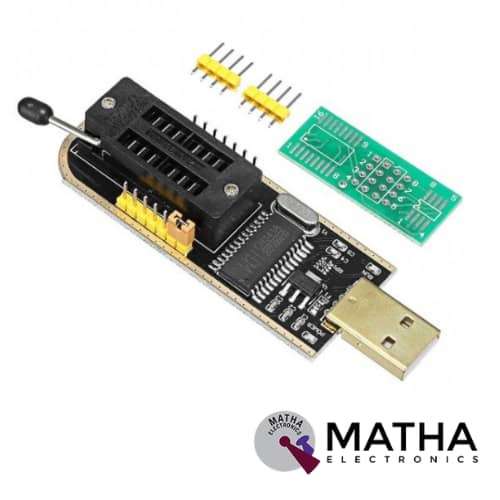
CH341A 24 25 Series EEPROM Flash BIOS USB Programmer with Software & Driver
- USB interface
- With CH341A chip
- Support 24 EEPROM and 25 SPI flash 8pin or 16pin chip
- With 24/25 status indicator lamp
- Support USB to TTL conversion
- Support 24EEPROM and 25 SPI flash 8pin/ 16pin chip
- Recognize 25 series chip automatically
- Supports download STC series procedure of single chip
- SPI pin to support expanding the utility
- STC microcontroller supports a full range of program download
- Support expanding the utility by SPI pin
- With SOP8 SOP16 to DIP8 converter board
- Used in wide applications – PC motherboard, LCD monitor, DVD, router program reading and writing
- Supports Windows XP, Vista, Win7 and Win8 (32/64bit) system
- Provide 5V-3.3V power supply output

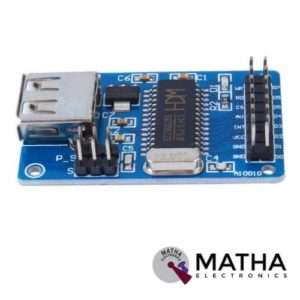

TL866CS USB Universal Programmer EEPROM FLASH 9 Adapters Extractor for 13000 Ics
- Model: TL866CS
- With a Multi-functional ICSP interface
- 40pin ZIF socket, fully automatic, support fast mode SPI
- USB interface for both data transfer and power supply
- With over-voltage and over current protection
- Supports the serial number of the chips two times development, built-in a variety of commonly used automatic numbering functions
- English Language Support
- It can program faster than another programmer 500%~1000%
- Programming EPROM, EEPROM, FLASH, SPI, I2C,93Cxx, ICSP etc.
- Supports thousands of most popular application devices (13071+)r
- Ideally suits the portable/convenient applications, which includes: car automotive field ECU chip tuning, airbag reset, mileage, satellite devices, BIOS refreshing, Xbox, Wii gaming machines EPROM sync, PIC / MCU development, newer laptop technology and newer desktop PC etc.
- Dimensions: 4.02 in x 2.48 in x 1.22 in (10.2 cm x 6.3 cm x 3.1 cm)
- Weight: 138 g
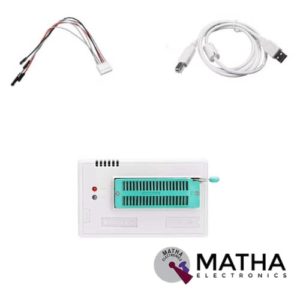
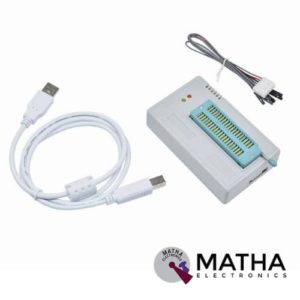
TL866II Plus Universal USB MiniPro USB Programmer for 15000+IC SPI Flash NAND EEPROM MCU PIC AVR
- High-Speed Programming - 12 Mbps
- Unique ultra-low power consumption
- Portable performance
- Programmable programming power supply
- Best overvoltage, overcurrent protection
- 40-pin universal pin
- Upgrade function
- 54/74F/LS/HC CMOS4000 series IC functional tests
- AVR microcontroller one-to-one soft encryption
- Unified and convenient user interface
- NAND Flash: Yes
- ISP for 24/93/25 MCU: Yes
- 25 NOR Flash Max. Capacity: 512M
- Multiprogramming: 4 programmers
- VPP Max. Voltage: 18 V
- VCC Voltage: 1.8 V to 6.5 V
- W29C020 P+V (s): 10.S+2.4S
- W25X80 P+V (s): 9.3S+1.7S
- W25W64 P+V (s): 69S+14.5S
- Device List: 15,000+
- Support simultaneously burn with 4 Programmers each computer
- Minimum Volume and the lowest Power Consumption and Do not Feel any Heat in Process.
- All chips do not need an external power supply, the low power consumption of its own to ensure that the USB port can provide enough power.
- Best internal 40 pins over-voltage protection, the strongest VCC/VPP 4-level overcurrent protection. The short-circuit do not reset the PC.
- Unique serial ICSP interface
- Test CMOS4000 74/54 series integrated circuit. Can be located in the gate circuit error.
- Chip auto serial number is the most complete and practical.
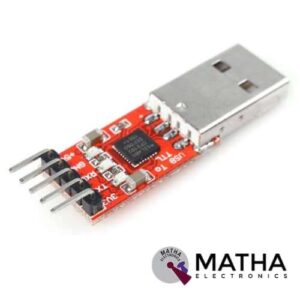
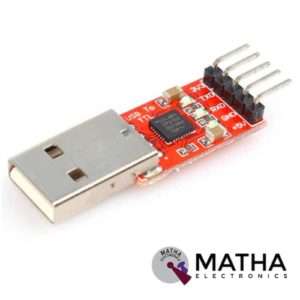
USB TO SERIAL CP2102 CONVERTER
- Reliable and stable device
- Baud rate:300bps-1Mbps
- Supports Windows, Linux &Mac
- Compliant withUSB2.0 at a full-speed 12Mbps
- Self-power :3.0 to 3.6v
- USB bus power:4.0 to 5.25v
- Supports all handshaking and modem interface signal
- Standard USB type A male and TTL 6pin connector.
- 6pins for 3.3V, RST, TXD, RXD, GND & 5V.
- All handshaking and modem interface signals.
- Byte receives buffer; 640 bytes transmit buffer.
- Hardware or X-On/X-Off handshaking supported.
- Event character support Line break transmission.
- USB suspend states supported via SUSPEND pins.
- Temperature Range: -40 to +85.
- Dimension: 42mm X 15mm.
Reviews
There are no reviews yet.