
I am text block. Click edit button to change this text. Lorem ipsum dolor sit amet, consectetur adipiscing elit. Ut elit tellus, luctus nec ullamcorper mattis, pulvinar dapibus leo.
-4%

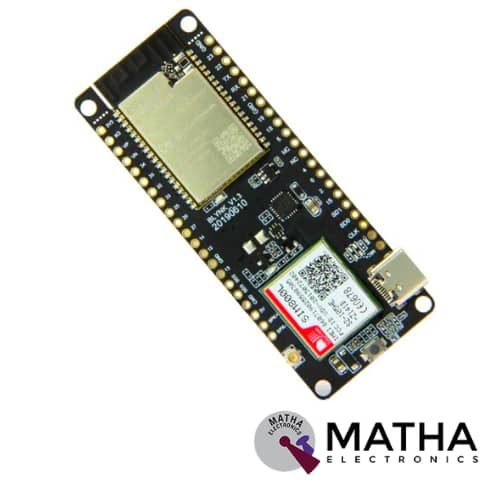
ESP32 SIM800L Wireless Communication Module
Original price was: ₹2,555.00.₹2,200.00Current price is: ₹2,200.00. inc. GST
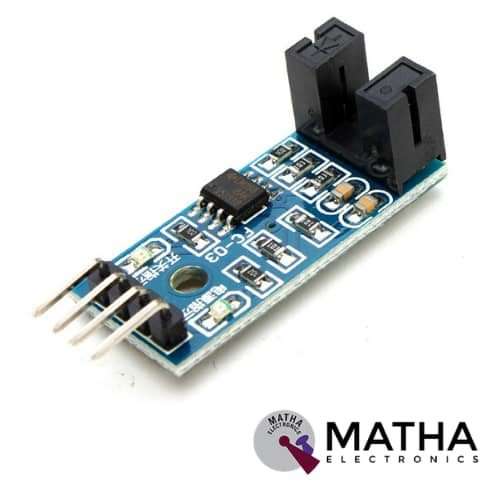
Double speed measuring module encoder photoelectric pulse output module
Original price was: ₹180.00.₹150.00Current price is: ₹150.00. inc. GST
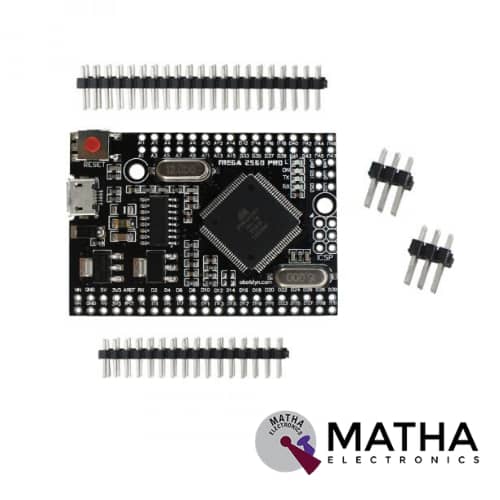
Arduino Mega Pro Mini CH340 Development Board
Original price was: ₹1,675.00.₹1,600.00Current price is: ₹1,600.00. inc. GST
- Microcontroller ATmega2560
- USB-TTL converter: CH340
- Power Out:5V-800mA
- Power IN.: 5V
- Power IN. VIN/DC Jack:5V
- Power Consumption: 5V 220mA
- Logic Level: 5V
- USB: Micro USB
- Clock Frequency: 16MHz
- Operating Supply Voltage: 5V
- Digital I/O: 54
- Analog I/O: 16
- Memory Size: 256kb
- Data RAM Type/Size: 8Kb
- Data ROM Type/Size: 4Kb
- Interface Type : ISP
- Operating temperature −40С°/+85С°
- Length x Width :38mm×54mm
Description
The Mega Pro Embed CH340G / ATmega2560 board was designed based on the ATmega2560 microcontroller. Along with Built on the Atmel ATmega2560 microcontroller and USB-UART interface chip CH340G. This board is often an excellent solution to urge your final project on the welding prototype board. Therefore the USB-UART adapter CH340. The board is compatible with Arduino Mega 2560 features a compact form factor of 38 x 55mm and superb solution for developing projects supported by ATmega2560.
The Mega Pro Embed functionalities are similar to Mega 2560. albeit it’s an Embed board, it’s solid as stable because of the Mega Board. It uses the first chip, and 16 MHz high-quality quartz resonators are present on the board. The board uses the chip CH340G because the converter is UART-USB. It provides a stable data exchange result once you work on a frequency of 12Mhz (requires the driving force to be installed on the computer).
We can power the board or power the pins through the MicroUSB connector. The transformer (LDO) handle input voltages from 6V to 9V (peak 18V) DC. The transformer allows to spend to 18V as an input value, however, we don’t recommend exceeding the recommended values aforementioned, since this will cause excessive heat and damage the device
Reviews (0)
Shipping & Delivery

Related products


2.4″ Inch Touch Screen TFT Display Shield for Arduino
- 4″ Touch LCD TFT display module for Arduino
- 240*320 pixels resolution
- Ability to display 262000 different colours
- The shield comes equipped with a microSD card slot.
- SPFD5408 controller with built-in video RAM buffer
- 8-bit digital interface, plus 4 control lines
- 5V compatible. Use with 3.3V or 5V logic
- On-board 3.3V 300mA LDO regulator
- Uses digital pins 5-13 and analogue 0-3. That means you can use digital pins 2, 3, and analog 4 and 5. Pin 12 is available if not using the microSD
- Works with any Arduino Uno and mega compatible boards
- Resolution: 240320 pixels
- Supply voltage: 5V
- Working temperature: -30C ~ 70C
- Dimension: 72*52*12mm
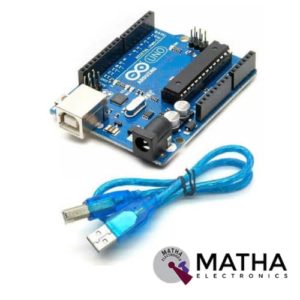

Arduino Duemilanove Development Board with USB Cable
- Microcontroller: ATmega168/ATmega 328
- Operating Voltage: 5V
- Input Voltage: 7-12V
- Input Voltage: 6-20V
- Digital I/O Pins: 14 (of which 6 provide PWM output)
- Analog Input Pins: 6
- DC Current per I/O Pin: 40 mA
- DC Current for 3.3V Pin: 50 mA
- Flash Memory: 16 KB (ATmega168) or 32 KB (ATmega328) of which 2 KB used by the bootloader
- SRAM: 1 KB (ATmega168) or 2 KB (ATmega328)
- EEPROM: 512 bytes (ATmega168) or 1 KB (ATmega328)
- Clock Speed: 16 MHz


Attiny 5 Version 1
- High Performance, Low Power AVR® 8-Bit Microcontroller
- Non-volatile Program and Data Memories
- 8K Bytes of In-System Programmable Program Memory Flash
- Endurance: 10,000 Write/Erase Cycles
- 512 Bytes In-System Programmable EEPROM
- Endurance: 100,000 Write/Erase Cycles
- 512 Bytes Internal SRAM
- Peripheral Features
- High-Frequency PWM Outputs with Separate Output Compare Registers
- USI – Universal Serial Interface (12C, SPI, 1-wire) with Start Condition Detector
- 10-bit ADC
- Single-Ended Channels
- 2 Differential ADC Channel Pairs with Programmable Gain (1x, 20x)
- Speed Grade: 0 – 10 MHz @ 2.7 – 5.5V, 0 – 20 MHz @ 4.5 – 5.5V
- Low Power Consumption
- Active Mode:1 MHz, 1.8V: 300 µA


CAN Bus Shield
- Implements CAN V2.0B at up to 1 Mb/s
- Industrial standard 9 pin sub-D connector
- OBD-II and CAN standard pinout selectable.
- Changeable chip select pin
- Changeable CS pin for TF card slot
- Changeable INT pin
- Screw terminal that easily to connect CAN_H and CAN_L
- Arduino Uno pin headers
- Grove connectors (I2C and UART)
- SPI Interface up to 10 MHz
- Standard (11 bit) and extended (29 bit) data and remote frames
- Two receive buffers with prioritized message storage


L293D Motor Driver Shield
- L293D motor driver chip & 74HC595 shift register
- Four H-bridges
- Terminal blocks and jumper to connect external power, for separate logic/motor supplies
- Up to 4 bi-directional DC motors with individual 8-bit speed selection
- Up to 2 stepper motors (unipolar or bipolar) with single coil, double coil or interleaved stepping.
- 2 connections for 5V ‘hobby’ servos connected to the Arduino’s high-resolution dedicated timer
- 4 H-Bridges: L293D chipset provides 0.6A per bridge (1.2A peak) with thermal shutdown protection, internal kickback protection diodes. Can run motors on 4.5VDC to 25VDC.
- Pull-down resistors keep motors disabled during power-up
- Big terminal block connectors to easily hook up wires (18-26AWG) and power
- Arduino reset button brought up top
- Tested compatible with Arduino Mega 1280 & 2560, Diecimila, Duemilanove, and UNO
- PCB Size: 69 x 53 mm
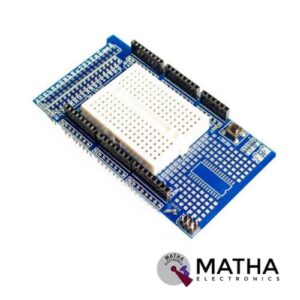

Prototype Shield V3.0 For Arduino Mega with breadboard
- The shield can support being fully assembled with Arduino MEGA
- Support soldering components directly on this shield
- Support sticking the mini breadboards on this shield
- Reset button up top
- Mainboard aureate quadrate
- With SOP28 SMT components encapsulation
- With PWR & STAT indicator
- Breadboard Points : 170
- Shield Size (mm) : 102×56
- Breadboard Size (mm) : 48×34
- Weight (gm) :35


Screw Shield Expansion board for Arduino
- Arduino terminal to provide the IO, port connection.
- 81 posts quality, reliable, convenient, durable.
- Combined with the Proto Shield, the middle can be used as a prototype expansion board.
- Double-sided PCB Prototyping extended area vias connecting the front sides can be welded components.
- The middle section can be placed small bread plate, convenient test extend
Reviews
There are no reviews yet.