
I am text block. Click edit button to change this text. Lorem ipsum dolor sit amet, consectetur adipiscing elit. Ut elit tellus, luctus nec ullamcorper mattis, pulvinar dapibus leo.
-10%
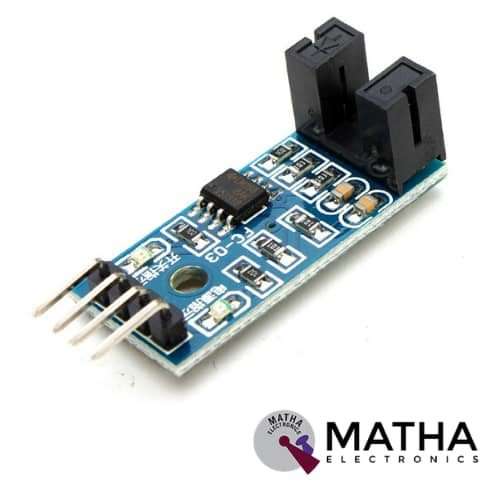
Double speed measuring module encoder photoelectric pulse output module
Original price was: ₹180.00.₹150.00Current price is: ₹150.00. inc. GST
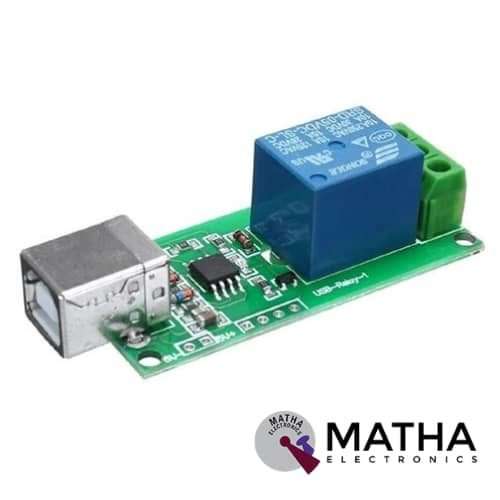
USB Control Module 1 Channel 5V Relay Module (No Need Driver)
Original price was: ₹685.00.₹650.00Current price is: ₹650.00. inc. GST
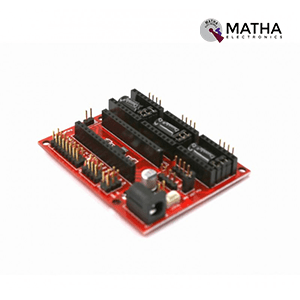
CNC Shield V4 for Engraving Machine 3D Printers Controller Board
Original price was: ₹555.00.₹500.00Current price is: ₹500.00. inc. GST
- Worked with Arduino nano.
- 3 axis stepper motor driver
- Compatible with micro-drive laser engraving machine, three-axis CNC engraving machine.
- 2A can be controlled within the two-phase four-wire stepper motor.
- Released the digital IO interface, easy to connect to other modules, such as ENDSTOP.
- Released the I2C interface, you can connect to the LCD I2C or another I2C module.
- Power DC5V interface, 7.5-12V voltage input.
- GRBL compatible
Description
The A4988 is a comprehensive microstepping motor driver with an easy-to-use built-in translator. These are meant to drive bipolar stepper motors in full, half, quarter, eighth, and sixteenth steps in full, half, quarter, eighth, and sixteenth step modes, with an output drive capacity of up to 35 V and 2 A. The existence of a fixed off-time current regulator allows it to function in Slow or Mixed decay modes. Only two IO ports are required for each stepper motor. In other words, three stepper motors may be effectively handled using six IO ports. It can handle four axes (X, Y, Z, and A-Z). With modified firmware and pins D12 and D13, you can duplicate X,Y,Z or perform a whole 4th axis.Moreover, it provides internal synchronous rectification control circuitry, thereby improve the pulse width modulation (PWM) power consumption during operation.
Jumpers are supplied on this board to adjust the Micro-Stepping for the stepper drivers. Some drivers, such as the DRV8825, can accomplish up to 1/32 micro-stepping in some instances. It is a GRBL 0.9 compliant board, which is an open source firmware that converts G-code commands into stepper signals and operates on an Arduino UNO. For CNC milling/engraving/3D printers, the GRBL controller offers a no-compromise, high-performance, low-cost alternative to parallel-port-based motion control. It may be used with any Arduino (Duemillanove/Uno) that has an Atmega 328. The GRBL controller is built in highly optimised C and takes advantage of all of the AVR’s sophisticated features to provide accurate timing and asynchronous operation. This board serves as a driver expansion board for engraving machines, 3D printers, and CNC machines. This latest expansion board designed from updated Arduino CNC Shield Version 3. This board consists of total of three slots, and thus can drive 3 A4988 stepper motor.
Reviews (0)
Shipping & Delivery

Related products

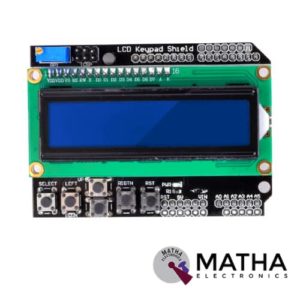
16×2 (1602) LCD Keypad Shield
- Operating Voltage:5V
- 5 Push buttons.
- RST button to reset Arduino program.
- Integrate a potentiometer for adjusting the backlight.
- Expanded available I/O pins.
- Blue light with white characters.
- Uses 4 Bit Arduino LCD Library
- Screen contrast adjustment
- Arduino Reset button
- The keypad consists of 6 keys select, up, right, down, left and reset.
- To save the digital IO pins, the keypad interface only uses one ADC channel.
- The key value is read out through a 5 stage voltage divider.
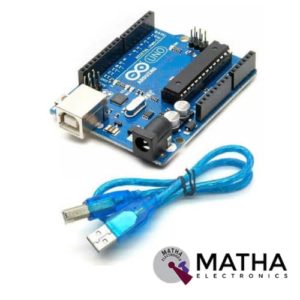

Arduino Duemilanove Development Board with USB Cable
- Microcontroller: ATmega168/ATmega 328
- Operating Voltage: 5V
- Input Voltage: 7-12V
- Input Voltage: 6-20V
- Digital I/O Pins: 14 (of which 6 provide PWM output)
- Analog Input Pins: 6
- DC Current per I/O Pin: 40 mA
- DC Current for 3.3V Pin: 50 mA
- Flash Memory: 16 KB (ATmega168) or 32 KB (ATmega328) of which 2 KB used by the bootloader
- SRAM: 1 KB (ATmega168) or 2 KB (ATmega328)
- EEPROM: 512 bytes (ATmega168) or 1 KB (ATmega328)
- Clock Speed: 16 MHz
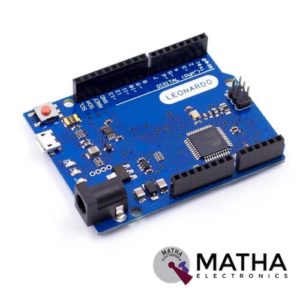

Arduino Leonardo R3
- Board Mode: LEONARDO R3
- Microcontroller: ATmega32u4
- Operating Voltage: 5V
- Input Voltage (Recommended): 7-12V
- Input Voltage (limits): 6-20V
- Digital I/O Pins: 20
- PWM Channels: 7
- Analog Input Channels: 12
- DC Current per I/O Pin: 40 mA
- DC Current for 3.3V Pin: 50 mA
- Flash Memory: 32 KB
- SRAM: 2.5 KB (ATmega32u4)
- EEPROM: 1 KB (ATmega32u4)
- Clock Speed: 16 MHz


DTMF Shield
- MT8870 Decoder IC.
- 4 Output digital pins.
- Operates on 5V
- Includes MT8870 DTMF Receiver IC
- Receives and Converts Standard DTMF Codes
- Remotely Switch Devices from Anywhere Using the Phone
- Easily Connects to Most Microcontrollers or Roboduino Board
- Low Power Consumption
- 5 On-Board LED's For Data Received Indication
- Standard Header Connections for Control System Connection
- Audio socket for application
- Speaker connector for audio sound checking.
- Microphone connector for over the air remote control system( note, due to environmental noise, without any filtering system this method is not recommended)
- Dimension: 37x37x9mm


ESP8266 WIFI Shield
- Operating voltage 5V (supplied from the Arduino Board)
- Connection via: 802.11b/g networks
- Encryption types: WEP and WPA2 Personal
- Connection with Arduino on SPI port
- on-board micro SD slot
- ICSP headers
- FTDI connection for serial debugging of WiFi shield
- Mini-USB for updating WiFi shield firmware
- 32-bit RISC architecture
- The processor can operate at 80MHz / 160MHz
- 32MB flash memory
- 64kB for instructions
- 96kB for data
- Operates in AP, Station or AP + Station mode
- It has 11 digital pins
- It has 1 analogue pin with 10-bit resolution
- Digital pins except the D0 have interrupts, PWM, I2C and one wire
- Programmable through USB or WiFi (OTA)
- Compatible with Arduino IDE
- Compatible with modules and sensors used in Arduino

NUCLEO-64 STM32G071RBT6 Development Board Arduino & ST Morpho Connectivity
- STM32 microcontroller in LQFP64 package
- 1 user LED shared with ARDUINO®
- 1 user and 1 reset push-buttons
- 768 kHz crystal oscillator
- Board connectors: ARDUINO Uno V3 expansion connectors morpho extension pin headers for full access to all STM32 I/Os
- Flexible power-supply options: ST-LINK, USB VBUS, or external sources
- On-board ST-LINK debugger/programmer with USB re-enumeration capability: mass storage, Virtual COM port and debug port
- Comprehensive free software libraries and examples available with the STM32Cube MCU Package
- Support of a wide choice of Integrated Development Environments (IDEs) including IAR Embedded Workbench®, MDK-ARM, and STM32CubeIDE
- Board-specific features
- External SMPS to generate Vcore logic supply
- 24 MHz HSE
- Board connectors: External SMPS experimentation dedicated connector Micro-AB or Mini-AB USB connector for the ST-LINKMIPI® debug connector
- Arm® Mbed Enabled™ compliant
Reviews
There are no reviews yet.