
I am text block. Click edit button to change this text. Lorem ipsum dolor sit amet, consectetur adipiscing elit. Ut elit tellus, luctus nec ullamcorper mattis, pulvinar dapibus leo.
-11%



Arduino Mega 2560 Board
Original price was: ₹2,000.00.₹1,600.00Current price is: ₹1,600.00.
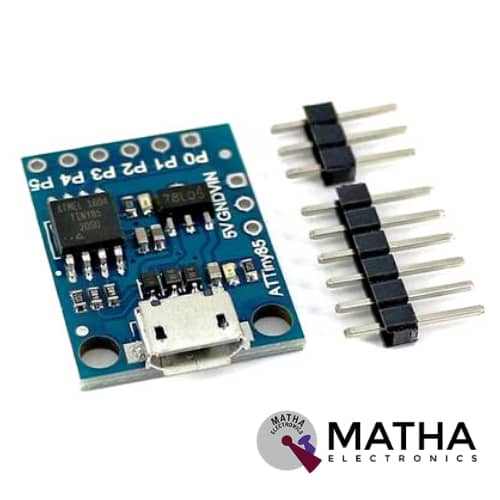
ATtiny85 Arduino-enabled Mini USB Dev Board
Original price was: ₹250.00.₹200.00Current price is: ₹200.00.
LilyTiny (LilyPad ATTiny85)
Original price was: ₹475.00.₹425.00Current price is: ₹425.00.
- Program Memory Type: Flash
- Program Memory (KB) : 8
- CPU Speed (MIPS): 20
- Data EEPROM (bytes): 512
- Digital Communication Peripherals: 1-SPI, 1-I2C
- Capture/Compare/PWM Peripherals : 5
- Comparators: 1
- Temperature Range (C) : -40 to 85
- Operating Voltage Range (V): 1.8 to 5.5
- Pin count: 8
- Cap Touch Channels : 3
Description
Lily Tiny was designed as a tiny little Lily Pad board designed to add flashy functionality to our electronics project. The compact-sized board consists of an ATtiny85 microcontroller that can sew 4 LEDs and connect a battery for blinky projects. LilyPad is a wearable e-textile technology developed by Leah Buechley and cooperatively designed by Leah and SparkFun. This is a circular miniature board of about 25mm in diameter. It does not have any connection pin, designed specifically for the applications of electronic clothing, we will simply connect the different components of the project (switch, button cell battery, Led, accelerometer, GPS …) using a wire Stitched.
These are high-performance, low-power Microchip 8-bit AVR RISC-based microcontrollers. It comes with 8KB ISP flash memory, 512B EEPROM, 512-Byte SRAM, 6 general-purpose I/O lines, 32 general purpose working registers, one 8-bit timer/counter with compare modes, one 8-bit high-speed timer/counter, USI, internal and external Interrupts, 4-channel 10-bit A/D converter, programmable watchdog timer with internal oscillator, three software selectable power saving modes, plus debug wire for on-chip debugging. The device operates at a voltage range of 2.7-5.5 volts and achieves a throughput of 20 MIPS at 20 MH. Meanwhile, the device can achieve throughputs approaching 1 MIPS per MHz, by executing powerful instructions in a single clock cycle. This ensures excellent balancing power consumption and processing speed.
The programming of the LilyTiny board was made quite simpler because a USB cable was used instead of an AVR programmer. It the ATTiny85designed as an AVR microcontroller just like the ATmega328 that equips Arduino boards. It is capable of executing the programs created with the Arduino IDE with some restrictions.
Reviews (0)
Shipping & Delivery

Related products

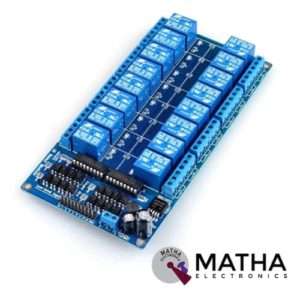
16 CHANNEL 12V RELAY
- 16 channel 12V relay board
- Operating voltage: 12V
- Supply current: 0.2 A
- Relay contact current capacity of 10A @250 V AC/10A@ 30V AC
- Optocoupler protection
- LED status indicates relay ON/OFF state.
- The 10-16 road can be any full-on/off or any road
- Common terminal(com) in each rely is user friendly and can be accessed by different signal
- Normally closed or normally open with each port
- Strong anti-jamming ability and stable performance
- The on-board power supply module doesn’t need any external power
- Dimension: 180*90*20mm
- Weight: 100gm
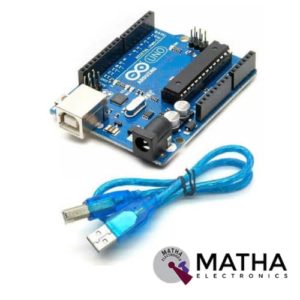

Arduino Duemilanove Development Board with USB Cable
- Microcontroller: ATmega168/ATmega 328
- Operating Voltage: 5V
- Input Voltage: 7-12V
- Input Voltage: 6-20V
- Digital I/O Pins: 14 (of which 6 provide PWM output)
- Analog Input Pins: 6
- DC Current per I/O Pin: 40 mA
- DC Current for 3.3V Pin: 50 mA
- Flash Memory: 16 KB (ATmega168) or 32 KB (ATmega328) of which 2 KB used by the bootloader
- SRAM: 1 KB (ATmega168) or 2 KB (ATmega328)
- EEPROM: 512 bytes (ATmega168) or 1 KB (ATmega328)
- Clock Speed: 16 MHz


Attiny 5 Version 1
- High Performance, Low Power AVR® 8-Bit Microcontroller
- Non-volatile Program and Data Memories
- 8K Bytes of In-System Programmable Program Memory Flash
- Endurance: 10,000 Write/Erase Cycles
- 512 Bytes In-System Programmable EEPROM
- Endurance: 100,000 Write/Erase Cycles
- 512 Bytes Internal SRAM
- Peripheral Features
- High-Frequency PWM Outputs with Separate Output Compare Registers
- USI – Universal Serial Interface (12C, SPI, 1-wire) with Start Condition Detector
- 10-bit ADC
- Single-Ended Channels
- 2 Differential ADC Channel Pairs with Programmable Gain (1x, 20x)
- Speed Grade: 0 – 10 MHz @ 2.7 – 5.5V, 0 – 20 MHz @ 4.5 – 5.5V
- Low Power Consumption
- Active Mode:1 MHz, 1.8V: 300 µA


ESP8266 WIFI Shield
- Operating voltage 5V (supplied from the Arduino Board)
- Connection via: 802.11b/g networks
- Encryption types: WEP and WPA2 Personal
- Connection with Arduino on SPI port
- on-board micro SD slot
- ICSP headers
- FTDI connection for serial debugging of WiFi shield
- Mini-USB for updating WiFi shield firmware
- 32-bit RISC architecture
- The processor can operate at 80MHz / 160MHz
- 32MB flash memory
- 64kB for instructions
- 96kB for data
- Operates in AP, Station or AP + Station mode
- It has 11 digital pins
- It has 1 analogue pin with 10-bit resolution
- Digital pins except the D0 have interrupts, PWM, I2C and one wire
- Programmable through USB or WiFi (OTA)
- Compatible with Arduino IDE
- Compatible with modules and sensors used in Arduino
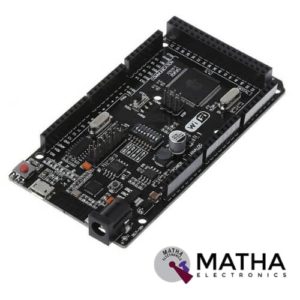
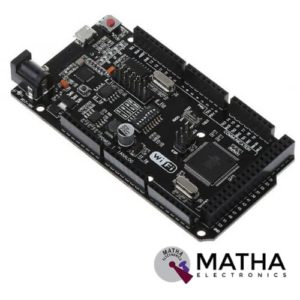
Mega R3 +WiFi ATmega2560+ESP8266 Module CH340G Compatible For Arduino Mega
- Microcontroller:ATmega2560
- IC Wi-Fi : ESP8266
- USB-TTL converter: CH340G
- Power Out: 5V-800mA
- Power Input USB: 5V (500mA max.)
- Power Input VIN/DC Jack: 9-24V
- Power Consumption: 5V 800mA
- Logic Level: 5V
- Wi-Fi 802.11 b/g/n 2.4 GHz
- USB: Micro USB
- Clock Frequency: 16MHz
- Operating Supply Voltage: 5V
- Digital I/O: 54
- Analog I/O: 16
- Memory Size: 256kb
- Data RAM Type/Size: 8Kb
- Data ROM Type/Size: 4Kb
- Interface Type: SerialOTA
- Operating temperature:−40С°/+125С°
- Build in external antenna
- Dimensions:53.361×101.86mm
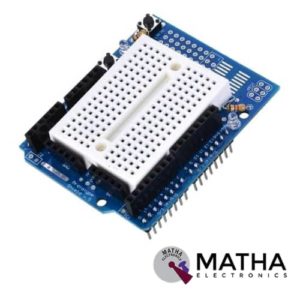
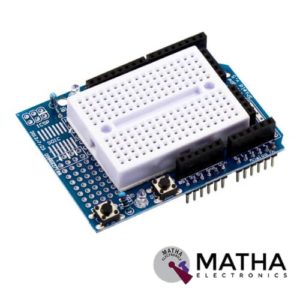
Protosheild For Arduino
- Standard 0.1"x0.1" prototyping grid with big pads
- Comes with Stacking headers and plain header, choose whichever you want when soldering together
- IC pattern for adding DIP ICs up to 20 pins
- Power rails down the middle and sides
- Reset button and an extra general use button
- 2 3mm general use LEDs, red and green, as well as 2 matching resistors
- A pass-thru ICSP stacking header so you can stack any kind of shield on top, and/or use an AVR programmer
- A surface-mount chip area for up to 14 SOIC size parts
- Compatible with tiny breadboards
- Every pin is brought out
- Gold plated pads
- 2 x 0.1uF capacitors on either side for extra power stability


UNO R3 Transparent Case
- Material: A grade acrylic sheet.
- For Arduino UNO R3 Development Board only.
- With screw copper pillar and installation instructions.
- To protect your little computer against damages, dust and scratches Clear Top and Bottom.
- This case provides easy access to all ports.
- It requires no tools for easy assembly and disassembly.
- Simply Clicks Together Enclosure.
Reviews
There are no reviews yet.