
I am text block. Click edit button to change this text. Lorem ipsum dolor sit amet, consectetur adipiscing elit. Ut elit tellus, luctus nec ullamcorper mattis, pulvinar dapibus leo.


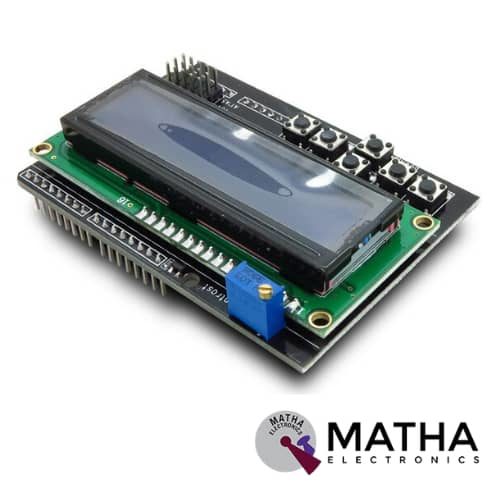
16x2 (1602) LCD Keypad Shield
Original price was: ₹450.00.₹400.00Current price is: ₹400.00. inc. GST
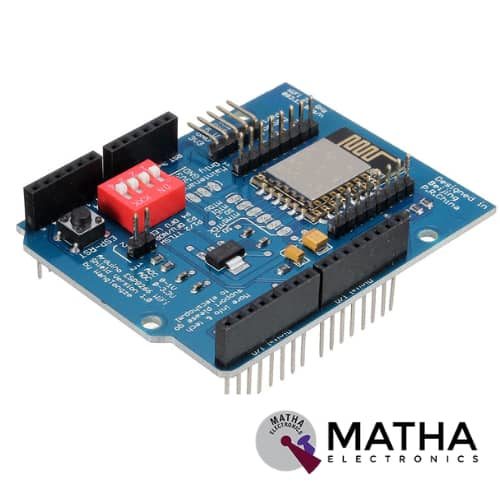
ESP8266 WIFI Shield
Original price was: ₹935.00.₹899.00Current price is: ₹899.00. inc. GST
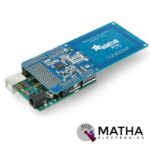
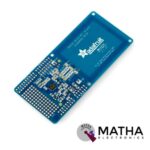
PN532 NFC/RFID Controller Shield for Arduino
₹1,500.00 inc. GST
- PN532 chip-set
- Operating Voltage : 3.3V ~ 5v
- Support I2C, SPI
- I2C: 3.3V ~ 24V TTL
- SPI: 3.3V TTL with 100-ohm resistors in series
- Plug and play, Arduino compatible
- Built-in PCB Antenna
- Communication distance:10cm
- Easy to change mode
- NFC/RFID PN532 shield including a tuned 13.56MHz stripline antenna
- 36-pin 0.1″ header for attaching the shield to an Arduino.
- Compatible with Arduino Mega 1280 & 2560, Diecimila, Duemilanove, and UNO
Description
NFC/RFID Sheild was designed as a perfect tool for any 13.56MHz RFID or NFC application. This NFC shield uses the PN532 chip set. PN532 NFC Module was designed as a highly integrated radio transmission module for Near Field Communication at 13.56MHz. NFC protocol designed for smartphones and similar devices, can read and write cards and tags, interact with NFC phones, and enable communication from device to device. While the controller provides many capabilities. Our Arduino library currently only supports reading/writing tags and does not support phone-to-shield communication, tag emulation (which requires an external ‘secure element’ only available from NXP) or other more advanced features at this time.
This shield comes with a tuned 13.56MHz stripline antenna, 36-pin 0.1″ header for attaching the shield to an Arduino. In order to stack another shield on top or below, stacking headers allow pass-through stacking. This shield was designed by RF engineers using the best test equipment to create a layout. And antenna within a range of 10cm (4 inches), the maximum range possible using the 13.56MHz technology. It is quite easy to attach the shield behind a plastic plate with standoffs and still read cards through a (non-metal) barrier.
This shield supports I2C or SPI communication protocols. I2C is the default, as it uses fewer pins. Analog pins 4 and 5 are used for I2C ( you can still connect other I2C devices to the bus). And Digital #2 is used for “interrupt” notification. This means we don’t have to sit there and ‘poll’ the chip to ask a target tag has been found. The pin will pull low when a card, phone, etc is within range. The shield changes over to SPI easily where you can use any 4 digital pins by shorting two solder jumpers on the top of the PCB. These NFC/RFID Compatible with any “classic” Arduino – NG, Diecimilla, Duemilanove, UNO – as well as Mega R3 or later.
Reviews (0)
Shipping & Delivery

Related products

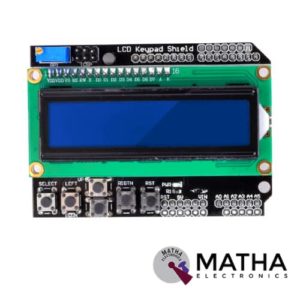
16×2 (1602) LCD Keypad Shield
- Operating Voltage:5V
- 5 Push buttons.
- RST button to reset Arduino program.
- Integrate a potentiometer for adjusting the backlight.
- Expanded available I/O pins.
- Blue light with white characters.
- Uses 4 Bit Arduino LCD Library
- Screen contrast adjustment
- Arduino Reset button
- The keypad consists of 6 keys select, up, right, down, left and reset.
- To save the digital IO pins, the keypad interface only uses one ADC channel.
- The key value is read out through a 5 stage voltage divider.

37 IN 1 Sensor Kit For Arduino
- For beginners who are interested in Arduino
- A complete set of Arduino’s most common and useful electronic components
- Infrared sensor receiving module
- Laser sensor module
- Temperature and humidity sensor module
- Infrared sensor module
- 5v relay module
- Obstacle avoidance sensor module. For beginners who are interested in Arduino
- A complete set of Arduino’s most common and useful electronic components
- Packaging Type: Box
- Material: Circuit board
- Dimensions: 98 x 0.59 x 0.24 inch
- Weight: 428 g


CAN Bus Shield
- Implements CAN V2.0B at up to 1 Mb/s
- Industrial standard 9 pin sub-D connector
- OBD-II and CAN standard pinout selectable.
- Changeable chip select pin
- Changeable CS pin for TF card slot
- Changeable INT pin
- Screw terminal that easily to connect CAN_H and CAN_L
- Arduino Uno pin headers
- Grove connectors (I2C and UART)
- SPI Interface up to 10 MHz
- Standard (11 bit) and extended (29 bit) data and remote frames
- Two receive buffers with prioritized message storage
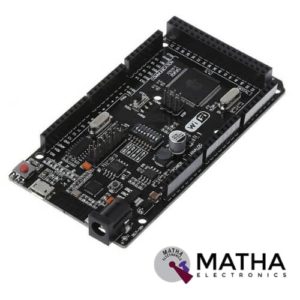
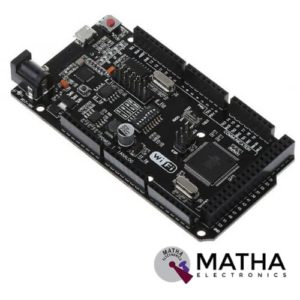
Mega R3 +WiFi ATmega2560+ESP8266 Module CH340G Compatible For Arduino Mega
- Microcontroller:ATmega2560
- IC Wi-Fi : ESP8266
- USB-TTL converter: CH340G
- Power Out: 5V-800mA
- Power Input USB: 5V (500mA max.)
- Power Input VIN/DC Jack: 9-24V
- Power Consumption: 5V 800mA
- Logic Level: 5V
- Wi-Fi 802.11 b/g/n 2.4 GHz
- USB: Micro USB
- Clock Frequency: 16MHz
- Operating Supply Voltage: 5V
- Digital I/O: 54
- Analog I/O: 16
- Memory Size: 256kb
- Data RAM Type/Size: 8Kb
- Data ROM Type/Size: 4Kb
- Interface Type: SerialOTA
- Operating temperature:−40С°/+125С°
- Build in external antenna
- Dimensions:53.361×101.86mm
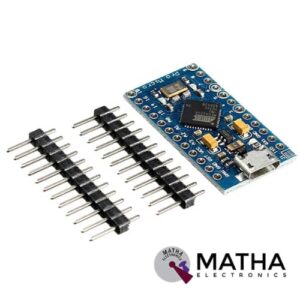
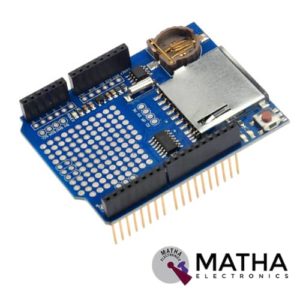

SD Card shield V4.0 for Arduino UNO
- Standard SD card, SDHC card and TF card compatible
- 3.3v and 5v logical voltage compatible
- 2.6-3.6v DC power supply
- UART Grove & I2C connection compatible
- Fully supported SD Library
- Minimal number of SPI port
- Jumpers provided for configuring Arduino SPI port pins
- Onboard toggle switch for SD card select type
- Truly stackable
- Prototype expand Library support
- Size: 53mm x 47mm
- Weight: 35g


USB Host Shield
- Works with standard (dual 5/3.3V) and 3.3V-only (for example, Pro Arduino) boards.
- Operates over the extended -40°C to +85°C temperature range
- Complies with USB Specification Revision 2.0 (Full-Speed 12Mbps Peripheral, Full-/Low-Speed 12Mbps/1.5Mbps Host)
- Supports HID devices, such as keyboards, mice, joysticks, etc.
- Compatible with Mass storage devices, such as USB sticks, memory card readers, external hard drives (FAT32 Type File System – Mega Arduino only).
Reviews
There are no reviews yet.