
I am text block. Click edit button to change this text. Lorem ipsum dolor sit amet, consectetur adipiscing elit. Ut elit tellus, luctus nec ullamcorper mattis, pulvinar dapibus leo.
-4%

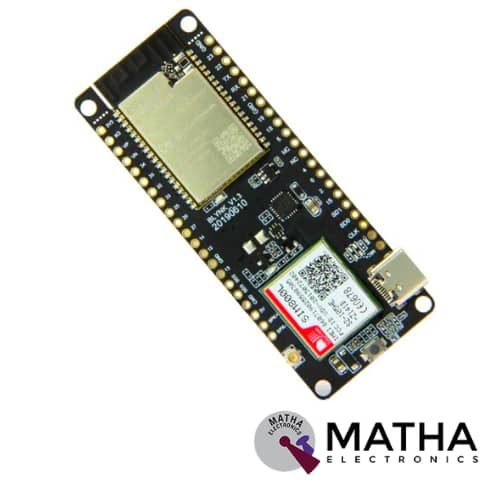
ESP32 SIM800L Wireless Communication Module
Original price was: ₹2,555.00.₹2,200.00Current price is: ₹2,200.00. inc. GST
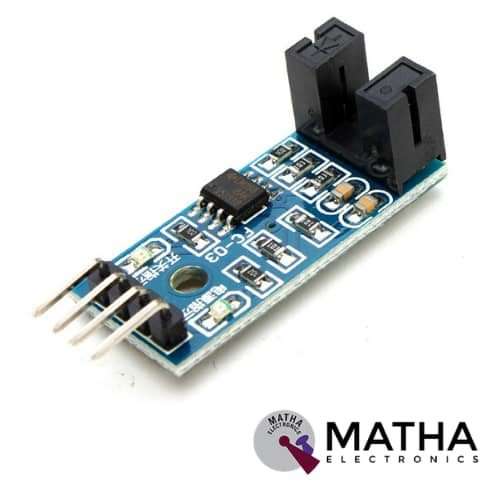
Double speed measuring module encoder photoelectric pulse output module
Original price was: ₹180.00.₹150.00Current price is: ₹150.00. inc. GST
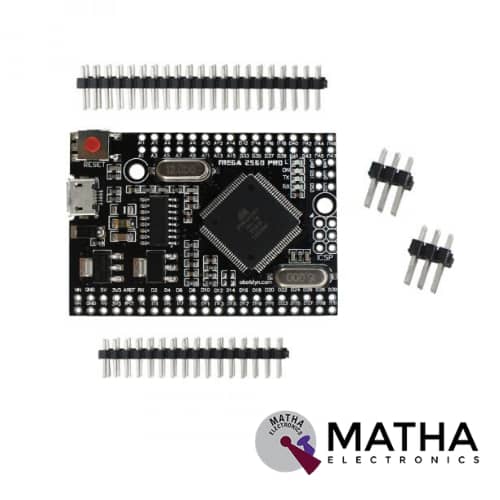
Arduino Mega Pro Mini CH340 Development Board
Original price was: ₹1,675.00.₹1,600.00Current price is: ₹1,600.00. inc. GST
- Microcontroller ATmega2560
- USB-TTL converter: CH340
- Power Out:5V-800mA
- Power IN.: 5V
- Power IN. VIN/DC Jack:5V
- Power Consumption: 5V 220mA
- Logic Level: 5V
- USB: Micro USB
- Clock Frequency: 16MHz
- Operating Supply Voltage: 5V
- Digital I/O: 54
- Analog I/O: 16
- Memory Size: 256kb
- Data RAM Type/Size: 8Kb
- Data ROM Type/Size: 4Kb
- Interface Type : ISP
- Operating temperature −40С°/+85С°
- Length x Width :38mm×54mm
Description
The Mega Pro Embed CH340G / ATmega2560 board was designed based on the ATmega2560 microcontroller. Along with Built on the Atmel ATmega2560 microcontroller and USB-UART interface chip CH340G. This board is often an excellent solution to urge your final project on the welding prototype board. Therefore the USB-UART adapter CH340. The board is compatible with Arduino Mega 2560 features a compact form factor of 38 x 55mm and superb solution for developing projects supported by ATmega2560.
The Mega Pro Embed functionalities are similar to Mega 2560. albeit it’s an Embed board, it’s solid as stable because of the Mega Board. It uses the first chip, and 16 MHz high-quality quartz resonators are present on the board. The board uses the chip CH340G because the converter is UART-USB. It provides a stable data exchange result once you work on a frequency of 12Mhz (requires the driving force to be installed on the computer).
We can power the board or power the pins through the MicroUSB connector. The transformer (LDO) handle input voltages from 6V to 9V (peak 18V) DC. The transformer allows to spend to 18V as an input value, however, we don’t recommend exceeding the recommended values aforementioned, since this will cause excessive heat and damage the device
Reviews (0)
Shipping & Delivery

Related products
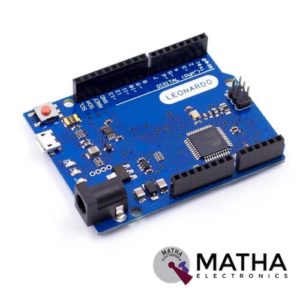

Arduino Leonardo R3
- Board Mode: LEONARDO R3
- Microcontroller: ATmega32u4
- Operating Voltage: 5V
- Input Voltage (Recommended): 7-12V
- Input Voltage (limits): 6-20V
- Digital I/O Pins: 20
- PWM Channels: 7
- Analog Input Channels: 12
- DC Current per I/O Pin: 40 mA
- DC Current for 3.3V Pin: 50 mA
- Flash Memory: 32 KB
- SRAM: 2.5 KB (ATmega32u4)
- EEPROM: 1 KB (ATmega32u4)
- Clock Speed: 16 MHz


CAN Bus Shield
- Implements CAN V2.0B at up to 1 Mb/s
- Industrial standard 9 pin sub-D connector
- OBD-II and CAN standard pinout selectable.
- Changeable chip select pin
- Changeable CS pin for TF card slot
- Changeable INT pin
- Screw terminal that easily to connect CAN_H and CAN_L
- Arduino Uno pin headers
- Grove connectors (I2C and UART)
- SPI Interface up to 10 MHz
- Standard (11 bit) and extended (29 bit) data and remote frames
- Two receive buffers with prioritized message storage

DTMF Shield
- MT8870 Decoder IC.
- 4 Output digital pins.
- Operates on 5V
- Includes MT8870 DTMF Receiver IC
- Receives and Converts Standard DTMF Codes
- Remotely Switch Devices from Anywhere Using the Phone
- Easily Connects to Most Microcontrollers or Roboduino Board
- Low Power Consumption
- 5 On-Board LED's For Data Received Indication
- Standard Header Connections for Control System Connection
- Audio socket for application
- Speaker connector for audio sound checking.
- Microphone connector for over the air remote control system( note, due to environmental noise, without any filtering system this method is not recommended)
- Dimension: 37x37x9mm


Ethernet Shield
- Based on the W5100Based on the Wiznet W5100 allows an Arduino board to connect to the internet.
- Stackable Design, can directly be supported by Arduino official Ethernet Library.
- Supports up to four simultaneous socket connections
- Can be used to store files for serving over the network.
- Compatible with the Arduino Duemilanove (168 or 328), Uno as well as Mega (1280/2560).
- Can be accessed using the Mini SD TF library.
- The current shield has a Power over Ethernet (PoE) module designed to extract power from a conventional twisted-pair Category 5 Ethernet cable.
- IEEE802.3af compliant
- Low output ripple and noise (100mVpp)
- Overload and short-circuit protection
- 1500V isolation (input to output)


L293D Motor Driver Shield
- L293D motor driver chip & 74HC595 shift register
- Four H-bridges
- Terminal blocks and jumper to connect external power, for separate logic/motor supplies
- Up to 4 bi-directional DC motors with individual 8-bit speed selection
- Up to 2 stepper motors (unipolar or bipolar) with single coil, double coil or interleaved stepping.
- 2 connections for 5V ‘hobby’ servos connected to the Arduino’s high-resolution dedicated timer
- 4 H-Bridges: L293D chipset provides 0.6A per bridge (1.2A peak) with thermal shutdown protection, internal kickback protection diodes. Can run motors on 4.5VDC to 25VDC.
- Pull-down resistors keep motors disabled during power-up
- Big terminal block connectors to easily hook up wires (18-26AWG) and power
- Arduino reset button brought up top
- Tested compatible with Arduino Mega 1280 & 2560, Diecimila, Duemilanove, and UNO
- PCB Size: 69 x 53 mm

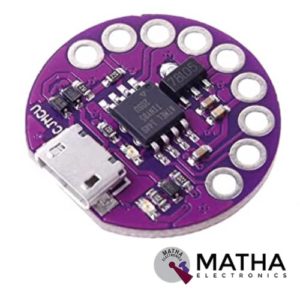
LilyTiny (LilyPad ATTiny85)
- Program Memory Type: Flash
- Program Memory (KB) : 8
- CPU Speed (MIPS): 20
- Data EEPROM (bytes): 512
- Digital Communication Peripherals: 1-SPI, 1-I2C
- Capture/Compare/PWM Peripherals : 5
- Comparators: 1
- Temperature Range (C) : -40 to 85
- Operating Voltage Range (V): 1.8 to 5.5
- Pin count: 8
- Cap Touch Channels : 3


Wemos D1 WiFi Esp8266 Development Board Uno Compatible Program
- Microcontroller: ESP-8266EX
- Operating Voltage: 3.3 V
- Digital I/O Pins: 11
- Analog Input Pins 1(Max input: 3.2V)
- Clock Speed: 80MHz/160MHz
- Flash: 4M bytes
- Good stability.
- 11 digital input/output pins, all pins have interrupt/PWM/I2C/one-wire supported(except for D0)
- 1 analog input(3.2V max input)
- Micro USB connection
- Compatible with Arduino
- Support OTA wireless uploading
- On-Board Switching Power Supply:
- Micro USB connection
- Compatible with Arduino
- Support OTA wireless uploading
Reviews
There are no reviews yet.