
I am text block. Click edit button to change this text. Lorem ipsum dolor sit amet, consectetur adipiscing elit. Ut elit tellus, luctus nec ullamcorper mattis, pulvinar dapibus leo.
-3%


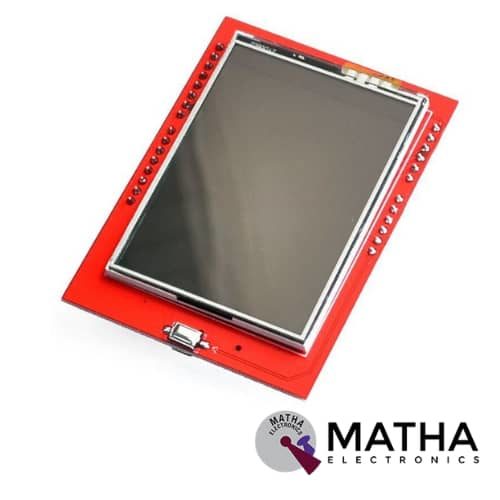
2.4″ Inch Touch Screen TFT Display Shield for Arduino
Original price was: ₹850.00.₹800.00Current price is: ₹800.00. inc. GST
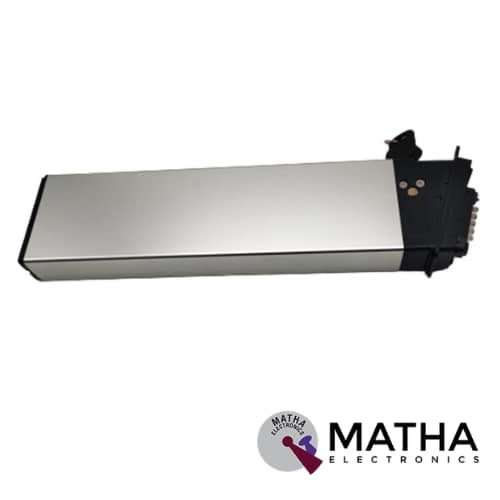
36V/48V Fold bike Lithium Battery Case 410*100*42mm Aluminum Alloy Material
Original price was: ₹2,825.00.₹2,499.00Current price is: ₹2,499.00. inc. GST
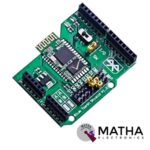
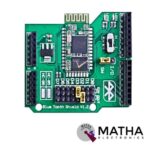
HC-05 Bluetooth Shield for Arduino
Original price was: ₹825.00.₹799.00Current price is: ₹799.00. inc. GST
- Bluetooth serial port Profile
- Bluetooth protocol: Bluetooth Specification v2.0+EDR
- Frequency: 2.4GHz ISM band
- Communication Range: 10M
- Serial Bluetooth module for Arduino
- Can operate in Master, Slave or Master/Slave mode
- UART interface (TTL) with programmable baud rate (SPP firmware installed)
- Default baud rate: 38400(CMD MODE) / 9600(DATA MODE), data bits: 8, stop bit: 1, Parity: No parity
- Onboard PCB antenna
- FCC ID certificated
Description
HC-05 Bluetooth Shield based on Bluetooth SPP (Serial Port Protocol) module designed as Wireless Serial Communication allows use with any microcontroller. It supports the UART protocol for easy transfer and receives data wirelessly. This module works as both Master and Slave Mode and easy switchable between these two modes. By default, Slave mode is configured. And the configured Modes changed using AT Commands. While working in slave mode, HC-05 cannot initiate a connection to another Bluetooth device but can accept connections. Whereas in Master mode, it initiates a connection to other devices.
This serial port Bluetooth module features fully qualified Bluetooth V2.0+EDR (Enhanced Data Rate) 3Mbps Modulation with a complete 2.4GHz radio transceiver and baseband. The module communicates using the USART protocol at a baud rate of 9600. Hence it is easy to interface with any microcontroller that supports USART. The onboard LED present on the board indicates the connection status, whether the Bluetooth connection or not. This red LED blinks continuously in a periodic manner before connecting to the module. When connected to any other Bluetooth device, its blinking slows down to two seconds.
This Bluetooth protocol is an affordable communication method in PAN network, with a maximum data rate of 1Mb/S, working in a nominal range of 100 meters using 2.4 G frequency is a common way of wireless communicating. HC05 module consists of an internal 3.3v regulator and that is why you can connect it to 5v voltage. But it is highly recommended 3.3V voltage since the logic of HC05 serial communication pins is 3.3V. Supplying 5V to the module can cause damage to the module. In order to prevent the module from being damaged and make it work properly, you should use a resistance division circuit (5v to 3.3v ) between the Arduino TX pin and the module RX pin.
Reviews (0)
Shipping & Delivery

Related products


2.4″ Inch Touch Screen TFT Display Shield for Arduino
- 4″ Touch LCD TFT display module for Arduino
- 240*320 pixels resolution
- Ability to display 262000 different colours
- The shield comes equipped with a microSD card slot.
- SPFD5408 controller with built-in video RAM buffer
- 8-bit digital interface, plus 4 control lines
- 5V compatible. Use with 3.3V or 5V logic
- On-board 3.3V 300mA LDO regulator
- Uses digital pins 5-13 and analogue 0-3. That means you can use digital pins 2, 3, and analog 4 and 5. Pin 12 is available if not using the microSD
- Works with any Arduino Uno and mega compatible boards
- Resolution: 240320 pixels
- Supply voltage: 5V
- Working temperature: -30C ~ 70C
- Dimension: 72*52*12mm
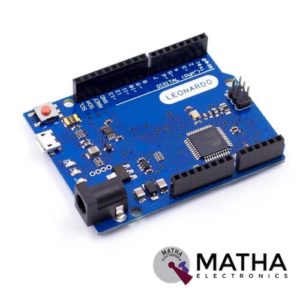

Arduino Leonardo R3
- Board Mode: LEONARDO R3
- Microcontroller: ATmega32u4
- Operating Voltage: 5V
- Input Voltage (Recommended): 7-12V
- Input Voltage (limits): 6-20V
- Digital I/O Pins: 20
- PWM Channels: 7
- Analog Input Channels: 12
- DC Current per I/O Pin: 40 mA
- DC Current for 3.3V Pin: 50 mA
- Flash Memory: 32 KB
- SRAM: 2.5 KB (ATmega32u4)
- EEPROM: 1 KB (ATmega32u4)
- Clock Speed: 16 MHz


NUCLEO-64 STM32G071RBT6 Development Board Arduino & ST Morpho Connectivity
- STM32 microcontroller in LQFP64 package
- 1 user LED shared with ARDUINO®
- 1 user and 1 reset push-buttons
- 768 kHz crystal oscillator
- Board connectors: ARDUINO Uno V3 expansion connectors morpho extension pin headers for full access to all STM32 I/Os
- Flexible power-supply options: ST-LINK, USB VBUS, or external sources
- On-board ST-LINK debugger/programmer with USB re-enumeration capability: mass storage, Virtual COM port and debug port
- Comprehensive free software libraries and examples available with the STM32Cube MCU Package
- Support of a wide choice of Integrated Development Environments (IDEs) including IAR Embedded Workbench®, MDK-ARM, and STM32CubeIDE
- Board-specific features
- External SMPS to generate Vcore logic supply
- 24 MHz HSE
- Board connectors: External SMPS experimentation dedicated connector Micro-AB or Mini-AB USB connector for the ST-LINKMIPI® debug connector
- Arm® Mbed Enabled™ compliant
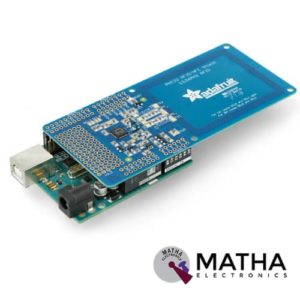

PN532 NFC/RFID Controller Shield for Arduino
- PN532 chip-set
- Operating Voltage : 3.3V ~ 5v
- Support I2C, SPI
- I2C: 3.3V ~ 24V TTL
- SPI: 3.3V TTL with 100-ohm resistors in series
- Plug and play, Arduino compatible
- Built-in PCB Antenna
- Communication distance:10cm
- Easy to change mode
- NFC/RFID PN532 shield including a tuned 13.56MHz stripline antenna
- 36-pin 0.1" header for attaching the shield to an Arduino.
- Compatible with Arduino Mega 1280 & 2560, Diecimila, Duemilanove, and UNO
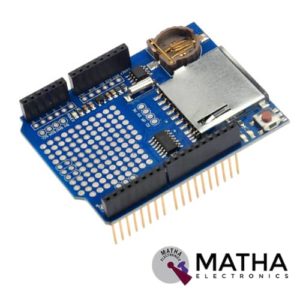

SD Card shield V4.0 for Arduino UNO
- Standard SD card, SDHC card and TF card compatible
- 3.3v and 5v logical voltage compatible
- 2.6-3.6v DC power supply
- UART Grove & I2C connection compatible
- Fully supported SD Library
- Minimal number of SPI port
- Jumpers provided for configuring Arduino SPI port pins
- Onboard toggle switch for SD card select type
- Truly stackable
- Prototype expand Library support
- Size: 53mm x 47mm
- Weight: 35g


Sensor Shield V5 Expansion Board For Arduino
- Retain the merits of the V4.0 version
- Laminated design
- PCB immersion gold processing technology
- IIC interface
- Bluetooth module communication interface
- SD card module communication interface
- APC220 Wireless RF modules communication interface
- RB URF v1.1 ultrasonic sensors interface
- 12864 LCD string of line and parallel interface
- 32 servo controller interface

STM32 Nucleo-64 development board with STM32F103RB MCU, supports Arduino and ST morpho connectivity
- STM32 microcontroller with LQFP64 package
- Two types of extension resources
- mbed-enabled (mbed.org)
- On-board ST-LINK/V2-1 debugger/programmer with SWD connector
- Flexible board power supply
- Three LEDs
- Two push buttons: USER and RESET
- USB re-enumeration capability: three different interfaces supported on USB
- Comprehensive free software HAL library including a variety of software examples
- Supported by wide choice of Integrated Development Environments (IDEs) including IAR, Keil, GCC-based IDEs
Reviews
There are no reviews yet.