
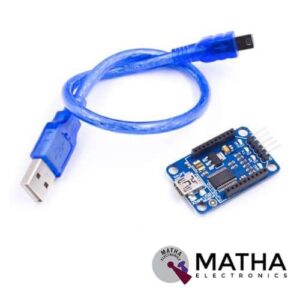
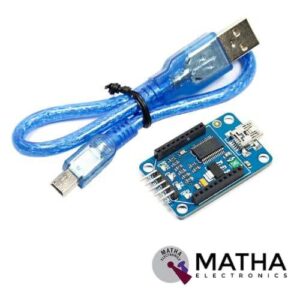
Bluetooth XBee USB Adapter FT232RL for Arduino with Cable
- IC Chip: FT232RL
- Input Supply Voltage: 3.3 ~ 5 VDC
- Connectivity: USB
- Communication Protocol: UART, Bit Bang I/O, SPI
- Cable Length: 30cm
- Board Dimensions: 42x26x6mm
- Interface: Mini-B USB, 2.54mm pitch pin header.
- Adapter socket: XBee compatible 2.0mm pitch female pin header.
- 3V and 5V IO compatible.
- USB 2.0 protocol.
- Easily connected to a PC via mini USB cable.
- XBee-setting support software X-CTU.
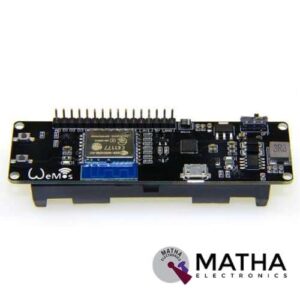
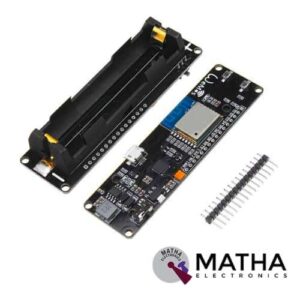
WeMos D1 ESP Wroom 02 Board ESP8266 Mini WiFi Nodemcu Module 18650 Battery
- One AD inputs.
- Micro USB inputs.
- One programmable LED (D0).
- AUTO PROGRAM circuit.
- ESP8266 (ESP-WROOM-02 With TELEC) is equivalent to the NodeMCU.
- Analog Input (AD): Built-in dividing resistor (AD = 220K ADC 100K = GND).
- There is a SOLDER terminal for SLEEP MODE.
- Compatible With Arduino andNodeMCU.
- Operation and charging are possible at the same time.
- 18650 charging circuit including the 5V boosting circuit with TP5410.
- Overcharge protection, over-discharge protection built-in.
- LED: Red = Charging, Green = Full charging.
- 3000 mA 18650 It is possible to operate for more than 17 hours on a battery.
- Integrated 18650 battery charging and discharging system.
- One switch controls whether the 18650 battery is on power or not.
- OLEDs SDA and SCL can connect to the D1 pin and the D2 pin respectively.
- The five buttons can be controlled by FLATH, RSET, D5, D6, and D7 respectively.
- The 5 Digital pins can configure the write/read/interrupt/PWM/I2C/one-wire supported separately.
- Operation and NodeMCU consistent, adding a programmable LED, you can use GPIO16 to control; display 8266 running status and other functions. Integrated OLED and five buttons, more convenient for development.
- The design concept originates from the open-source project NodeMCU; the development board integrates 18650 charging and discharging systems with charging and discharging protection. At the same time, an OLED and five directional buttons are integrated to facilitate the development.
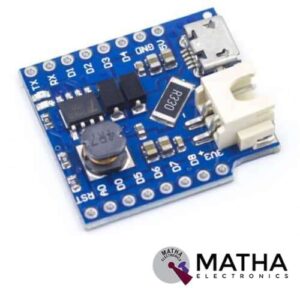
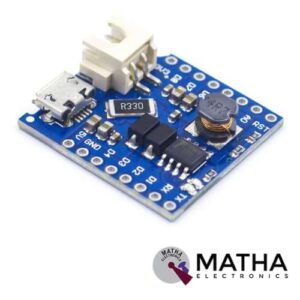
WeMos D1 Lithium Battery Charger Board with Mini USB
- Charging Voltage: max: 10V, recommend: 5V
- Charging Current: max: 1A
- Lithium Battery voltage: 3.3-4.2V
- Boost Power Supply: 5V(max: 1A)
- Can use D1 mini without a USB cable, it's really wireless
- Can use D1 mini anywhere, using this battery shield and a lithium Battery.
- High reliability
- Charging, when the battery run out, you do not need to unplug the battery, just use the USB port to charge.

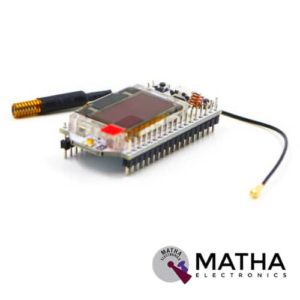
ESP32 LoRa SX1278 0.96 Inch Blue OLED Display BT WiFi Module for Arduino
- Operating voltage: 3.3V to 7V
- Operating temperature range: -40 ° C to + 90 ° C
- Frequency:433MHz
- Supports Sniffer, Station, softAP and Wi-Fi Direct modes
- Data rate: 150 Mbps @ 11n HT40,72 Mbps @ 11n HT20,54 Mbps @ 11g, 11 Mbps @ 11b
- Transmit power: 19.5 dBm @ 11b, 16.5 dBm @ 11g, 15.5 dBm @ 11n
- Receiver sensitivity up to – 98 dBm
- UDP continues to throughput by 135 Mbps
- Application:Camera

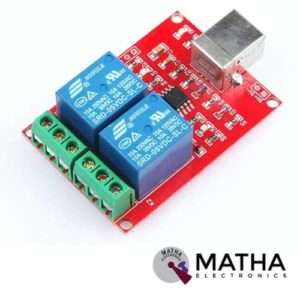
USB PC Intelligent Control Module 2 Channel 5V Relay Module (No Need Driver)
- Contact type: NC / COM / NO
- Input current: ≥300mA
- Input voltage: DC 5V
- Support Win7, XP 32-bit systems
- Onboard square USB interface, stable connection.
- Use an imported high-performance USB control chip.
- Application code: Green indicates that the relay is closed, the red disconnect
- Military-grade PCB board production
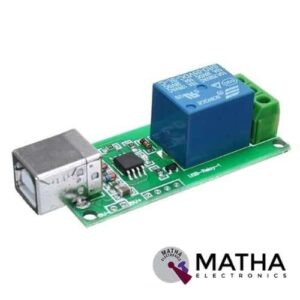
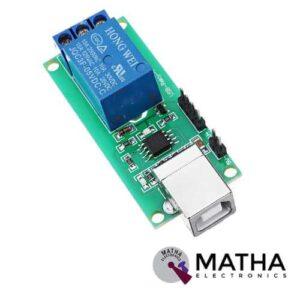
USB Control Module 1 Channel 5V Relay Module (No Need Driver)
- Contact type: NC / COM / NO
- Input current: ≥300mA
- Input voltage: DC 5V
- Support Win7, XP 32-bit systems
- Onboard square USB interface, stable connection.
- Use an imported high-performance USB control chip.
- Application code: Green indicates that the relay is closed, the red disconnect
- Military-grade PCB board production
- Using genuine Single relay, the module uses HID technology, without any driver on the windows system plug and play, easy to use and simple
- Military-grade PCB board production
- Board power outlets and terminals, two kinds of access to power is flexible. After connecting the power, even if the computer is off or unplug the USB from the computer, the relay can also remain set.
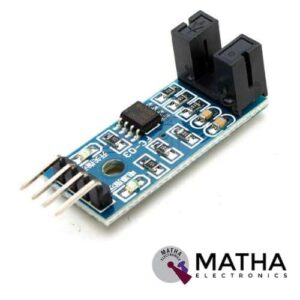

Double speed measuring module encoder photoelectric pulse output module
- Color: Green + black
- Material: FR4
- Working Voltage: 4.5~5.5V
- Launch Tube Pressure drop: V f=1.6V
- Launch Tube Current: I f<20mA
- Signal Output: A, B two lines
- TT Power Level
- Resolution: 0.01mm
- Measurement Frequency: 100 kHz
- D Type Holes Encoder Diameter: 24mm
- Encoder Resolution: 20 lines
- Speed measuring Sensor configuration: measure line 1 motor speed
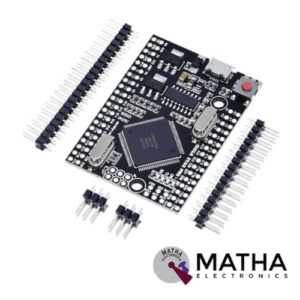

Arduino Mega Pro Mini CH340 Development Board
- Microcontroller ATmega2560
- USB-TTL converter: CH340
- Power Out:5V-800mA
- Power IN.: 5V
- Power IN. VIN/DC Jack:5V
- Power Consumption: 5V 220mA
- Logic Level: 5V
- USB: Micro USB
- Clock Frequency: 16MHz
- Operating Supply Voltage: 5V
- Digital I/O: 54
- Analog I/O: 16
- Memory Size: 256kb
- Data RAM Type/Size: 8Kb
- Data ROM Type/Size: 4Kb
- Interface Type : ISP
- Operating temperature −40С°/+85С°
- Length x Width :38mm×54mm

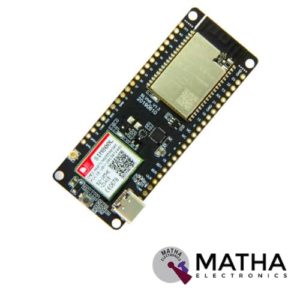
ESP32 SIM800L Wireless Communication Module
- Chipset: ESPRESSIF-ESP32 240MHz Xtensa® dual-core 32-bit LX6 microprocessor
- FLASH: QSPI flash 4MB / PSRAM 8MB
- SRAM: 520 kB SRAM
- Modular interface: UART, SPI, SDIO, I2C, LED PWM, TV PWM, I2S, IRGPIO, capacitor touch sensor, ADC, DACLNA pre-amplifier
- SIM card: Only supports Nano SIM card
- Power Supply: USB 5V/1A
- WIFI Protocol : 802.11 b/g/n
- Communication distance: 300m
- Bluetooth Protocol: Bluetooth v4.2BR/EDR and BLE standard
- Dimensions: 78.83mm*28.92mm*8.06mm
- Weight: 12 grams


2.8 inch SPI Screen Module TFT Interface 240 x 320 without Touch

“PWM Generator Module for Stepper Motor Driver with Forward and Reverse Function “
- Board can be used to generate PWM signals for the stepper motor driver
- Operating Voltage: 12VDC
- Three Frequency Range
- Forward and Reverse Function.
- It has three frequency ranges selectable via onboard jumpers.
- Frequency can be measured via PUL and common cathode (GND) ports.
- The board has two sets of power input
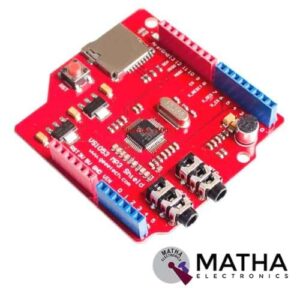
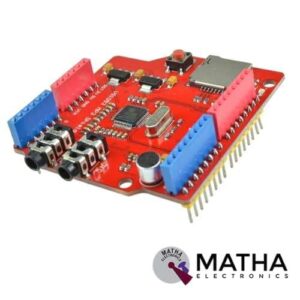
VS1053 MP3 Recording Module Development Board with Onboard Recording For UNO
- SPI interface, the control signal lines are led out
- A headphone and stereo output
- Onboard Microphone for recording
- A line-in input interface
- Separate 3.5 mm Jack for MIC and Speaker
- Onboard Power Indicator
- 3V and 2.8V of LDO chip AMS-1117 on board provides up to 800mA current
- Can play a variety of music formats, support for OGG encoding real-time recording
- A single power supply: +5 VDC
- 288 Mhz crystal
- TF card slot